Warning: this article reveals the ending of Captain America: The First Avenger (2011) and a later revelation from Avengers: Infinity War (2018).
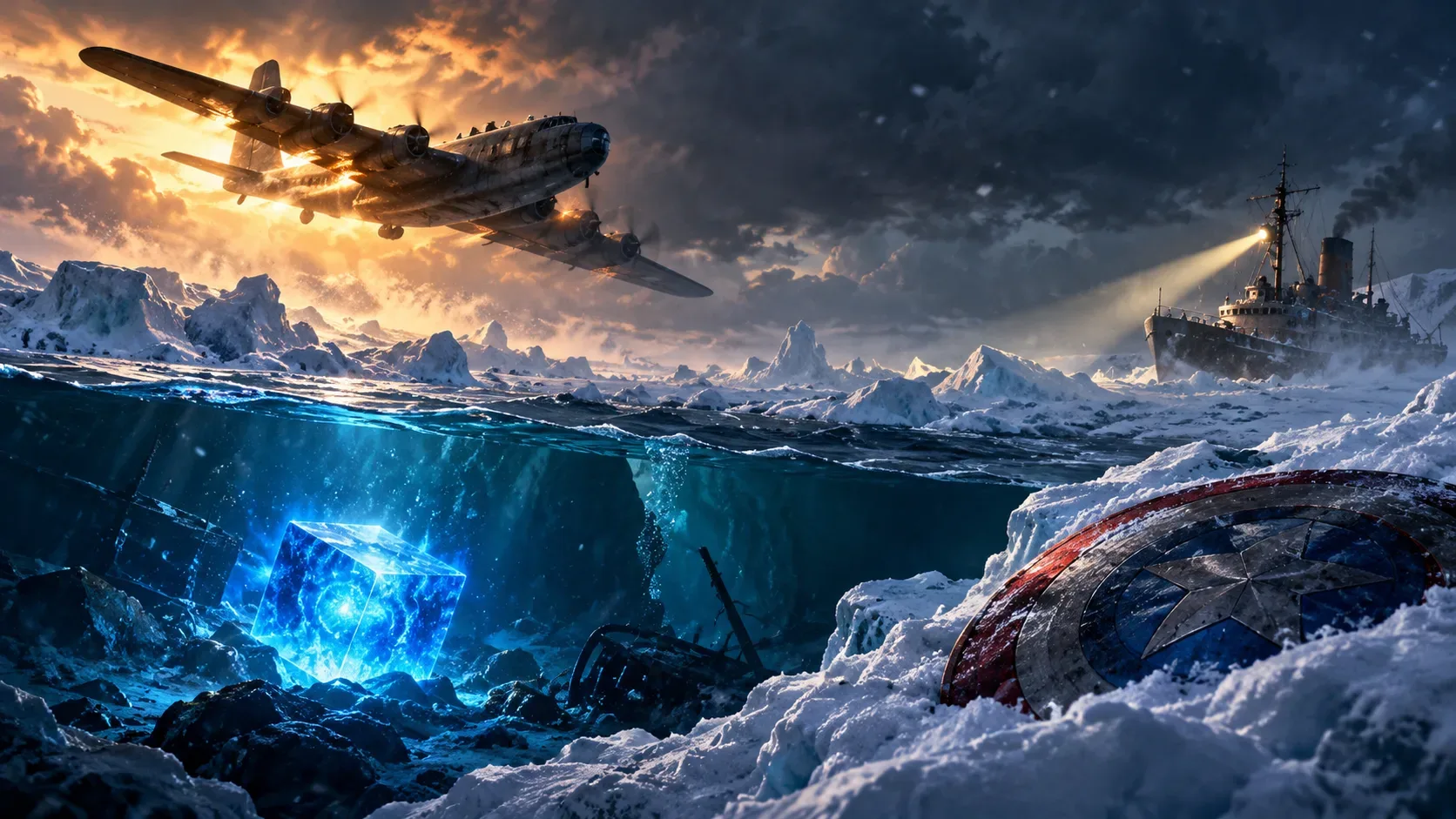
Steve Rogers deliberately crashes HYDRA's bomber in the Arctic because it is still carrying weapons aimed at cities and he cannot find a safe way to stop the attack by landing. The Tesseract has already fallen into the ocean during the fight with Red Skull. Howard Stark retrieves the cube during a subsequent search, but he does not find Steve or the aircraft. The hero reappears only decades later, preserved in the ice.
From HYDRA's attack plan to Red Skull's disappearance
Near the end of World War II, HYDRA prepares a bomber loaded with weapons of mass destruction. Its leader, Johann Schmidt, also known as Red Skull, plans to strike major cities, starting with New York. Steve manages to board the aircraft, fights HYDRA soldiers, and finally confronts Schmidt.
During their fight, the device housing the Tesseract is damaged. Schmidt grabs the cube with his bare hands, and a burst of light opens a passage through which he disappears. The 2011 film shows his disappearance, not a confirmed death. An explanation of the villain's fate would come years later in another Marvel Cinematic Universe film.
One detail matters enormously: after the encounter with Schmidt, the Tesseract drops, burns through the bomber's structure, and falls into the ocean. The object is no longer on the plane before Steve brings the aircraft down. Howard Stark's later discovery of the cube therefore does not mean he also found Captain America.
Why does Steve crash the plane instead of landing?
Even with Schmidt defeated, the danger remains. The bomber is still carrying weapons capable of hitting American cities. Steve must stop it from completing its route and sees no safe landing option that would avoid placing other people at risk. He steers it toward an unpopulated area of the Arctic and deliberately crashes.
His decision unfolds during a final radio conversation with Peggy Carter. Trying to hold on to the hope of seeing each other again, they talk about the dance they still owe one another. The goodbye connects a sacrifice made for countless people to a private loss: Steve prevents the attack but gives up the life he hoped to build after the war.
A common question is whether he could have jumped before impact. The film does not provide a technical assessment of every possible escape route. What the story establishes is Steve's judgment under the circumstances, with bombs on board, little time, and a need to keep the aircraft away from cities. Claiming that a particular maneuver would certainly have worked, or that escape was physically impossible, goes beyond what the ending proves.
How Howard Stark finds the Tesseract but not Steve
Howard Stark's search takes place after the crash. While looking for the missing hero, the inventor locates the Tesseract on the seabed. The cube is recovered, but the plane and Steve are not. That distinction explains why the artifact continues to appear in Marvel's larger story while Captain America remains missing.
There are, in other words, two separate recoveries: Howard finds the Tesseract in the postwar period, while Steve remains trapped beneath the ice for nearly seven decades. The cube is subsequently held by organizations involved in research and security, and its history later becomes entwined with S.H.I.E.L.D.
Subsequent films add another layer of meaning to the Tesseract: it contains the Space Stone, one of the Infinity Stones. That helps explain its connection to portals and why so many characters seek it out. But this later identification does not change the order shown at the end of The First Avenger: the cube falls into the sea first, and the plane crashes in the Arctic afterward.
Steve's awakening and the dance he missed
The movie opens with the discovery of an aircraft buried in ice and only later makes clear how that find relates to Steve. When the protagonist awakens, he is in a room designed to resemble a 1940s hospital. The illusion does not entirely convince him.
A baseball broadcast on the radio gives the deception away: Steve recognizes an old game he attended in person. He escapes the staged surroundings and emerges into modern Times Square, where Nick Fury tells him Captain America has been asleep for nearly 70 years.
The shock is about more than unfamiliar technology. Steve realizes he has lost decades, and especially the date he had arranged with Peggy. His reference to their dance turns the final scene into an emotional continuation of their goodbye on the plane. His presumed death is overturned, but the lost time remains a real consequence of his sacrifice.
What later films reveal about Red Skull
If we consider the 2011 film alone, Schmidt's fate remains uncertain: he vanishes after touching the Tesseract. Avengers: Infinity War (2018) reveals that he was transported to Vormir, where he serves as a guardian of the Soul Stone. This is information supplied by a later installment, not an explanation delivered during the fight aboard the bomber.
The key events should therefore remain distinct: Schmidt disappears, the Tesseract falls into the sea, Steve crashes the aircraft to stop the attack, Howard retrieves the cube, and the hero is found decades later. That sequence separates the artifact's fate from Steve's survival and shows how the 2011 ending both closes the conflict with HYDRA and begins Captain America's story in the modern day.