Spoiler warning: this article reveals the central twist in The Giggle (2023). A later section, separately marked, also discusses a 2025 revelation.
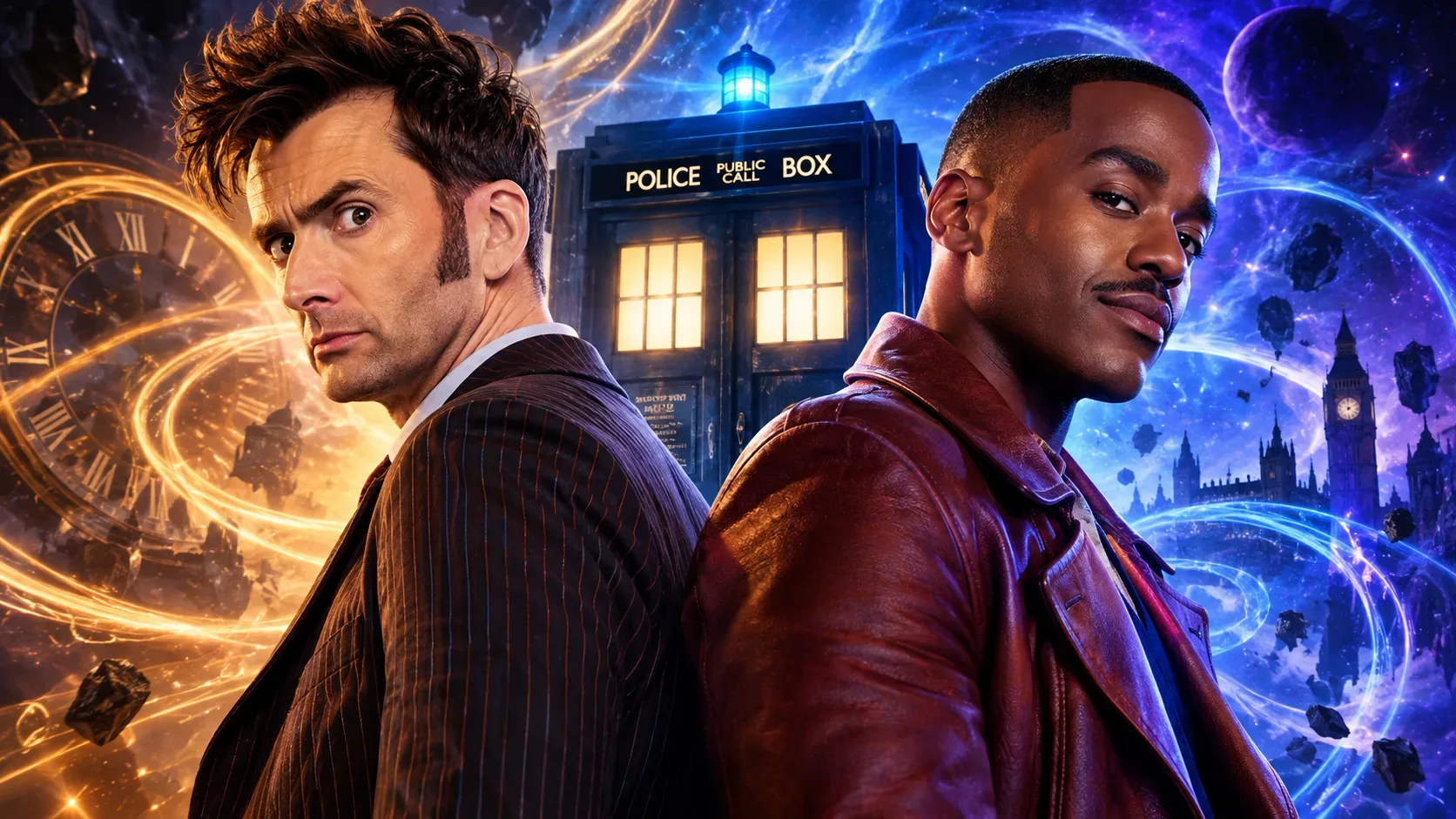
In Doctor Who, bi-generation is an unusual form of regeneration in which the new incarnation emerges without physically replacing the previous one. In The Giggle, first broadcast on 9 December 2023, the Fifteenth Doctor (Ncuti Gatwa) separates from the Fourteenth (David Tennant), and both remain alive. The series establishes their coexistence but does not set out a definitive formula explaining why this regeneration happened differently.
How is bi-generation different from ordinary regeneration?
As the franchise explains it, regeneration allows a Time Lord to survive when a body grows old or suffers extreme damage. The body transforms, the face and aspects of the personality may change, and memories from earlier lives remain. Ordinarily, one incarnation gives way to the next rather than both existing physically side by side.
Bi-generation overturns that visual expectation: the Fourteenth retains his body and the Fifteenth appears as his succeeding incarnation, sharing the same identity and history. He is not presented as a clone manufactured by the Toymaker or as a Doctor imported from another universe. In the episode, the Fifteenth identifies the phenomenon as something Time Lords had regarded as mythical.
What happened to the Fourteenth Doctor in The Giggle?
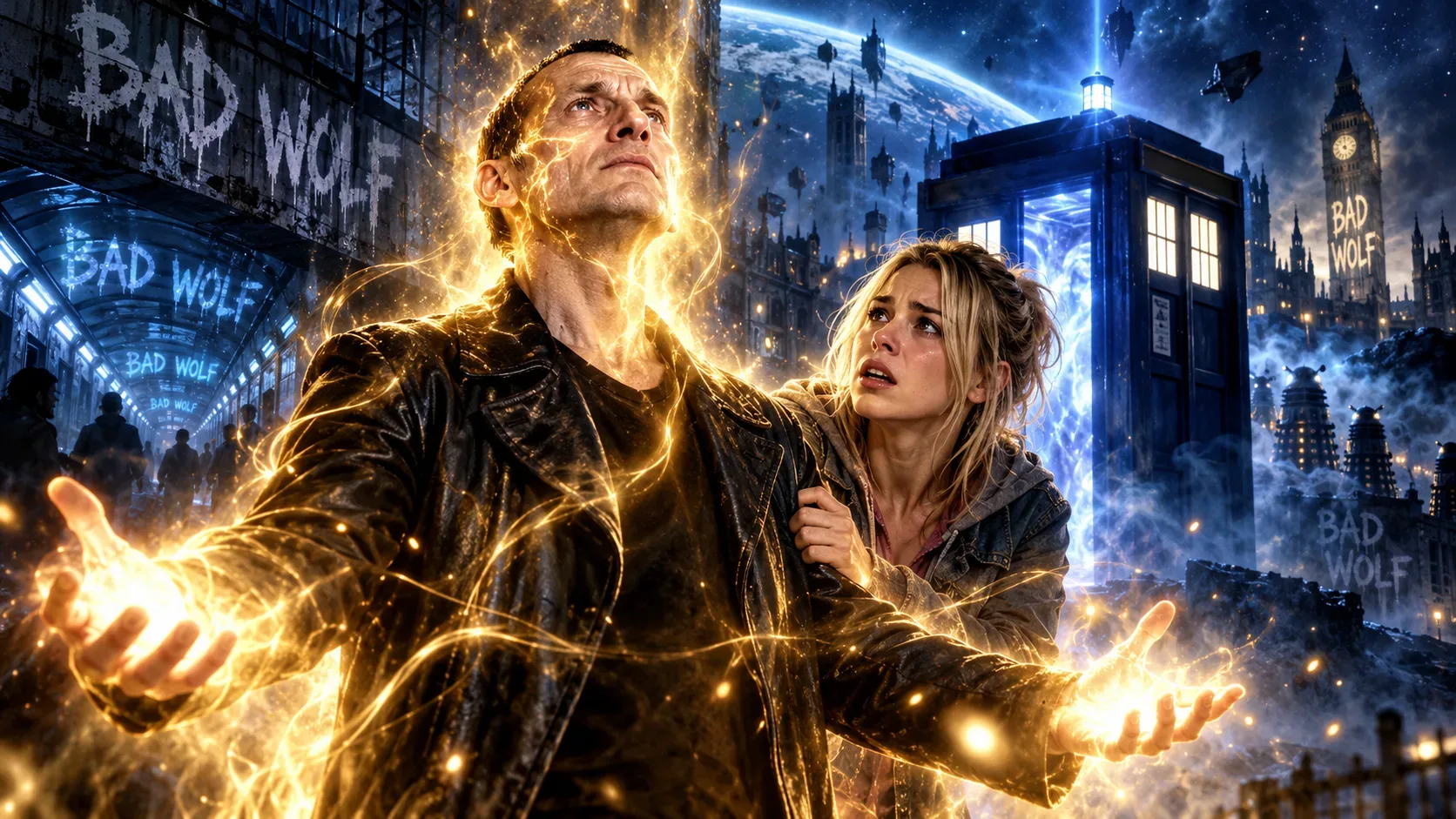
During the confrontation with the Toymaker at UNIT headquarters, the Fourteenth Doctor is struck by an energy beam, and his body begins producing the light associated with regeneration. Donna Noble and Mel Bush stand beside him. Rather than immediately adopting a new appearance, the Doctor notices that something is different and asks them to pull his arms. The Fifteenth Doctor emerges from that separation.
The consequence is shown unambiguously: both take part in the decisive game of catch against the Toymaker and defeat him together. The official character biographies retain the sequence of Fourteenth followed by Fifteenth, even though the transition did not remove the earlier body. From that moment there are two bodies and two paths, but not two unrelated protagonists.
If both coexist, why does each have a TARDIS?
The second TARDIS is not described as an automatic effect of bi-generation. After the victory, the Fifteenth draws on the Toymaker’s rules of play: the winner is entitled to a prize. Using a fairground hammer, he brings forth another TARDIS. The Doctors had already separated; duplicating the ship solves the practical problem of allowing each to follow his own path.
That distinction matters: the story confirms two coexisting Doctors and two TARDISes by the end of the special, but it does not establish a general rule that every bi-generation also duplicates the ship. The prize mechanism belongs to the exceptional circumstances of that confrontation.
Why does Fourteen stay with Donna while Fifteen travels on?
The ending connects the separation with the strain the Doctor has accumulated through repeated losses, battles and responsibilities. The Fifteenth says his predecessor needs to rest and recover. Donna interprets the return of that familiar face and their reunion as an opportunity for the Doctor to come home. The Fourteenth settles with the Noble family while the Fifteenth embarks on new journeys.
The intriguing detail is that the Fifteenth seems more emotionally recovered and links his condition to the care the Fourteenth will give himself. Their exchange makes healing the dramatic purpose of the bi-generation, but does not provide a complete technical account of how one body’s future experiences would be transferred to the other.
Did the Toymaker cause the bi-generation?
The Toymaker’s shot clearly triggers the regeneration, and his presence is connected to supernatural forces entering the series’ universe. The Fourteenth Doctor’s official biography recalls how the Doctor made that possible by invoking a superstition at the edge of the universe in Wild Blue Yonder. Even so, The Giggle never explicitly states that the Toymaker chose to produce two Doctors or that his rules alone account for the split.
The reading that an altered reality made a previously impossible event possible is plausible, but remains an interpretation. Nor does the special offer a repeatable instruction, such as being hit by the same beam or pulled by two people, that would make any Time Lord bi-generate.
What is established canon, and what remains theory?
The difference between what the series depicts and what people infer is crucial. The episode establishes the physical separation, the survival of both incarnations, their joint defeat of the Toymaker and their decision to live separately. Other claims require attention to where they originated.
Russell T Davies discussed the possibility that the entire timeline of the Doctors had bi-generated, allowing earlier incarnations to reappear. GamesRadar+ reported those remarks, including the writer’s own speculative wording. This is an attributed behind-the-scenes idea, not an on-screen demonstration that all those events occurred within The Giggle’s established continuity.
There is also a time-loop theory: the Fifteenth may already carry the healing the Fourteenth has yet to experience, and a later point in the Fourteenth’s life might connect to the Fifteenth’s emergence. Inverse presented this as a hypothesis. The episode suggests an unusual temporal relationship, but does not conclusively establish whether the bodies will reunite, when the Fourteenth will die or whether a closed loop exists. None of those proposed answers should be treated as fact.
Did bi-generation happen again after 2023?
Warning: the next paragraph contains a spoiler for The Interstellar Song Contest (2025), from the second season of the era that began in 2024.
Yes. The official Doctor Who website documents another bi-generation when Mrs Flood’s connection to the Rani is revealed, leaving two incarnations of the character on screen. This confirms that the phenomenon was no longer depicted only with the Doctor. It does not, however, mean the series has established a universal rule governing its causes or explained every temporal consequence of the Fourteenth and Fifteenth Doctors’ case.
Sources and references
- Doctor Who: What is Regeneration?
- Doctor Who: The Fourteenth Doctor
- Doctor Who: The Fifteenth Doctor
- Doctor Who: The Giggle
- Doctor Who: Exploring the Doctor’s Troubled Past as Revealed in The Giggle
- Doctor Who: Everything you need to know about the Rani
- GamesRadar+: Russell T Davies on the implications of bi-generation
- Inverse: A time-loop theory about the two Doctors
- GamesRadar+: The Giggle ending explained