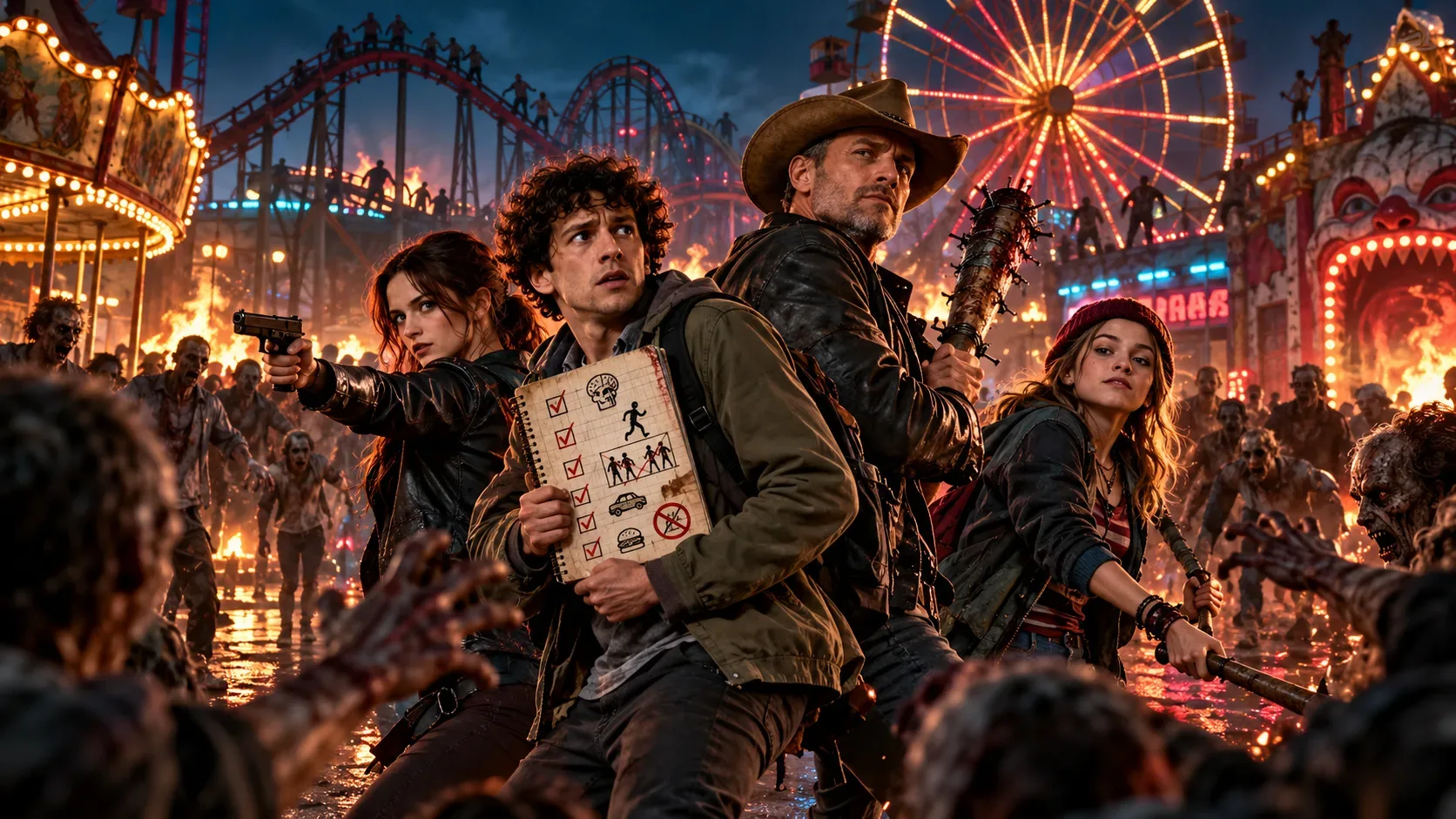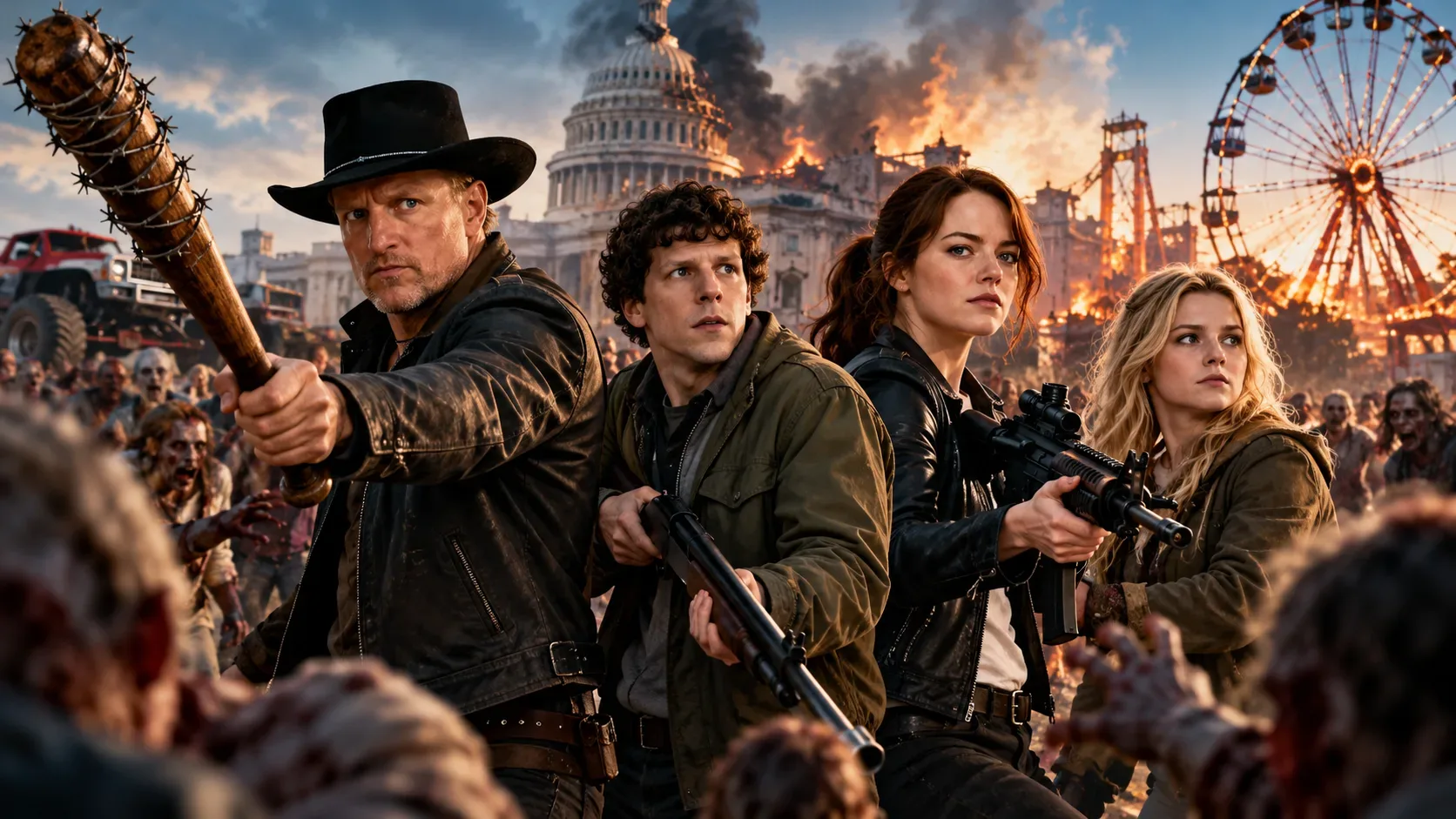
In Zombieland: Double Tap (2019), Columbus, Tallahassee, Wichita, and Little Rock face the undead again, but the threat has changed: zombies are now classified as Homer, Hawking, Ninja, and T-800. The sequel also tests their makeshift family when Little Rock seeks independence and the group ends up defending an unarmed community.
Spoiler warning: the following text reveals major story events, the ending, and the credits sequence of Zombieland: Double Tap.
What happened to the group after Zombieland?
The story continues the 2009 film without repeating the trip to the amusement park. The four survivors move into the White House, but living together does not resolve their differences. Columbus wants to marry Wichita, who pulls back from the commitment. Little Rock wants to meet people her own age and resents Tallahassee’s overprotectiveness.
Wichita and Little Rock leave; Little Rock later meets Berkeley and heads with him to Babylon, a pacifist commune. Columbus, Tallahassee, and Wichita take to the road to find her. Madison, a survivor Columbus meets, joins the journey and creates further tension between the couple.
The four zombie types: what changes in the sequel?
Director Ruben Fleischer explained in an interview with Fandango that the survivors have begun naming zombies according to their behavior. These categories do not replace Columbus’s rules: they help explain why some encounters require different precautions.
| Type | Trait | Consequence for the survivors |
|---|---|---|
| Homer | Slow and not very intelligent | Relatively predictable, but still dangerous. |
| Hawking | Shows greater problem-solving ability | Can overcome obstacles and surprise people who underestimate the infected. |
| Ninja | Moves stealthily | Requires attention to unexpected approaches. |
| T-800 | Tougher, faster, and harder to kill | Makes direct confrontation particularly dangerous. |
The T-800 name refers to the Terminator. The problem in this sequel is not a new supernatural power but an infected enemy that can keep advancing after attacks that would stop the others.
Do Columbus’s rules still work?
In the first film, Columbus organizes survival around personal rules, including staying fit, wearing a seat belt, and making sure a zombie is down. The original title Double Tap refers to that final precaution: a second shot to ensure that a threat cannot get up again.
The sequel keeps the narration and the logic behind these rules, adds observations, and contrasts them comically with Flagstaff’s commandments. Yet memorizing a list is not enough: the T-800 exposes the limits of old routines, while the Babylon battle requires improvisation, cooperation, and a shared strategy.
| Aspect | Zombieland (2009) | Double Tap (2019) |
|---|---|---|
| Threat | Encounters with infected people and unpredictable travel | Named zombie types and T-800s that are harder to defeat |
| Method | Columbus’s individual rules | Rules retained but adapted to evolving threats |
| Emotional focus | The formation of a found family | Conflicts over independence, commitment, and staying together |
Madison, Nevada, Albuquerque, and Flagstaff: who joins the story?
Madison is a survivor whose habits differ sharply from the veterans’. When she shows alarming symptoms, Columbus believes she is turning and seemingly leaves her behind after firing a shot. She later returns alive: a nut allergy caused her illness, and Columbus deliberately fired wide to spare her.
Nevada runs an Elvis-themed establishment and connects with Tallahassee. Albuquerque and Flagstaff arrive as exaggerated counterparts to Tallahassee and Columbus. The two fight T-800s, are bitten, and eventually turn. Their fate shows that experience and overconfidence cannot guarantee safety.
How does the battle at Babylon end?
Babylon’s residents reject weapons, but a horde drawn by fireworks exposes their vulnerability. Tallahassee, who intended to leave once Little Rock was found, returns to warn the commune. A plan involving burning biodiesel removes some of the danger without stopping all the zombies.
Nevada arrives in a monster truck and opens an escape route. The group lures the infected to the top of a tower and channels them over the edge. Tallahassee hangs from a hook to avoid falling too, but two zombies grab him. Little Rock uses the gun he had given her to save him. Her action also resolves their dispute about his need to protect her and her independence.
After the victory, Wichita accepts Columbus’s marriage proposal. Little Rock leaves Berkeley, who grows closer to Madison. Nevada joins the original four as they drive away. Their next destination is unspecified: home is defined by their bond rather than a fixed address.
What about Bill Murray in the credits?
The credits sequence returns to the outbreak’s beginning in 2009 and shows Bill Murray promoting a fictional third Garfield film when people around him begin turning into zombies. It is a comic callback to the first film, not a change to the outcome of the Babylon battle.