Spoiler warning: this article reveals the deaths, Freddy Krueger's identity, and the entire ending of A Nightmare on Elm Street (1984).
Nancy seemingly defeats Freddy by refusing to fear him, but the film never confirms that she has escaped for good. After the killer vanishes, she finds her mother and friends alive on what looks like an ordinary morning. The calm does not last: a car bearing Freddy's colors traps the teenagers, and the villain's hand pulls Nancy's mother back inside the house. The epilogue leaves the boundary between dreaming and waking uncertain.
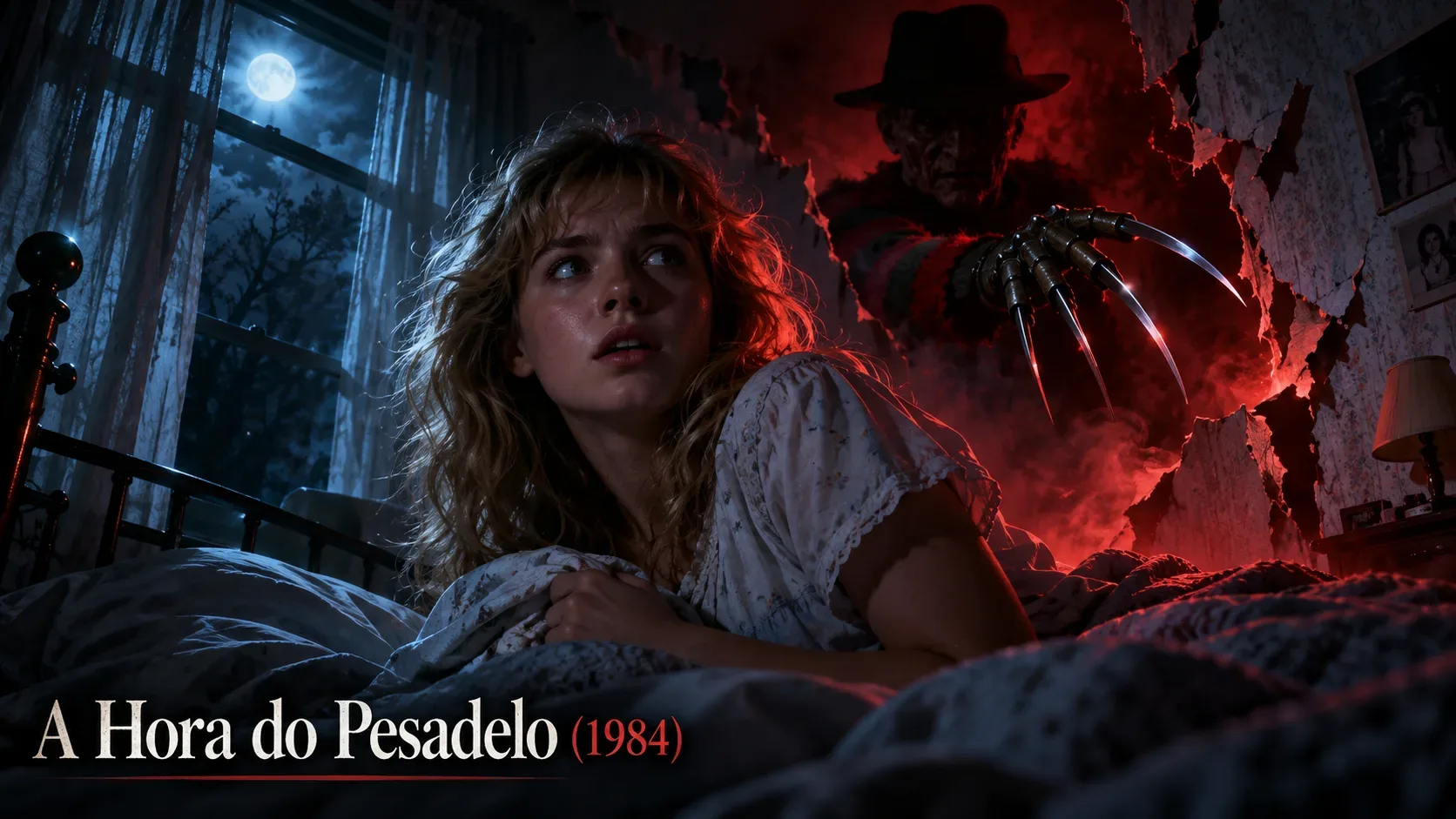
Written and directed by Wes Craven, A Nightmare on Elm Street (1984), released in Brazil as A Hora do Pesadelo, follows Nancy Thompson, played by Heather Langenkamp, as she tries to survive a murderer who attacks people in their sleep. This recap covers only the original 1984 film, not the 2010 remake.
Story recap: from Tina's nightmares to Nancy's discovery
The horror begins when Tina Gray dreams of a burned-faced man in a hat and a bladed glove pursuing her. She wakes to find her nightgown torn, suggesting that the dream has left a physical mark. Tina discovers that Nancy, Nancy's boyfriend Glen Lantz, and Rod Lane have also been experiencing disturbing dreams.
When the group spends a night at Tina's house, she is chased again and violently killed in her sleep. Rod, who is in the room, witnesses the attack without seeing the attacker. Because he was next to Tina, he becomes the prime suspect and is arrested by Nancy's father, police lieutenant Donald Thompson.
Nancy begins to recognize the pattern after falling asleep at school. She sees Tina inside a body bag and follows the vision into a boiler-room setting, where the man with the glove pursues her. To wake herself, she burns her arm against a hot pipe; the burn remains after she opens her eyes. Later, blades almost pull her beneath the bathwater. The threat does more than create frightening images: its effects cross from sleep into waking life.
She tries to protect Rod after realizing the attacker has entered his jail cell as well. Her warning cannot prevent his death: his bedsheet hangs him while he sleeps. The police interpret the event differently, while Nancy becomes increasingly desperate to stay awake.
Who is Freddy Krueger, and why does he target the teenagers?
During an examination at a sleep clinic, Nancy wakes injured, with a streak of white hair, and holding a hat she seized from her pursuer in a dream. Inside it is the name Fred Krueger. The object gives her tangible evidence to confront her mother, Marge Thompson.
Marge finally reveals what the neighborhood's adults have concealed: Krueger was a child murderer who escaped conviction because of a procedural error. The victims' parents found him and burned down his hiding place. Marge kept his bladed glove as a reminder of their revenge and insists that the man is dead.
For Nancy, this history explains why the community's children have become targets. Reading Freddy as a figure returning to punish the next generation fits the narrative, although the movie does not offer a scientific explanation of the precise supernatural mechanism behind his return.
How Nancy sets a trap for Freddy
After discussing their dreams with Glen, Nancy decides to seize Freddy while asleep and bring him into the waking world. Glen is supposed to help keep her safe, but he falls asleep himself and is killed when his bed swallows him and erupts in blood. With her friends dead and the adults unwilling to believe her, Nancy acts alone.
She rigs her house with booby traps, sets an alarm, and deliberately enters a nightmare. Finding Freddy among the boilers, she draws him into a pursuit until the alarm sounds, grabs him, and wakes up with him inside her bedroom. Freddy then triggers the traps, takes several blows, is driven into the basement, and is set alight by Nancy. The danger seems to have crossed from the dream setting into the physical house.
Ending explained: what happens to Nancy's mother?
Nancy's father arrives with police officers, but burning footprints lead to Marge's bedroom. Freddy is seen attacking Nancy's mother; when they try to help, he disappears, and her body sinks into the mattress. Apparently physical events mix with impossible images, setting up the uncertainty of the ending.
Once Nancy is alone, Freddy rises from the bed again. Instead of running, she says she will take back the energy she has given him. The idea recalls Glen's earlier mention of weakening a dream monster by turning one's back on it. Nancy does just that: Freddy lunges at her and disappears.
At this point, Nancy's victory has a clear meaning: she breaks with the fear that sustained the confrontation and refuses to play by Freddy's rules. That describes her strategy, not proof that the villain has been destroyed forever.
Why are her friends alive again in the final scene?
Immediately after Freddy disappears, Nancy opens the bedroom door and steps into a sunny, slightly misty morning. Marge is alive and promises to stop drinking. Tina, Rod, and Glen, all of whom died earlier, arrive in a convertible to drive Nancy to school. The reunion suggests an impossible restoration of what came before.
Then the car's roof closes over them, revealing red-and-green stripes like Freddy's sweater, and the car drives away with the four young people trapped inside. As Marge waves, Freddy's arm bursts through the small window in the house's front door and drags her inside. The children's rhyme associated with the murderer returns.
The film never explicitly establishes whether Nancy never woke up, entered a second dream, or experienced a final supernatural sting. The simplest reading is that the pleasant morning is not a safe waking reality: Freddy's signs are still present. The reappearance of Nancy's friends does not establish that their deaths were reversed in the story's real timeline.
Did Nancy really beat Freddy? What the filmmakers said
The answer depends on where we stop. During the bedroom confrontation, yes: Freddy loses power in the face of Nancy's defiance and vanishes. By the end of the released film, a permanent victory is not confirmed: the car sequence and attack on Marge preserve the danger and leave her triumph unresolved.
The ambiguity is not just a fan theory. In interviews revisited by Rolling Stone, Craven said he favored a quieter ending, with the young people driving away without the spectacular attack on Marge. New Line Cinema's Robert Shaye wanted a final horror jolt. Shaye has said their disagreement was chiefly about the ending's impact, not necessarily about setting up sequels.
In The Ringer's 2024 oral history, Shaye recalled filming and testing different endings. Heather Langenkamp offered her own reading: Nancy's attempt to defeat Freddy appears to succeed, but the dream keeps going and the movie never reveals how her experience ends. That is the actress's interpretation, not a definitive answer supplied by the film itself.
The 1984 ending therefore preserves both Nancy's courage and the instability of the dream world. Later installments may develop the character's fate, but they should not erase the ambiguity of the original theatrical film.