Spoiler warning: this article reveals the full story and ending of Night of the Living Dead (1968).
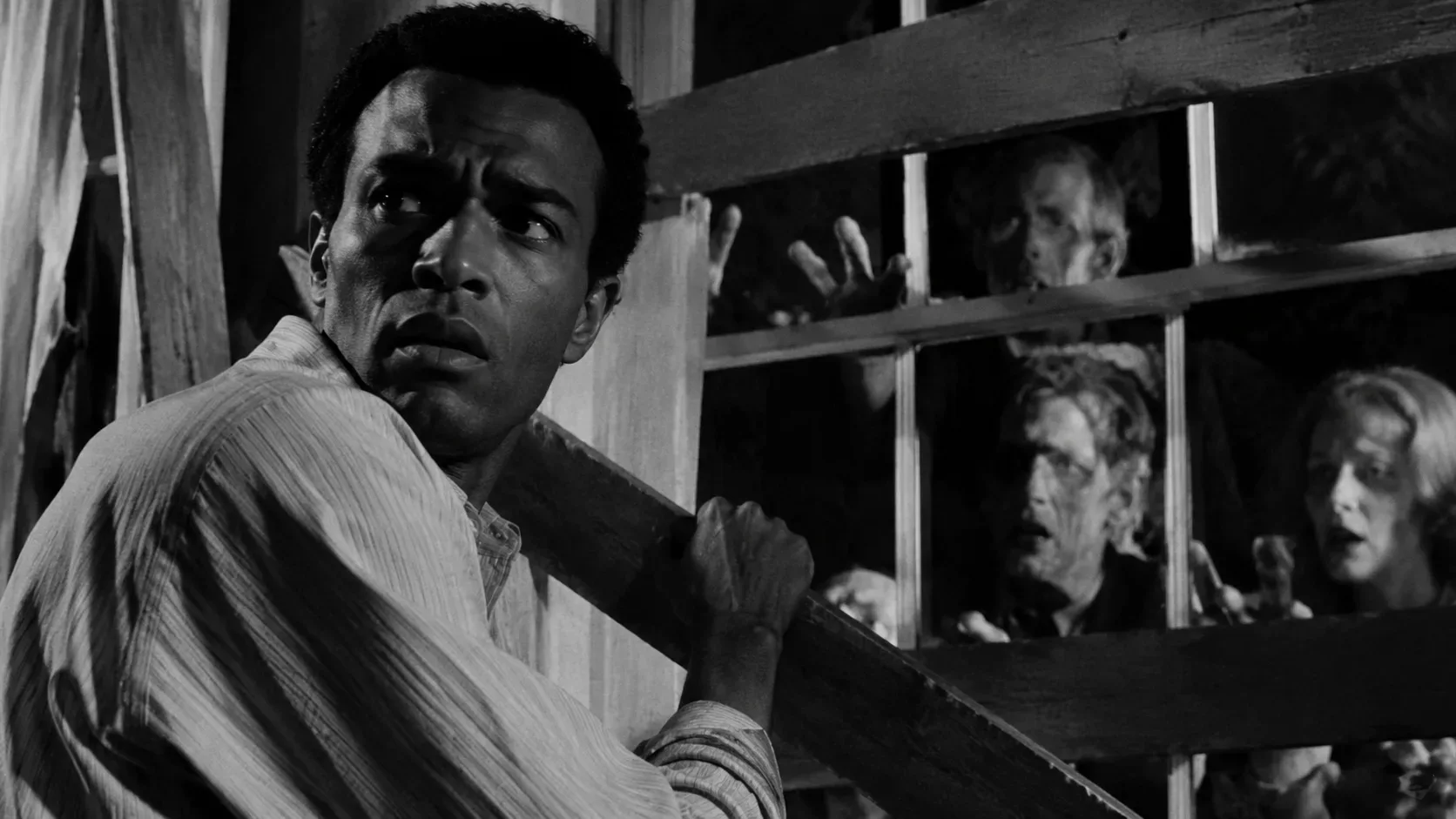
Ben dies because a member of an armed group fighting the living dead mistakes him for one of the creatures and shoots him in the head. Ben has survived the night by hiding in the besieged farmhouse's cellar. His death comes in the morning, when the danger appears to be receding. In the plot, the shooting is presented as a case of mistaken identity; casting a Black lead, played by Duane Jones, also opens the ending to interpretations involving racism and institutional violence.
Directed by George A. Romero and written with John A. Russo, Night of the Living Dead follows strangers trapped in a rural Pennsylvania farmhouse. Understanding its last scene means following two stories at once: the dead advancing outside and the living turning against each other inside.
Story recap: from the cemetery to the farmhouse siege
Barbra flees while Johnny disappears
Barbra and her brother Johnny visit their father's grave when a strange-looking man attacks them. Johnny falls during the struggle, and Barbra escapes to a farmhouse. Inside, she discovers a dead body and realizes more attackers are approaching. At first, neither she nor the audience has a reliable explanation for what is happening.
Ben organizes the defense and discovers other refugees
Ben reaches the house looking for shelter, fights off attackers and starts boarding up the doors and windows. He gathers supplies, seeks information on radio and television and tries to protect the deeply shaken Barbra. He then discovers five more people hiding in the cellar: Harry and Helen Cooper, their daughter Karen, and the couple Tom and Judy.
Karen was injured in an attack, and her condition is deteriorating. Harry insists that everyone lock themselves in the cellar; Ben favors defending the main floor, where he can watch the outside and respond. Tom tries to help, but the power struggle between Ben and Harry undermines decisions that need to be made together. As more of the dead arrive, time is running out.
The news helps but does not end the danger
Broadcasts report that dead people are becoming active again and attacking the living. They also explain that fire and serious injuries to the head can stop them. One televised hypothesis connects the phenomenon to radiation from a space probe; the film does not establish this hypothesis as a definitive explanation. The most useful information is practical: the attackers can be fought, but the crisis extends far beyond the farmhouse.
An escape attempt ends in an explosion
The group tries to use a vehicle and obtain fuel to escape. Tom and Judy take part in the operation, which spins out of control: the vehicle catches fire, explodes and kills them both. The living dead subsequently feed on their bodies. With their chance to flee gone, the remaining survivors rely on barricades in an increasingly surrounded house.
The defense collapses overnight
When the horde breaks into the house, the conflict between Ben and Harry reaches its peak. Harry tries to assert control with the gun, Ben regains control and shoots him. Harry collapses in the cellar, where Karen, now transformed, begins eating her father's body. Helen finds her daughter in that state and is killed by her. Upstairs, Barbra recognizes Johnny, now among the dead, and is dragged away by the crowd.
Ben retreats alone to the cellar, locks the entrance and holds out until daybreak. There he finds the dead Coopers and shoots them when they become a renewed threat. The space Harry had defended as a refuge ultimately helps Ben survive the invasion, although that does not mean Harry's plan, on its own, would have saved everyone.
Timeline of the survivors and their fates
| Stage | What happens | Consequence |
|---|---|---|
| Cemetery | Johnny is attacked; Barbra escapes. | Barbra reaches the farmhouse alone. |
| Initial defense | Ben secures the house and discovers five people in the cellar. | The group argues about how to survive. |
| Escape plan | Tom and Judy try to obtain fuel. | Both die when the vehicle catches fire and explodes. |
| Break-in | Ben shoots Harry during the struggle over the gun. | Harry dies in the cellar. |
| Family collapse | A transformed Karen attacks Helen; Johnny reappears among the dead. | Helen dies and Barbra is dragged out of the house's protection. |
| Final hours | Ben shelters in the cellar and confronts the reanimated Coopers. | He is the farmhouse's only living human survivor at dawn. |
| Armed group's arrival | A shooter mistakes Ben for one of the living dead. | Ben is killed and his body taken to the corpse-burning fire. |
Why does the farmhouse defense fail?
The tragedy does not stem from a single wrong choice. The threat escalates, but the people inside also lose their ability to cooperate. Three breakdowns explain much of the outcome:
- Divided leadership: Ben and Harry clash over the main floor and the cellar. Their dispute prevents a consistent strategy.
- Failed escape: the attempt to secure fuel ends in fire, kills Tom and Judy and removes the group's clearest way out.
- Danger within the shelter: Karen is infected and transforms in the cellar. Locking the door cannot keep the threat out when it is already among the refugees.
There is an important irony: when the house is overrun, Ben survives precisely by isolating himself in the cellar. This suggests Harry's position was not completely unreasonable, but it does not prove the others would have survived had they followed his plan from the beginning. The film shows people making decisions under pressure, not a survival manual with a perfect answer.
Ending explained: why is Ben shot?
After surviving the night, Ben hears gunfire and activity outside. A group made up of law enforcement officers and armed men sweeps the area, killing the living dead. When Ben looks out a window, one man sees him and fires without establishing whether he is alive. The shot is fatal. The story shows no careful identification, attempt at conversation or opportunity for Ben to establish who he is.
What the plot explicitly shows is Ben being mistaken for one of the living dead. The film contains no explicit admission that the shooter chose to kill him because he is Black. That distinction matters: the immediate reason indicated by the action and the political interpretation of the imagery are different levels of analysis.
The final images show Ben's body being collected and taken to be burned with the other corpses. Presented as a sequence of still photographs, the scene reduces a man who resisted all night to another body discarded during the cleanup. Help arrives, but it does not save him.
The social meaning of the ending and what Romero said
Duane Jones's central role, the predominantly white armed group and Ben's summary death support a reading connected to racial violence in the United States. A Multiplot! analysis links the final images to the historical iconography of lynching; Stuart Klawans's essay for The Criterion Collection places the film's reception against the political violence of the late 1960s. These are grounded critical interpretations, not explanations spoken by the characters.
In an interview with the British Film Institute's Sight and Sound, Romero said the script had originally envisioned Ben as a white man and that Duane Jones was cast for his acting. According to the director, the screenwriters had not consciously planned a racial theme, although the casting transformed the film's political meaning. Romero also identified the group's failure to rise above individual agendas in a catastrophe as a central concern.
Therefore, saying Ben is killed because of racism as though the film disclosed the shooter's individual intent goes beyond what the scene confirms. Saying his death can represent racism, dehumanization and violent authority is an interpretation supported by the imagery, the context of 1968 and subsequent criticism. Much of the ending's force comes from the gap between those two claims.
What remains unanswered in the 1968 film?
The broadcasts offer tentative explanations for the return of the dead, but the cause is never definitively demonstrated. We also cannot know whether better cooperation would have kept the refugees alive until the armed group arrived. The narrative confirms something narrower and more devastating: Ben escaped the dead inside the house only to be killed by living people who mistook him for one of them.
This recap covers only the black-and-white feature released in 1968. It does not mix its plot with the 1990 remake or other living-dead stories.