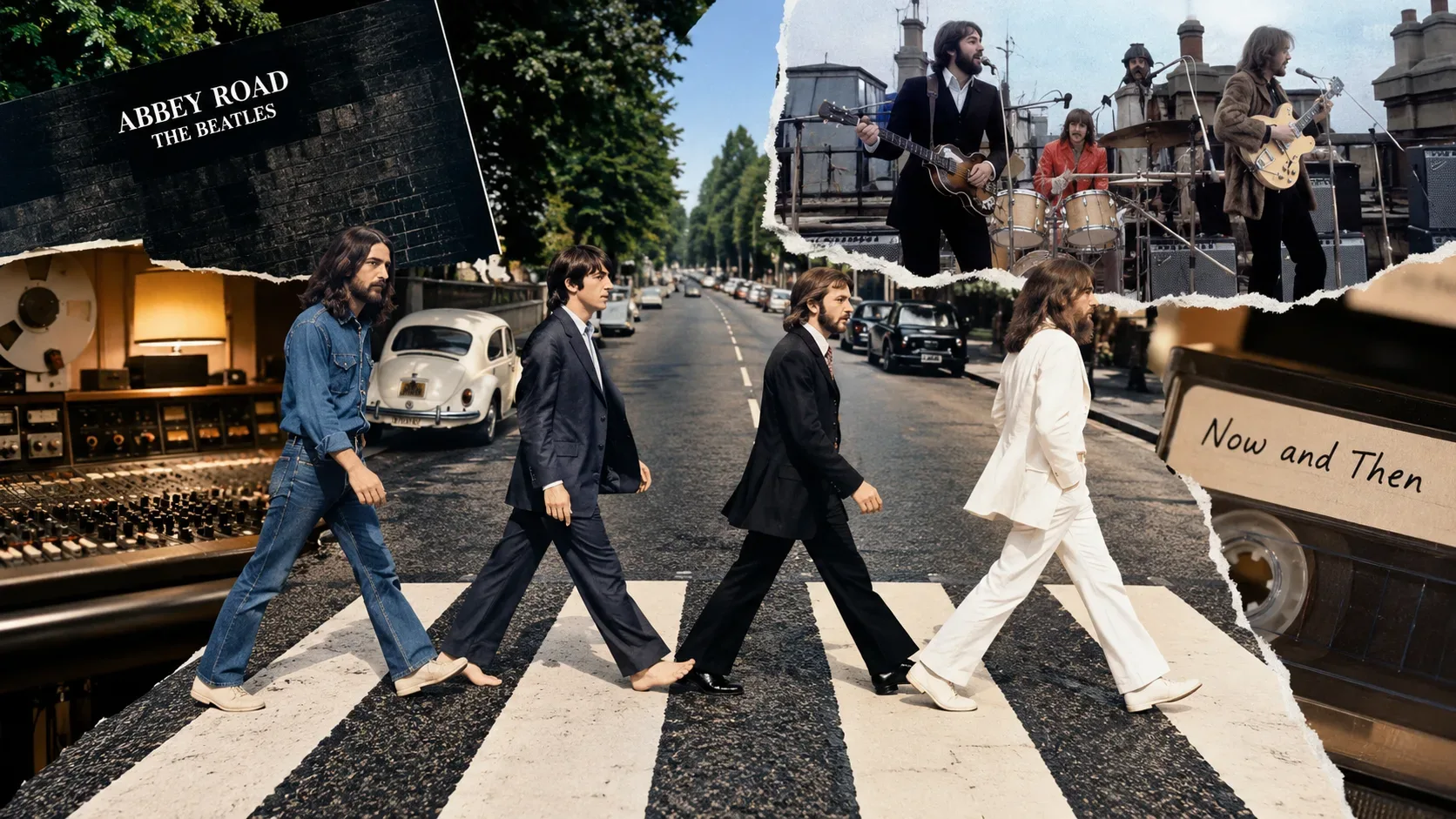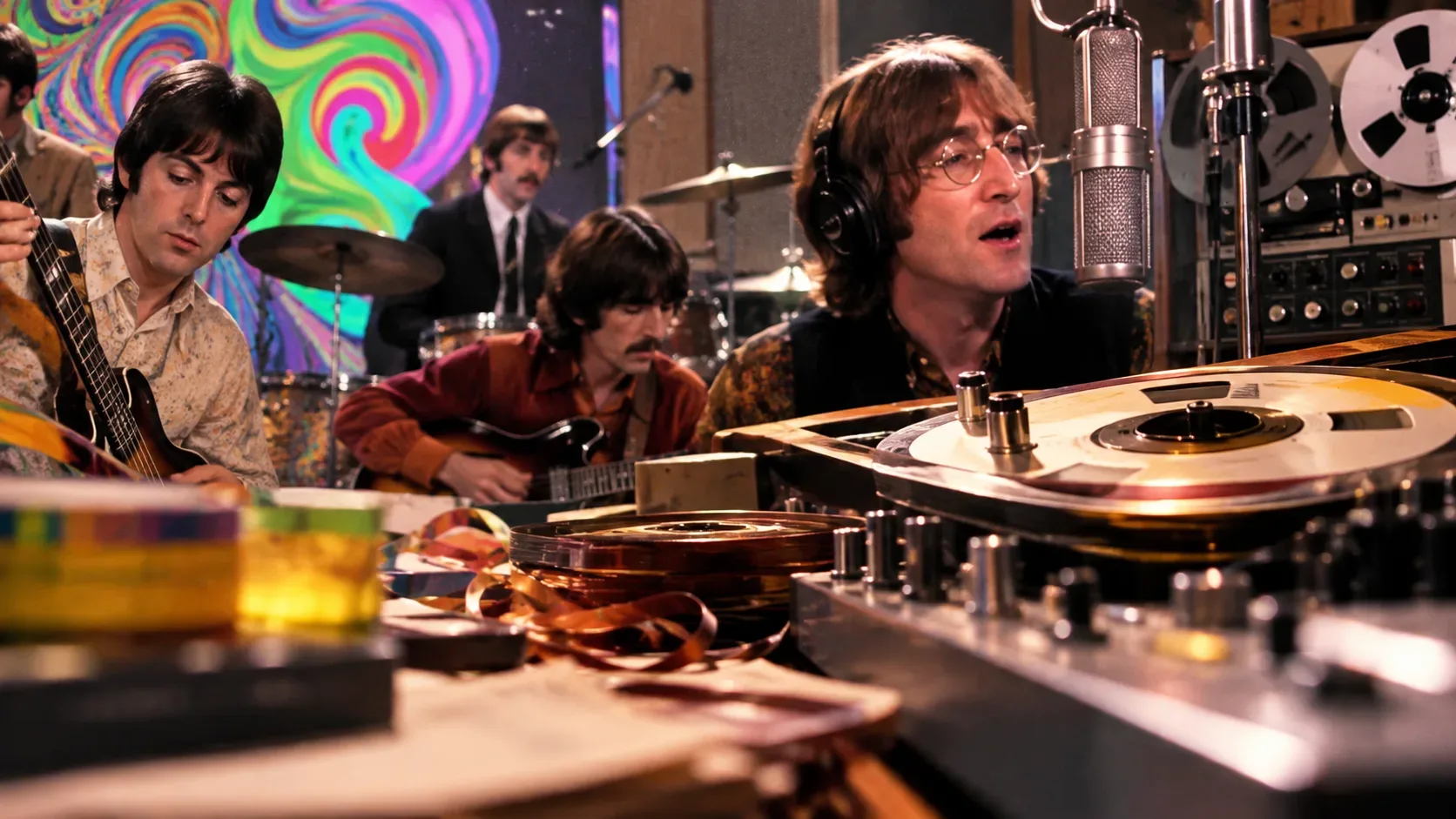
The Beatles recorded Tomorrow Never Knows across three sessions in April 1966 at EMI Studios on London's Abbey Road. They first laid down the rhythm track, then added tape loops and further vocals, and finally completed additional instrumental and vocal overdubs. Changes in tape speed and direction, a rotating Leslie speaker and mixing-desk moves performed almost like a live performance shaped the finished recording.
The song was primarily written by John Lennon and credited to Lennon-McCartney. It was the first track attempted for Revolver but became the album's closing song when the record was released in the UK on August 5, 1966. Its session history makes it possible to distinguish the band's basic performance from the sounds subsequently created and manipulated in the studio.
When was each part of Tomorrow Never Knows recorded?
| Date | Documented stage |
|---|---|
| April 6, 1966 | In Studio Three, the group recorded three takes of Mark I, the working title. Take 3 became the basis of the released song. |
| April 7, 1966 | In Studio Three, tape loops, sound effects and Lennon vocal recordings were added to take 3. |
| April 22, 1966 | In Studio Two, the band recorded further overdubs, including vocals and additional instruments. |
| April 27, 1966 | Nine attempts at a mono mix of the song were made. |
| June 6, 1966 | Three further mono mixes were prepared, including RM 11, used on an early UK pressing. |
| June 22, 1966 | The stereo mix was completed as work on Revolver came to an end. |
| August 5, 1966 | Revolver was released in the UK, with Tomorrow Never Knows as its final track. |
Recording and mixing were therefore separate stages: the instruments and effects were captured in April, while decisions about their final balance continued into June.
What did the April 6 backing track contain?
The first Revolver session began with the song still known as Mark I. The Paul McCartney Project's session history identifies three takes; the third, unlike the first, formed the foundation of the released recording. Ringo Starr's insistent drum pattern, Paul McCartney's bass and the sustained tambura sound associated with George Harrison supported a piece largely anchored to a fixed harmonic centre, drawing on Indian music.
That arrangement left room for Lennon's voice and for sounds still to be introduced. The track did not need frequent chord changes or a conventional instrumental solo to create movement. Shifts of texture, unexpected entrances and changes in timbre supplied it instead.
How did the tape loops work?
A tape loop is a short length of magnetic tape joined end to end so that the recorded sound repeats. In 1966, there was no digital program for copying, reversing or speeding up an audio file. Sounds had to be recorded, tape cut and joined, and the loop run through a machine while different speeds and playback directions were tested.
Paul McCartney played a leading role in bringing experiments with homemade loops to the sessions, while the other Beatles also contributed material. The band's official Revolver announcement identifies one example: Paul's voice, sped up until it resembled a seagull's cry. It was a processed human voice, not an actual recording of a bird.
On April 7, selected loops ran on machines stationed in different rooms of the EMI complex. Technicians kept the moving tape under tension, sometimes using pencils, while the signals fed into the mixing console. The band, producer George Martin and the engineering team combined those sounds using level and positioning controls. Their performance was recorded onto the existing track; different passes could yield different arrangements of the effects.
It is therefore more accurate to describe a live assembly of tape loops recorded in the studio than to imagine a single tape automatically running through the entire song. Accounts by participants and later researchers differ on the exact number of loops prepared or auditioned, and the identity of several individual noises remains disputed.
How did John Lennon's voice acquire its distant sound?
Part of Lennon's vocal was routed through a Leslie cabinet, a device normally used with Hammond organs. Its rotating speakers continuously altered the sound's projection and perceived frequencies, adding an unusual, pulsing quality to a pop vocal. Lennon wanted a remote, chant-like sound, and the cabinet helped produce it.
The Beatles' official song page also documents automatic double tracking (ADT), which thickened the vocal image by combining it with a slightly displaced second playback. The Leslie and ADT were different processes: one changed the vocal timbre and sense of motion; the other made it sound doubled or fuller. Neither should be confused with the backwards guitar, another element identified in official material about the song.
Who contributed to the final recording?
Lennon was the principal songwriter and sang the lead. McCartney played bass, took part in overdubs and was central to the tape experiments; Harrison contributed tambura and other string instruments associated with the sessions; and Starr supplied the drum pulse and additional percussion. The April 22 records include further vocals, guitar, piano, sitar, tambura, tambourine and organ, but the surviving descriptions do not attribute every second of every effect to an individual Beatle with equal certainty.
George Martin produced the record, Geoff Emerick served as recording engineer and Phil McDonald as second engineer. EMI technicians were also needed to operate tape machines in other rooms. The finished arrangement therefore reflects both the quartet's playing and a collective effort to make the equipment part of the music.
Why are there different mixes of Tomorrow Never Knows?
The April recordings still had to be balanced for mono and stereo records. Nine mono mixes were attempted on April 27, followed by three more on June 6. According to the session history compiled by The Paul McCartney Project, RM 11 appeared on an initial UK pressing but was replaced on later mono pressings by RM 8, prepared in April. The stereo mix was made on June 22.
This is a difference in mixes, not evidence that the group recorded an entirely new song. The 2022 special edition of Revolver offers the early take 1 and mono mix RM 11 alongside later presentations of the album. Comparing the opening attempt with the released result reveals how much the tape treatment and overdubs contributed to the sound heard in 1966.
Tomorrow Never Knows remains a striking example of studio experimentation in pop, but that does not establish that the Beatles single-handedly invented every technique it used. What the documents establish is how the group and EMI's staff brought existing methods together on a four-track recording and made the loops and effects part of the composition itself.
Sources and references
- The Beatles: official song page
- The Beatles: Revolver special edition announcement
- The Paul McCartney Project: April 6 session
- The Paul McCartney Project: April 7 session
- The Paul McCartney Project: April 22 session
- The Paul McCartney Project: April 27 mixing
- The Paul McCartney Project: June 6 mixing
- The Paul McCartney Project: song and release history