Spoiler warning: the following article reveals the entire plot and ending of Ferris Bueller's Day Off (1986), including the post-credits scene.
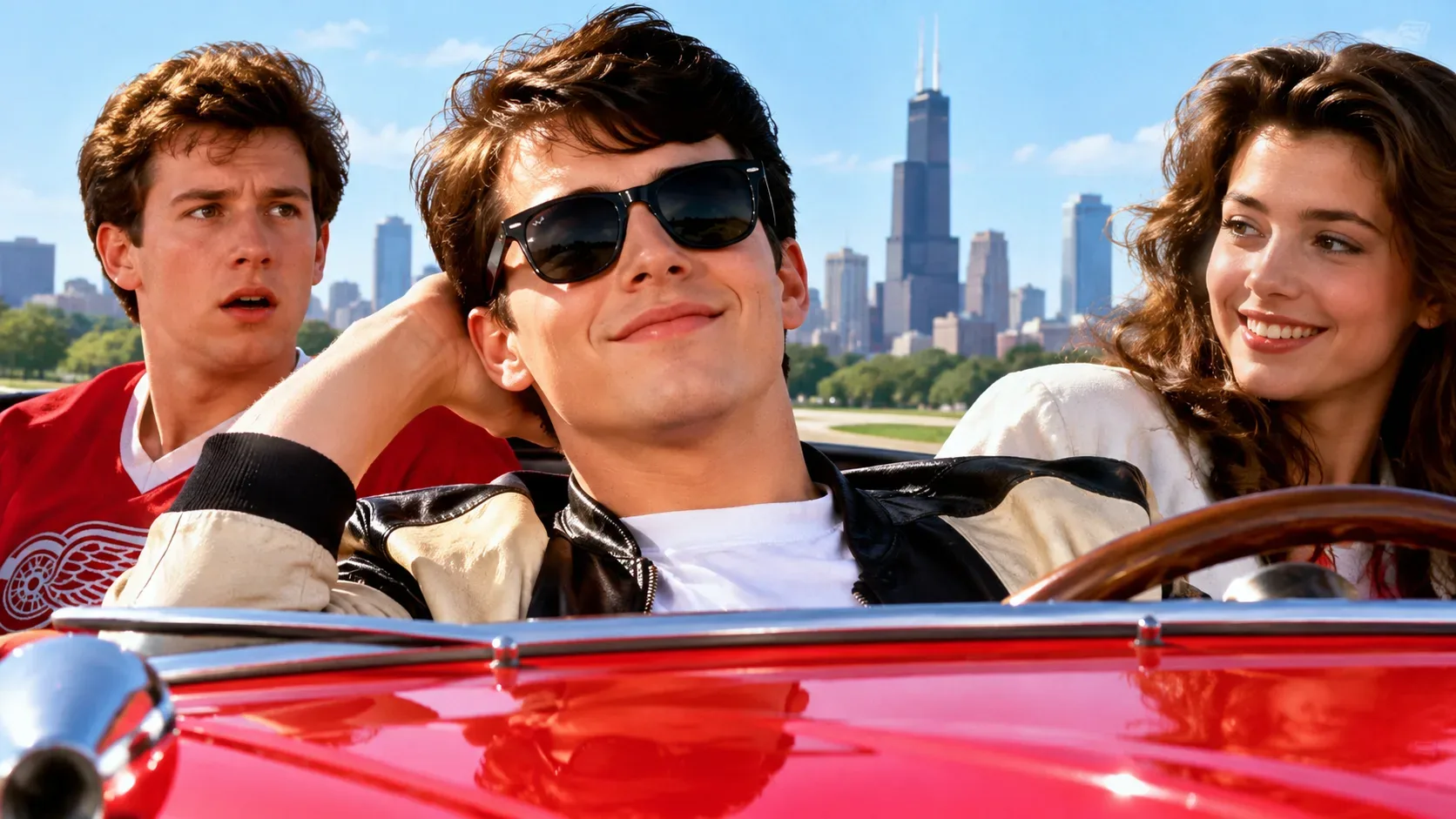
In Ferris Bueller's Day Off (known in Brazil as Curtindo a Vida Adoidado), Ferris pretends to be ill so he can skip school and spend the day in Chicago with his girlfriend, Sloane, and best friend, Cameron. The outing ends with Cameron's father's Ferrari plunging out of the garage. Cameron decides to tell the truth and face his father, while Ferris makes it back to his bedroom without being caught. The film never shows the father's reaction to the wrecked car.
Released in the United States on June 11, 1986, the comedy was written and directed by John Hughes. Matthew Broderick plays Ferris, Alan Ruck plays Cameron, and Mia Sara plays Sloane. The story alternates the trio's adventures with school administrator Ed Rooney's and Ferris's sister Jeanie's efforts to prove he is lying.
Full plot recap: how does Ferris's day off unfold?
- The fake illness. One school morning, Ferris convinces his parents that he is sick. Jeanie sees through the act and resents how easily her brother gets around the rules. Left alone, he sets up tricks to make it look as though he is still at home and calls Cameron, an anxious and dispirited friend, to join him. Ferris also tampers with his school absence record, arousing Rooney's suspicions.
- Picking up Sloane. To get his girlfriend excused from school, Ferris has Cameron call while impersonating Sloane's father and claiming a death in the family. Ferris then turns up at school playing the same father, while a second phone call helps fool the already suspicious Rooney. The trio travels in the Ferrari 250 GT California Spyder that Cameron's father treasures. Cameron is reluctant to lend it because he fears his father's response.
- A trip around Chicago. Ferris, Cameron, and Sloane leave the car with parking attendants and visit some of the city's best-known sites. They stop at an upscale restaurant, a baseball game at Wrigley Field, the Art Institute of Chicago, and the downtown skyscraper district. The attendants also take the Ferrari on an unauthorized joyride, which causes trouble later.
- The parade and an unexpected reputation. Ferris joins a street parade and excites the crowd by lip-syncing to Danke Schoen and Twist and Shout. Meanwhile, word of his supposed illness spreads and students worry about him. He enjoys his freedom without seeing every complication building around him.
- Rooney and Jeanie investigate. In a parallel storyline, Rooney heads to the Bueller home hoping to catch the absent student, runs into the family dog, and suffers several mishaps. Jeanie also returns home, encounters the intruder, and calls the police; the incident ultimately lands her at the police station. There, a conversation with a young man leads her to reconsider why she spends so much energy trying to expose her brother.
- The odometer gives away the trip. When the friends get the Ferrari back, the mileage has risen far more than expected. Cameron goes into shock, frightened of his father. Later, at a swimming pool, he pretends to be unresponsive after entering the water, alarming Ferris, who tries to rescue him. The episode exposes both Cameron's emotional state and Ferris's overconfidence in his ability to control events.
- Trying to turn back the odometer. At Cameron's house, the friends raise the Ferrari on a jack and run its wheels in reverse, hoping the mileage reading will go down. The plan fails. Cameron takes out his pent-up anger at his father on the car, saying that his father values the Ferrari more than his own son. His kicks dislodge the vehicle, which crashes through the glass garage wall and down the ravine.
- A race against time. Ferris offers to take the blame for the car, but Cameron refuses. Ferris says goodbye to Sloane and races home before his parents return. Jeanie spots him in the street and tries to beat him home, still intent on telling on him. Rooney corners Ferris at the house, but Jeanie changes course, pretends her brother has come back from the hospital, and uses Rooney's lost wallet to embarrass him. Ferris gets back into bed in time, and his parents continue to believe he spent the day ill.
What happens to the Ferrari, and why won't Cameron blame Ferris?
Within the story, the Ferrari is badly wrecked when it falls out of the garage. The accident happens after the failed attempt to reverse its mileage, not on the Chicago outing. Cameron kicks the car in anger; when the supports give way, it goes through the glass wall. Ferris had encouraged the use of the vehicle and offers to accept responsibility, but Cameron does not take that escape route.
Cameron's choice is the key to his growth. Throughout the film he fears his father and feels that his own life matters less than the car. By deciding to admit what happened, he stops avoiding that confrontation. This does not mean the family conflict has been settled: his father is not shown hearing the news, and the film does not reveal what punishment, if any, follows. What is shown is Cameron's decision to face him.
Behind the scenes, the vehicle that fell was not an irreplaceable vintage Ferrari destroyed for the production. The American Film Institute catalog documents replicas built for the film, including a fiberglass body used in the crash. The fictional car's fate and the practical filmmaking effect are separate matters.
Why does Ferris get away with it, and what changes for Jeanie?
The ending preserves the contrast between the friends. Cameron accepts the prospect of a real consequence, while Ferris keeps improvising until the last moment and escapes without his parents discovering his absence. Rooney tries to punish him but fails to score the victory he has pursued all day.
Jeanie makes the difference. After spending much of the story resenting Ferris's ability to get away with everything, she realizes that chasing her brother does not improve her own life. When she finds Rooney at the door, she chooses to protect Ferris and expose the school administrator's unauthorized entry into the house. It marks a shift in her outlook, not proof that she approves of every lie Ferris tells.
Does the post-credits scene explain anything?
There are two separate jokes. During the credits, a battered and defeated Rooney accepts a ride on a school bus and endures further embarrassment in front of the students. After the credits, Ferris appears again, looks straight into the camera, and tells anyone still watching to go home because the movie is over.
That final appearance does not reveal a future plot point or change the Ferrari's fate. It extends a device the comedy has used from the beginning: Ferris speaks directly to viewers, breaking the fourth wall. It is a playful sign-off, not a confirmed setup for a sequel.
What does Ferris and Cameron's ending mean?
One interpretation supported by the events is that Ferris teaches the value of enjoying the present, while Cameron is the one who has to turn the experience into a difficult decision. The fun in Chicago does not erase Cameron's anxiety or repair his relationship with his father; it gives him the courage to speak for himself. Ferris remains largely untouched, while his friend accepts that conflict may follow.
In his review published on June 11, 1986, Roger Ebert also read the outing as Ferris's attempt to help Cameron develop self-respect. That is an attributed critical interpretation, not a line of dialogue offering the film's definitive explanation. The story ends before any conversation between Cameron and his father.