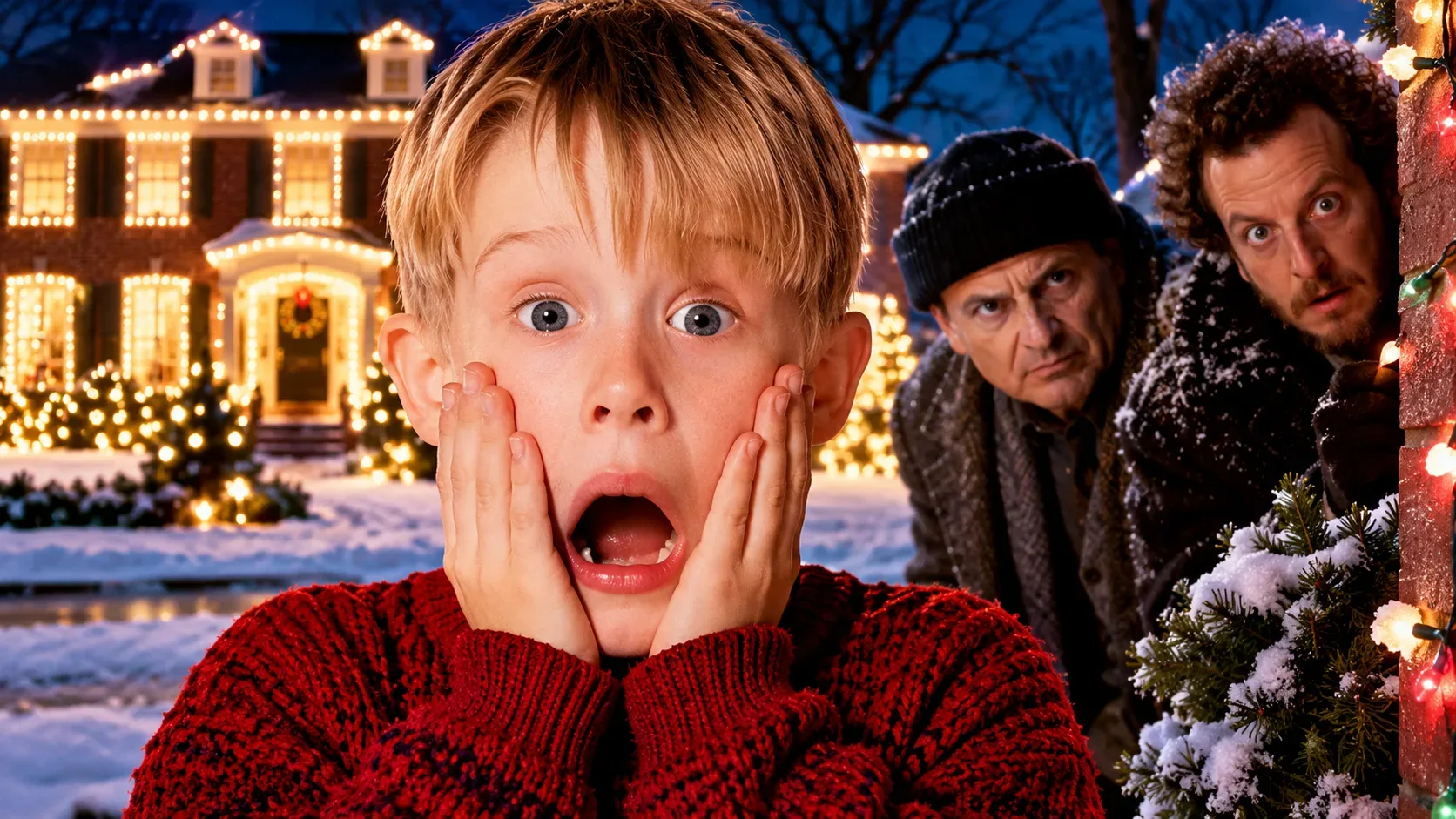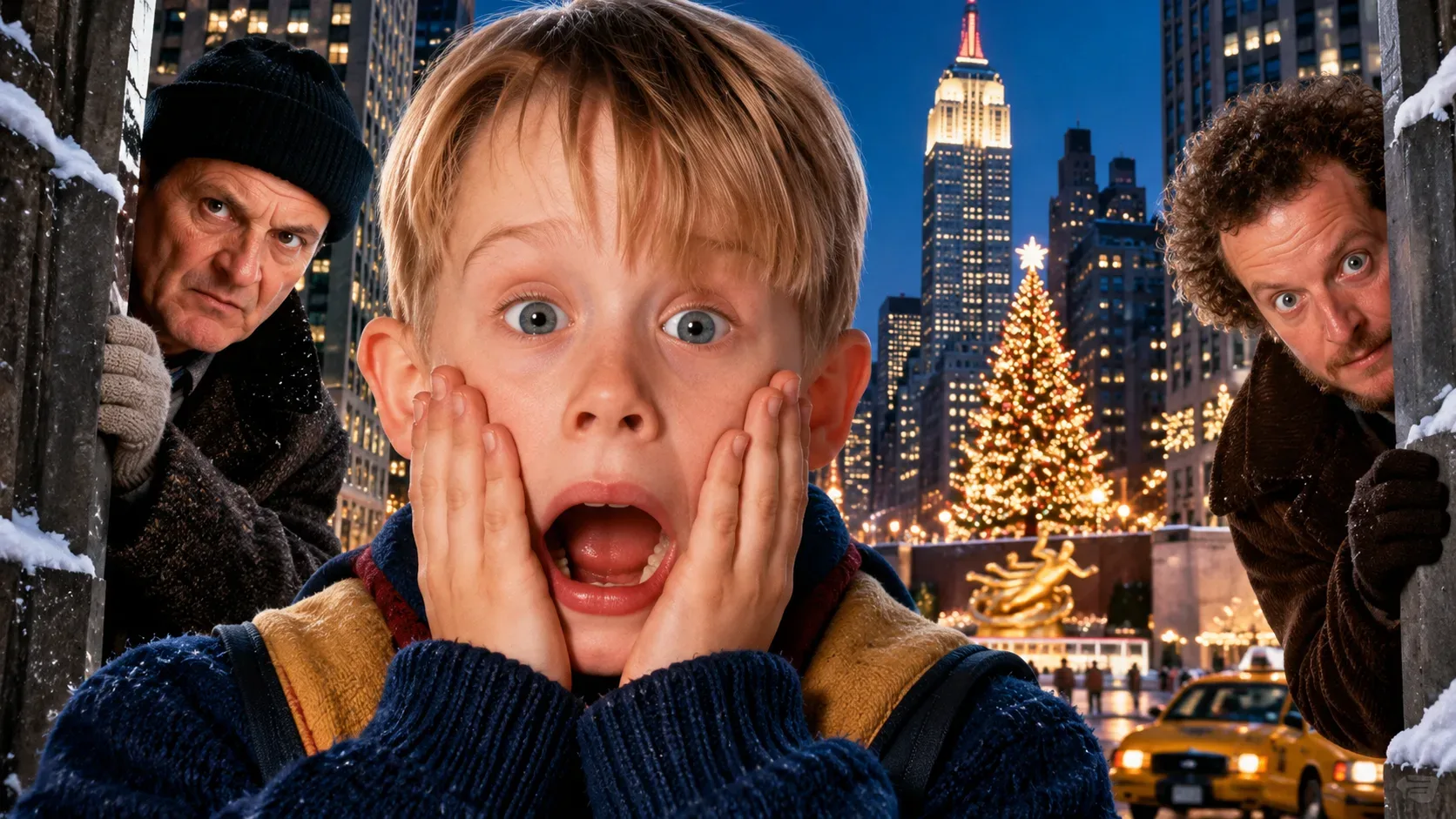
In Home Alone 2: Lost in New York (1992), Kevin McCallister mistakenly boards a flight to New York while his family travels to Florida. He enjoys the city and checks into the Plaza Hotel, but learns that Harry and Marv plan to rob a toy store on Christmas Eve. To stop them, Kevin leads the crooks into his uncle’s house, which is undergoing renovations. The pair are eventually arrested after the Pigeon Lady intervenes.
Spoiler warning: the following sections reveal the traps and ending of Home Alone 2.
How does Kevin end up in New York?
The McCallisters are preparing to spend Christmas in Florida. Amid the rush at the Chicago airport, Kevin follows a man he mistakes for his father and boards the wrong plane. He only realizes afterward that he has arrived in New York, far from the relatives who have landed in Miami.
Instead of repeating the confinement inside a house from the first film, the sequel gives Kevin an entire city to explore. Using his father’s credit card, he obtains a luxurious room at the Plaza Hotel, tours Manhattan and experiences its Christmas bustle. Things become complicated when the hotel staff become suspicious of the card and he leaves the hotel.
Meeting Harry and Marv and the toy-store robbery plan
Harry and Marv, arrested after their crimes in the 1990 film, are free again and roaming New York. In the sequel, they plan to steal money from Duncan’s toy store intended for a charitable cause. Kevin uncovers their scheme and sets out to prevent the robbery.
The toy-store visit also introduces Mr. Duncan and the gift of two decorative turtledoves, symbols of friendship. That keepsake becomes important at the end when Kevin reunites with someone he met in Central Park.
Why does Kevin seek out the Pigeon Lady?
Kevin is initially frightened by the woman surrounded by pigeons in Central Park. Later, she helps him when he is in trouble, and they talk about loneliness, trust and friendship. Their bond changes the way he sees her. It is she who later intervenes in the confrontation with the burglars.
How the traps differ from the first movie
The main chase does not take place at the McCallister home. Kevin sets traps inside his uncle’s vacant townhouse, which is being renovated. Its holes in the floors, stairs and construction supplies provide the setting for a series of exaggerated accidents.
- Kevin hits Marv with bricks dropped from above the house.
- Marv is subjected to staples, falls, paint cans and an electric shock from a tap Kevin has rigged.
- Harry deals with slippery surfaces, a burning hat and an explosion when he tries to put out the flames.
- A swinging metal bar, a huge toolbox and a burning rope intensify the chaotic pursuit.
These incidents belong to the second movie. Although the setup resembles the defense of the house in the 1990 original, the traps used at the McCallister residence should not automatically be attributed to the 1992 film.
How does the confrontation with the Wet Bandits end?
Kevin disrupts the toy-store burglary and attracts the criminals’ attention, leading them to the prepared house. After the traps, he runs toward Central Park, but Harry and Marv catch him and threaten him. The Pigeon Lady appears and throws bird food over the two men: a flock of pigeons surrounds them, buying time for the police to arrive and arrest them.
The name Wet Bandits recalls the original movie. In the sequel, the criminals call themselves the Sticky Bandits, a distinction that helps identify which adventure is being discussed.
Kevin’s reunion and one last Christmas keepsake
While searching for her son, Kate realizes Kevin might be near a large Christmas tree and finds him at Rockefeller Center. They reconcile. On Christmas morning, Mr. Duncan sends presents to the hotel in thanks for what Kevin did for his store.
Kevin returns to Central Park and gives the Pigeon Lady one of the decorative turtledoves from the toy store, celebrating their friendship. The ending adds one final joke about the Plaza’s room-service bill. The conclusion therefore resolves the robbery while giving Kevin a friendship he did not have at the start of the trip.
What actually changed between 1990 and 1992?
The premise of a child separated from his family and two burglars defeated by traps remains, but the story’s geography changes everything: the airport and hotel set the mishaps in motion; the toy store and Central Park establish the stakes; the renovated house hosts the blows. Directed by Chris Columbus and written by John Hughes, the film was released in US theaters on November 20, 1992, according to 20th Century Studios.