Spoiler warning: this article reveals the ending of Other Mommy (2026) and the conclusion of the novel Incidents Around the House.
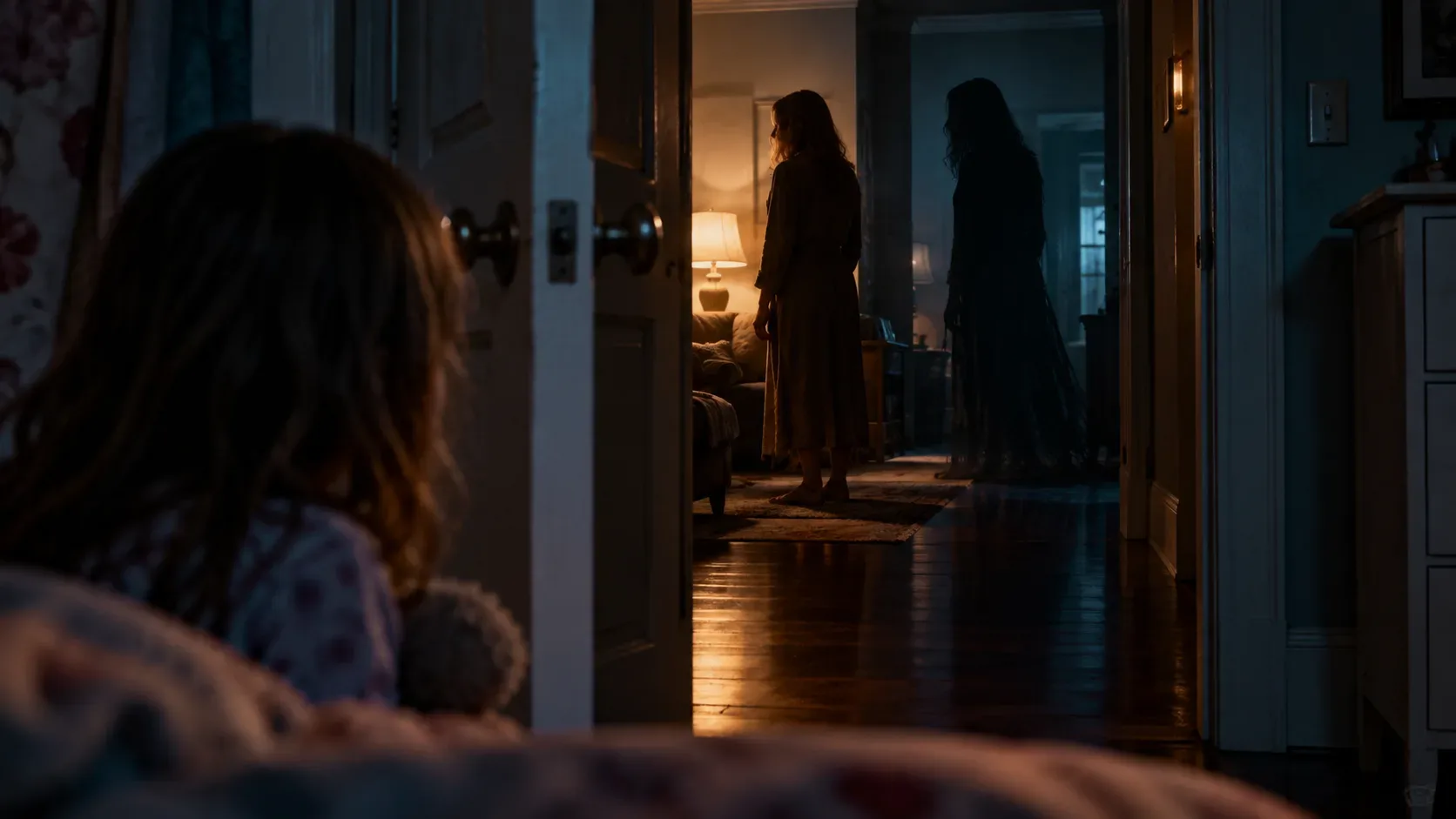
Bela resists Other Mommy because she realizes the creature is using her pain to sell her a false promise of protection. The entity needs the girl's permission to take over her body and live as a human. In the film, Bela pretends to consider the offer, confronts the impostor and prevents the possession. In Josh Malerman's novel, however, she ultimately lets the creature in and loses control of her own body. That is the decisive change between the two endings.
Directed by Rob Savage and written by Nathan Elston, the film adapts the novel published in 2024. Jessica Chastain plays both Ursula, Bela's mother, and her supernatural double; Arabella Olivia Clark plays Bela, while Jay Duplass plays Russ, the father she calls Daddo. Other Mommy opened in Brazilian theaters as Outra Mamãe on October 8, 2026, and in U.S. theaters on October 9.
What does Other Mommy want from Bela?
The creature's repeated request to enter the child's heart has a concrete meaning: it wants to take Bela's place in the world. It can impersonate humans, particularly Ursula, but gaining permanent access to the child's body requires her consent. That distinguishes possession from the physical assaults the entity can already commit. Hurting other people or copying their faces does not mean it has received permission to replace Bela.
The monster tries to make that decision emotionally tempting. Rather than acting only as a threat, it offers affection, attention and the prospect of a place without pain. By exploiting problems in Ursula and Russ's marriage, it encourages Bela to believe it could be a better mother than her own. This is a self-serving offer: apparent tenderness is the tool it uses to obtain the child's body.
How do her parents' secrets lead to the confrontation?
The entity did not create every problem within the family. Ursula's relationship with Frank, a friend of Russ, reveals tensions that predate the haunting. In the movie, when Bela wishes Frank would go away, Other Mommy uses her words as an excuse to kill him in front of the family. The incident demonstrates the creature's ability to manipulate a child's wishes, but it is not the consent required to possess Bela.
After failed attempts to escape and seek paranormal help, the parents return to their house. During the last confrontation, Ursula reveals that Russ is not Bela's biological father: Bela was conceived during Ursula's previous marriage. Ursula also admits she had not wanted to become a mother, while insisting that she loves her daughter. Bela is devastated. The entity seizes on her pain to offer, once again, to enter her heart.
Why can Bela resist in the film's ending?
In the bedroom, Other Mommy even takes Bela's appearance, offering a hug and a life without suffering. Bela seems ready to give in, but recalls something her grandmother Ruth taught her: pain is part of being alive. A promise to remove it entirely no longer sounds like love. It exposes the entity's lie.
Bela then attacks the false version of herself and destroys its manifestation, refusing the permission it wants. Her victory does not depend on having perfect parents. Instead, she accepts their shortcomings and recognizes that the supernatural alternative is also trying to deceive her. This reading is supported by the ending coverage from JustWatch and Flixlândia: growing up does not erase the hurt, but it stops the monster from using that hurt to take her place.
What happens afterward? Does the post-credits scene change the ending?
Months later, Bela and Russ are shown putting Christmas lights around their home. All three members of the family have survived, but Ursula looks uncomfortable, in contrast to her husband and daughter's happiness. The supernatural threat has been pushed back in that encounter; their marital problems and the difficult mother-daughter relationship have not magically disappeared.
There is also a scene after the credits finish: Other Mommy looks into the camera and makes a short shushing gesture and sound. The moment suggests the entity may still exist. It does not show Bela possessed, reverse her refusal or confirm a sequel. The film therefore ends this attempt at possession while leaving the creature's ultimate survival unresolved.
What changes between the book and the movie?
Josh Malerman's Incidents Around the House, published in June 2024, revolves around the same request to enter Bela's heart. The adaptation changes both the nature of the attacks and the child's final answer. These are the main differences, with each event assigned to the correct version:
| Element | 2026 film | 2024 novel |
|---|---|---|
| The entity's appearance | Convincingly imitates human faces, especially Ursula's. | Has less stable features, almost birdlike traits and a disturbing smell. |
| Paranormal investigation | A séance organized by Ruth ends in a deadly attack on the investigators. | The fraudulent specialists admit they cannot confront the presence. |
| Danger outside the home | A ball pit at a family entertainment venue becomes a supernatural setting. | A corresponding scene happens at a playground and involves Bela falling. |
| Frank's fate | The creature kills him violently in front of the family. | His death is reported to the characters, without the same explicit scene. |
| Ending | Bela refuses possession and stays with Ursula and Russ. | Ruth dies, the entity impersonates her, the parents are overcome and Bela says yes. The creature takes her body while her consciousness enters the space the monster came from. |
The novel's harshest turn is Bela losing every source of support: she finds Ruth dead and her parents lying motionless after the attack. The story points toward a fatal outcome for the adults, although the essential point is that nobody can protect her. Alone, Bela accepts the offer she had repeatedly refused. The movie reverses that outcome: she sees through the deception before surrendering her body.
Is this a happy ending or simply a less cruel one?
Bela's survival in the film is clear, while the post-credits reappearance makes it impossible to declare Other Mommy permanently destroyed. Ursula's expression in the epilogue also reminds us that defeating a supernatural presence does not automatically mend a family. The novel replaces this imperfect survival with loss and replacement. Both versions retain the same dramatic rule: the greatest danger comes when the entity turns loneliness and fear into permission to enter.
Sources and references
- Filme B: Brazilian theatrical release date
- NBCUniversal: U.S. release and film production details
- Penguin Random House: publication and overview of Incidents Around the House
- JustWatch: explanation of Bela’s resistance and the film ending
- Flixlândia: story analysis, ending and post-credits scene
- GaitherNews: excerpt from William Earl’s Variety comparison
- ComingSoon: account of the post-credits scene