Spoiler warning: this article reveals plot details from Rogue One: A Star Wars Story (2016) and Star Wars: A New Hope (1977).
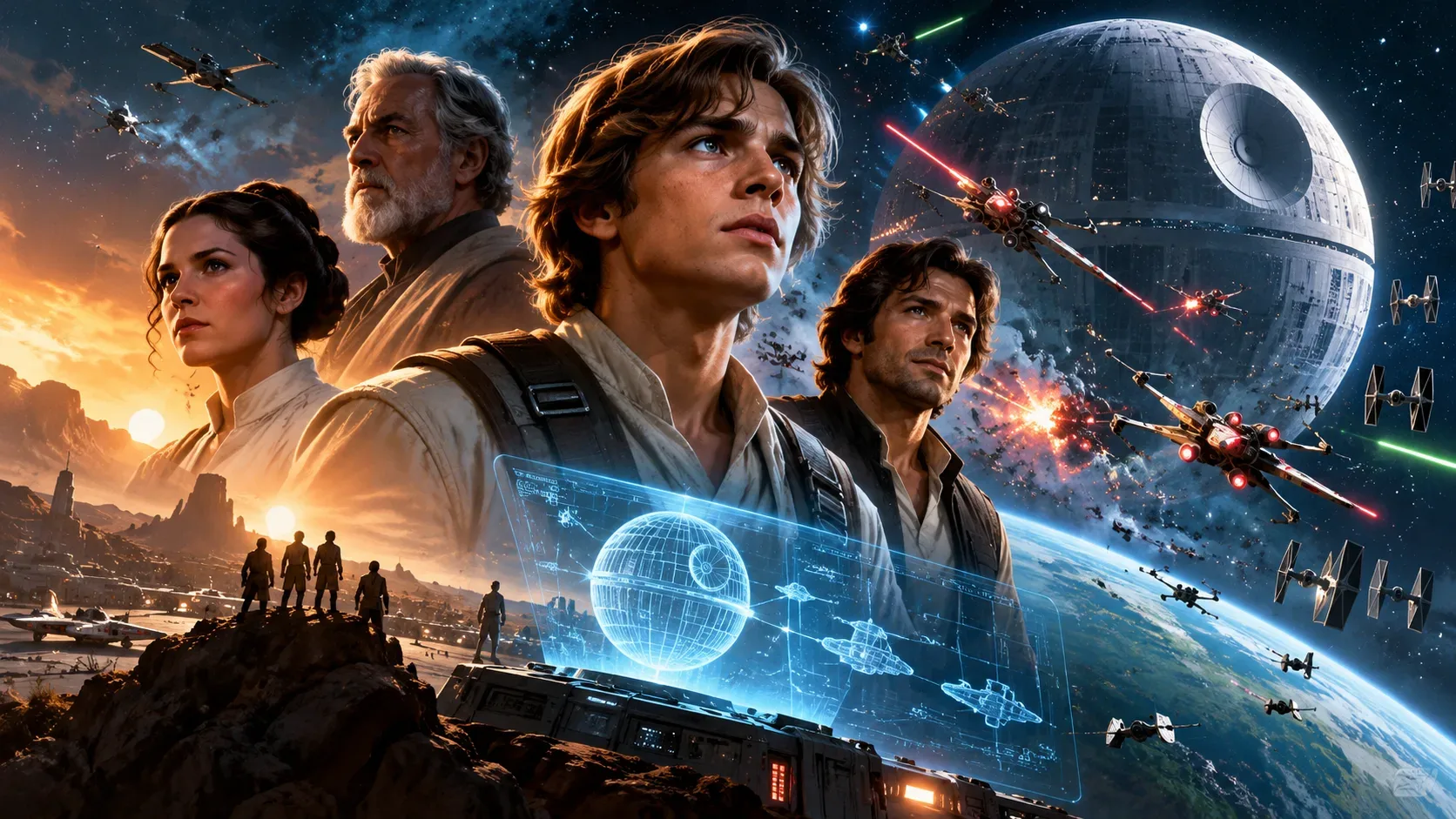
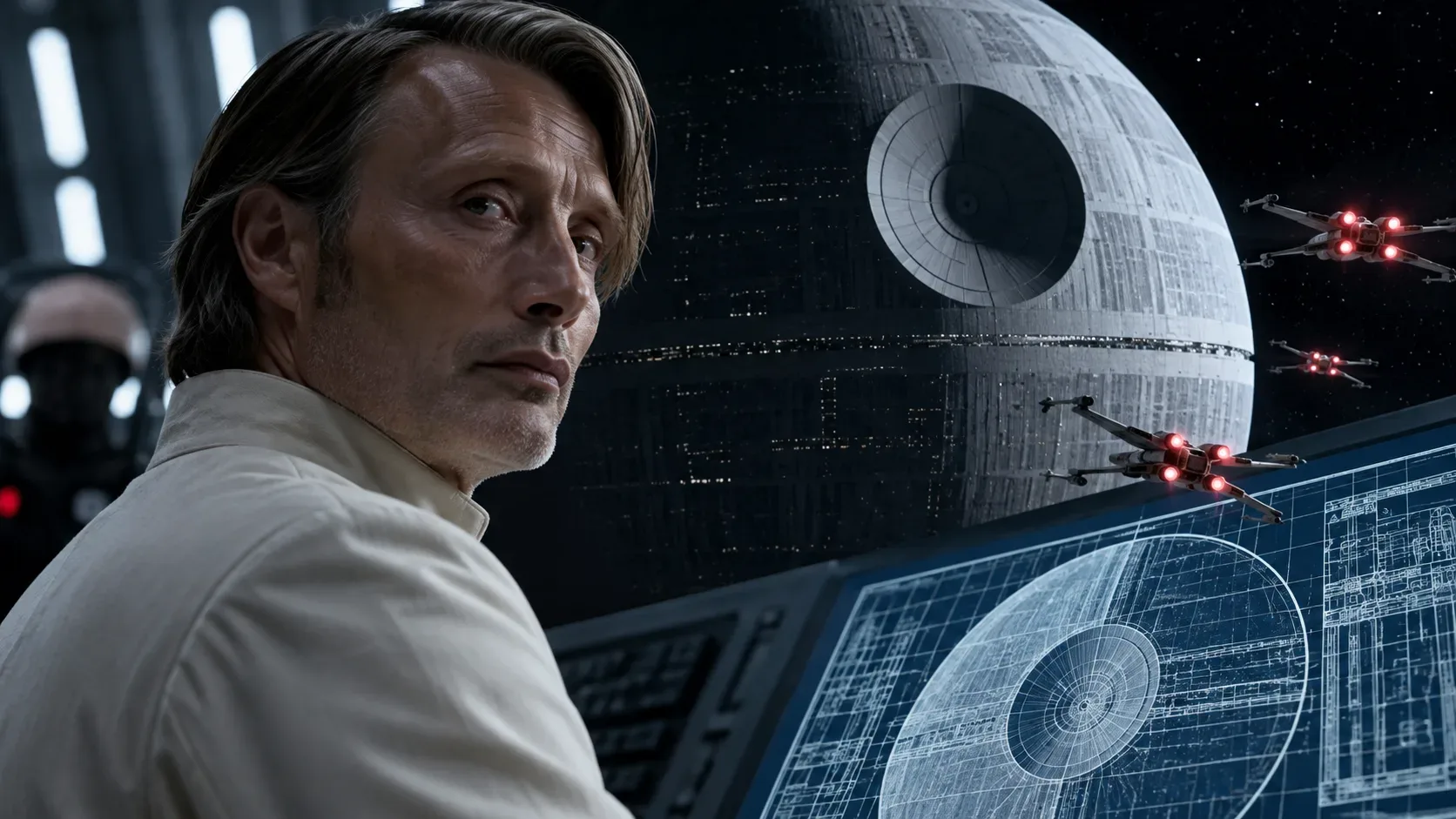
Galen Erso deliberately built a weakness into the first Death Star because he wanted to stop the Empire from using it to destroy planets. Forced by Orson Krennic to work on the project, the scientist chose to sabotage it from within and get the information to the Rebel Alliance. The flaw was real, but knowing it existed was not enough: the rebels still had to obtain the technical plans, work out how to exploit it, and carry out an extraordinarily precise attack.
That is the connection Rogue One establishes with Luke Skywalker's victory in A New Hope. The 2016 film explains the deliberate origin of the vulnerability; the 1977 film shows how it was found and used.
Why did Galen Erso sabotage a weapon he helped build?
Galen was a scientist specializing in kyber crystals and their energy applications. His research became part of the Death Star superlaser's development. According to the Star Wars Databank, he withdrew from the project, fled to Lah'mu with his family, and was eventually found by Krennic, who forced him to return. Galen's later involvement should therefore not be mistaken for voluntary support of the Empire's policy of destruction.
Unable simply to shut the program down, Galen found another way to resist: he continued working on the station while introducing a fatal defect hidden from the Imperial officials in charge. He wanted to give someone a chance to destroy the battle station before it could keep being used against entire populations. The official feature Star Wars Inside Intel: The Death Star explicitly confirms that the weak point was installed intentionally.
There is also a real-world creative reason for this characterization. In a Lucasfilm article published in 2017, Pablo Hidalgo, a member of the group overseeing Star Wars continuity, explained that J. Robert Oppenheimer was an inspiration for Galen: a scientist connected to the creation of a weapon of devastating power and the moral consequences of that work. This is an influence on the screenplay, not a literal equation between fiction and historical events.
Was the weakness in the reactor or the exhaust port?
The two elements serve different purposes. The official encyclopedia says that the Imperial schematics recorded a flaw introduced into the reactor system. That was the structural vulnerability Galen intended, one that could turn localized damage into a reaction capable of destroying the entire station.
In A New Hope, after examining the recovered plans, the Alliance identifies a practical way to reach that system: firing a proton torpedo through a small thermal exhaust port. Luke flies down the trench in his X-wing and makes the decisive shot. The Star Wars Databank describes the discovery of this attack route as the result of studying the stolen blueprints.
It is therefore misleading to reduce the entire sabotage to the claim that Galen simply “put a hole” in the surface. Official sources identify the reactor flaw and explain the route the rebels discovered, but they do not document every engineering modification Galen personally made. The exhaust port is the route of attack; the internal defect makes a successful hit catastrophic.
If Galen knew about the flaw, why did the rebels need to steal the plans?
Because knowing a weakness exists is not the same as knowing its precise location, the systems connected to it, or how to attack it. Galen's message warns that the station can be destroyed; the engineering plans stored on Scarif make it possible to turn that warning into a military operation.
- Galen leaves a lead. He sabotages the project and entrusts a message to the defecting Imperial pilot Bodhi Rook, who delivers it to Saw Gerrera.
- Jyn learns the truth. The scientist's daughter learns that the weapon contains a deliberate vulnerability, but that information does not replace the technical files.
- The Rogue One team reaches Scarif. Jyn, Cassian Andor, and their allies seek the plans in the Imperial archive and manage to transmit them to the rebel fleet.
- The documents reach the Alliance. The data passes through the ship Profundity, is entrusted to Princess Leia, and is stored in R2-D2, making later analysis possible.
- The attack takes place at Yavin. Using that analysis, rebel pilots attempt to hit the exhaust port. Luke makes the shot that destroys the first Death Star.
This sequence distinguishes three contributions that are often blended together: Galen creates the vulnerability; the Rogue One team secures the necessary information; the Alliance and Luke put the plan into action. None of these stages, on its own, explains the entire victory.
Did Rogue One change what happened in A New Hope?
It did not change the 1977 attack or take credit away from Luke and the other rebels. It added an earlier cause for the defect exploited in that battle. In A New Hope, viewers follow the analysis of a weakness identified in the plans; in Rogue One, they learn that a coerced scientist had planted a vulnerability in the design and tried to alert the people who might use it.
That connection also reflects the standalone film's narrative premise: telling the story of how the plans mentioned in the original film were obtained. The concept for Rogue One originated with Industrial Light & Magic's John Knoll. Galen gives the operation an ethical dimension: a weapon built to secure Imperial control carries, hidden within its own engineering, the possibility of its destruction.
The result was not an automatic self-destruct mechanism. Without the message, the theft of the documents, the rebels' analysis, and Luke's successful shot, Galen's sabotage might never have been used. Together, those decisions connect the two films.