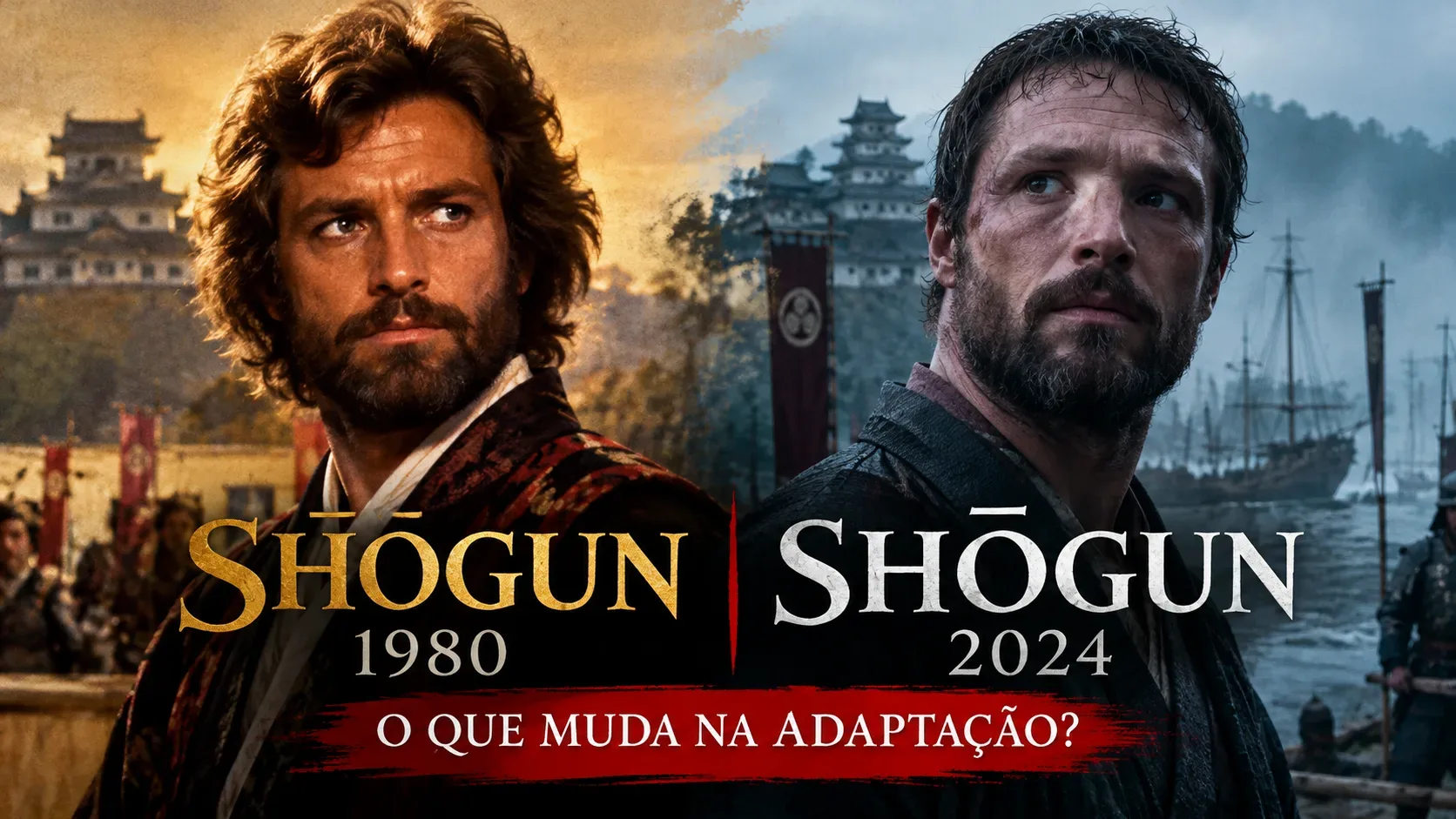
Shōgun (2024) is a new adaptation of James Clavell's 1975 novel, not a continuation of the 1980 miniseries. The most important change is who gets to drive the story. The earlier production emphasizes English sailor John Blackthorne's discovery of Japan, whereas FX's version gives Toranaga, Mariko, and other Japanese characters a far greater share of the perspective. Japanese-language dialogue with subtitles makes that difference apparent, quite literally in what the audience can hear and understand.
The shift was deliberate. In official Disney production coverage, John Landgraf, then head of FX content, explained that the new show set out to tell events from the Japanese perspective as well, rather than concentrating on the European one. That decision shapes the writing, casting, language work, and viewing experience.
Is the 2024 Shōgun a remake of the 1980 series?
In everyday conversation, calling the 2024 show a remake is understandable: television is telling a previously adapted story again. But “a new adaptation of the book” is more precise. Both versions draw from the 1975 novel, a fictional story set in Japan around 1600. They do not share an ongoing television continuity, and watching the older miniseries is not a prerequisite.
The NBC production aired over five nights in 1980, with Richard Chamberlain as Blackthorne, Toshiro Mifune as Toranaga, and Yoko Shimada as Mariko. FX premiered its ten-episode version in 2024 with a new cast: Cosmo Jarvis, Hiroyuki Sanada, and Anna Sawai play those respective roles. Rachel Kondo and Justin Marks developed the newer television adaptation.
Portugal's Observador newspaper described the 2024 production as a fresh interpretation of the novel rather than a simple reproduction of the previous miniseries. The key distinction is that the two shows interpret the same literary source through different television choices.
Why is Blackthorne no longer the sole center of the story?
In 1980, Blackthorne serves as the audience's main way into this world. Viewers encounter customs, power structures, and conflicts alongside the outsider. His disorientation becomes part of the dramatic experience: Japan is frequently filtered through what he knows, witnesses, or can understand.
Blackthorne remains essential in 2024. His arrival changes the political balance, and his relationship with Mariko still matters. Yet the story no longer requires his presence in order to follow what Japanese characters think, say, and decide. Toranaga receives greater prominence as a figure in the struggle for power; Mariko has room for her own political obligations, faith, and personal choices.
The result is not merely swapping one lead for another. It is a redistribution of knowledge and agency: viewers can understand interests Blackthorne does not know about, while the sailor remains an outsider in that world. In Disney's production interview, the producers presented this plurality of perspectives as a way of exploring layers of the novel that the earlier adaptation had compressed.
Japanese dialogue and subtitles are central to the shift
In the original 1980 broadcast, much of the Japanese-language dialogue was left unsubtitled. That brought viewers closer to Blackthorne's inability to understand what people around him were saying. It was a dramatic device with a cost: conversations among Japanese characters could not always convey their full content to the audience.
In 2024, most dialogue is spoken in Japanese and subtitled in the original version prepared for English-speaking audiences. Viewers can therefore follow negotiations, tensions, and positions among Japanese characters without waiting for Blackthorne to be present and have them interpreted for him. Access to information changes, and so does the perspective.
There is another nuance. On FX's official podcast, Justin Marks explains that English heard in certain exchanges between European characters stands in, within the fictional world, for languages such as Portuguese. Japanese dialogue followed a separate process: drafts written in English went through translation, cultural review, and period-language adaptation. English subtitles were then produced from the final Japanese performances, not simply copied from the first drafts. The show therefore does not reproduce literally every language that would have been spoken in 1600.
Which version is closer to Clavell's novel?
That depends on what is being compared. The 1975 book already contains Japanese political struggles and viewpoints extending beyond Blackthorne's journey. According to Michaela Clavell, the author's daughter and an executive producer of the 2024 show, the novel weaves together a complex network of characters and perspectives. By giving those voices more room, FX restores an aspect of the novel that was less prominent in the 1980 miniseries.
That does not make the newer version a complete transcription of the book, nor does it mean the earlier series ignored Japanese characters altogether. Both select, condense, and dramatize the source in their own ways. Describing the 2024 production as a rebalancing of narrative attention is more useful than declaring either adaptation definitively more faithful in every respect.
How did the 2024 production support its different perspective?
The commitment extended beyond writing. Hiroyuki Sanada played Toranaga and worked as a producer, collaborating with Japanese crew members on gestures, clothing, and behavior. FX highlighted the participation of professionals from Japan across departments; a firsthand account published by Japan's Nichibunken research center documents historical consultation on scripts, sets, costumes, movement, and language.
There is also a revealing geographical contrast: the 1980 miniseries was filmed in Japan, while principal photography for the 2024 series took place in Vancouver, Canada. Disney/FX says the pandemic disrupted the original plan to shoot the newer version in Japan. Filming on location and making careful cultural choices are different decisions; a show's fidelity cannot be judged solely by which country hosted the cameras.
Constantine Nomikos Vaporis, a historian at the University of Maryland, Baltimore County (UMBC), notes that the 2024 show foregrounds Japanese characters and takes greater care with period language. He also cautions that stereotypes may persist across the novel and both adaptations. Consultants can improve the grounding of a historical drama without turning fiction into an exact record of the past.
Shōgun in 1980 and 2024: the differences at a glance
| Aspect | Shōgun (1980) | Shōgun (2024) |
|---|---|---|
| Source | Television adaptation of the 1975 novel | New television adaptation of the same novel |
| Narrative center | Blackthorne's experience foregrounded | More space for Toranaga, Mariko, and other Japanese perspectives |
| Japanese dialogue | Largely unsubtitled in the original broadcast | Mostly in Japanese, subtitled in the original English-language release |
| Original format | NBC miniseries shown over five nights | Ten-episode FX season |
| Filming | Shot in Japan | Principal photography in Vancouver, Canada |
The reason to revisit Shōgun in 2024 was therefore not to continue the earlier story or simply replace its actors. FX chose to tell the same conflict without restricting the audience's understanding to the European visitor's gaze. Making Japanese voices accessible redefines the adaptation while preserving Blackthorne's importance to the plot.