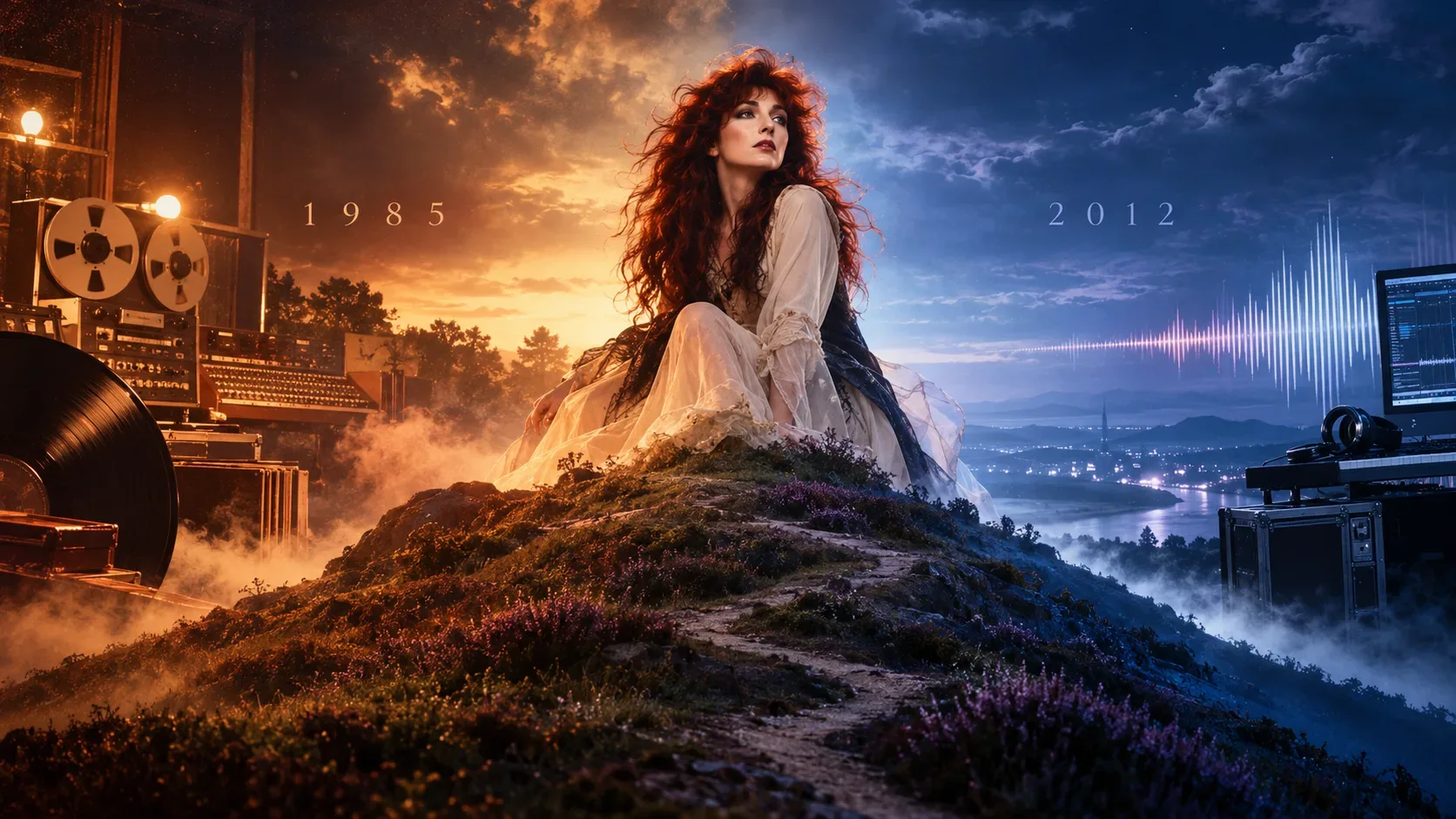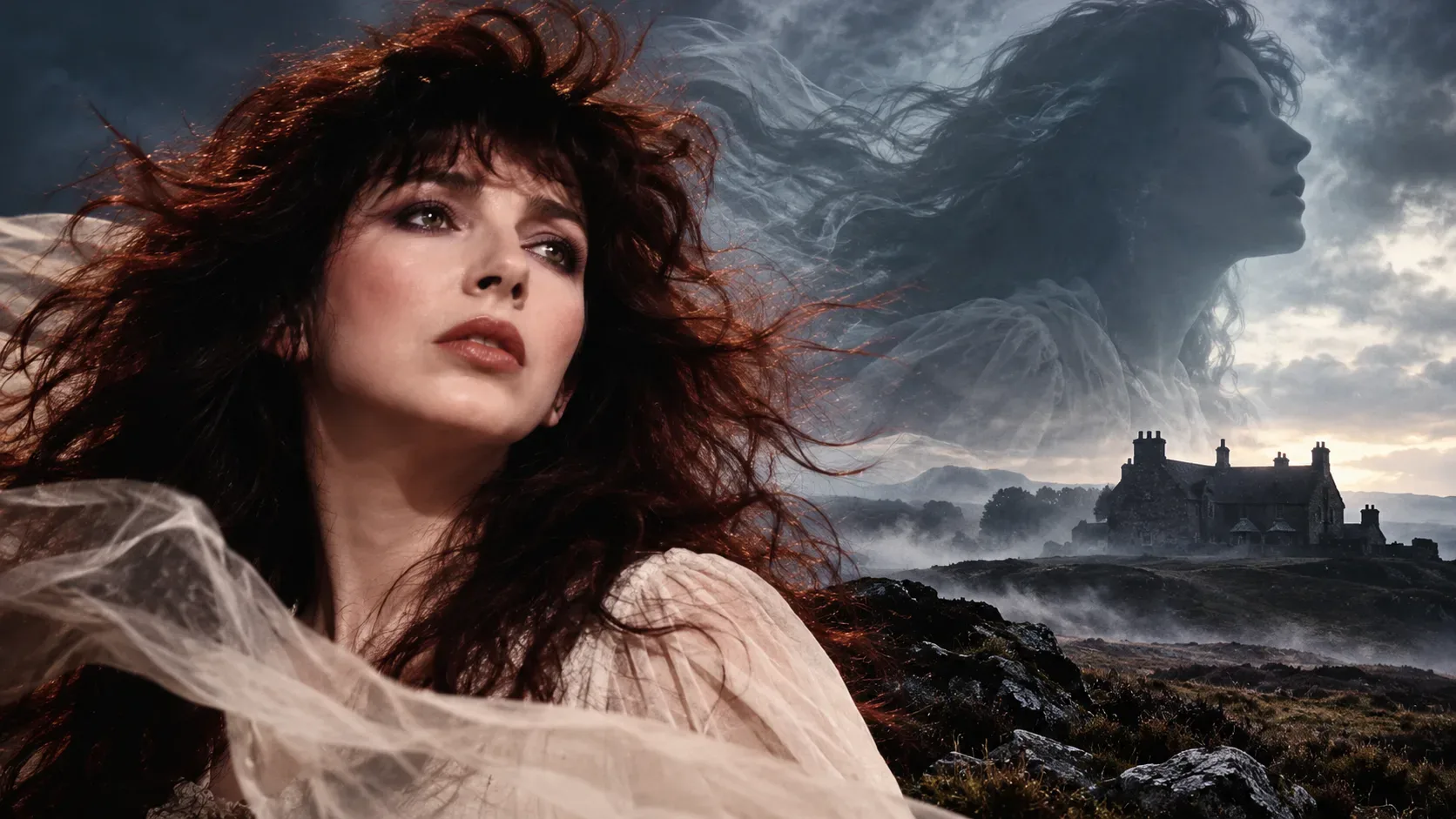
Spoiler notice: this article discusses Catherine’s death and important events from the novel. Kate Bush sings Wuthering Heights as Catherine Earnshaw from Emily Brontë’s novel, speaking from beyond the grave. The decision turns the unsettling image of an apparition at a window into a musical monologue addressed to Heathcliff. Her unusually high vocal register is part of the characterization: in a 1978 interview, Bush explained that she wanted an ethereal sound suited to the voice of a spirit.
The image at the window came before the song
Released as a single in January 1978 and included on Bush’s debut album The Kick Inside, the song was written when she was 18. The initial spark came from images in a screen adaptation of Brontë’s 1847 novel. Looking back on the song, Bush recalled seeing the final minutes of a televised story: a hand appeared outside a window in a disturbing scene that stayed with her.
One detail requires caution. Some accounts identify a 1967 television adaptation; an article from the British Film Institute notes that other retellings point to Robert Fuest’s 1970 film. The image of the window and Bush’s recollection are therefore more secure than an unequivocal identification of the exact production she saw.
The screen encounter did not replace the literary source. Bush turned to Brontë’s text to understand its atmosphere and characters. Saying the song arose solely from an earlier, complete reading of the novel would overlook the pivotal role of the scene she remembered from television.
In the novel, Lockwood sees Catherine at the window
In Chapter 3, the visitor Lockwood spends a night in a room connected with Catherine’s past. During an experience narrated as a nightmare, he encounters a young girl outside the window who identifies herself as Catherine and asks to be let in. This is not a love song delivered directly to Heathcliff. Lockwood tells the story; when Heathcliff hears what happened, he opens the window and desperately calls for the absent woman.
That narrative frame matters. Brontë builds the novel out of mediated accounts, especially those of Lockwood and the housekeeper Nelly Dean. Readers receive other people’s memories, judgments and possible distortions. The apparition belongs to this uncertainty between dream, haunting and desire. The song removes the intermediaries: the voice perceived from outside in the book gets to describe its own feelings in the first person.
The novel is also far more expansive than Catherine and Heathcliff’s romance. It encompasses class pressures, Catherine’s marriage to Edgar Linton, humiliation, violence, revenge and the lives of a second generation. The intensity of their bond does not erase the harm it causes. The ghost’s voice selects one emotional strand of that world without attempting to summarize the entire plot.
Why does Kate Bush sing in such a high register?
The vocal pitch was neither simply an involuntary trademark nor a generic attempt to sound unusual. Interviewed on Ask Aspel in 1978, Bush explained that she had chosen the higher register specifically for this song because she was playing Cathy as a spirit. She wanted an ethereal effect that listeners could associate with that supernatural state.
The effect also comes from the performance: extended phrases, shifts in intensity and a theatrical delivery move between pleading, longing and unease. The idea of someone unable to cross the window becomes a sonic presence. That is an interpretation of an artistic choice, not a claim that a ghost would literally sound a certain way.
What changes when Catherine tells her own story
The crucial change is perspective. In the novel, Lockwood witnesses an apparition and Heathcliff responds to his account; in the song, Catherine speaks and addresses Heathcliff herself. The plea to enter the house becomes the force of an impossible reunion. The University of León observes that the song puts a relatively brief episode from the book at center stage and helps make it an emblem of the entire work.
This also changes how close we feel to Catherine. Instead of encountering her only through other narrators, we hear a voice dramatizing the desire to return. But that immediacy does not make her more reliable or turn a relationship marked by obsession and suffering into uncomplicated love. Part of the song’s expressive power lies in making longing sound beautiful and disturbing at once.
In a study published in 2025 in Darandina, a journal hosted by the Federal University of Juiz de Fora (UFJF), Maria Beatriz Melo Rodrigues and Pedro Afonso Barth examine Bush’s musical and audiovisual adaptation, including two music videos. They highlight the shift in the characters’ perspectives and the creation of new meanings. Their analysis helps define the comparison: the song and videos reimagine Brontë’s world, but do not replace the novel’s architecture.
An interpretation, not a transcription of the novel
Wuthering Heights remains recognizable through Catherine, Heathcliff, the moors and the window. Yet Bush makes a distinct choice: she lets the woman whom the novel presents through narrators and an uncertain apparition speak directly. The high register does more than illustrate a ghost; it is the device she chose to turn a literary memory into a musical character. That difference between the book and the song is why the adaptation works as a new interpretation rather than a faithful summary of every event.
Sources and references
- Emily Brontë: Wuthering Heights, full text at Project Gutenberg
- University of León: Cumbres borrascosas reading guide (2026)
- Darandina / UFJF: Quando fantasmas dançam, Rodrigues and Barth (2025)
- MusicRadar: songwriting history and the 1978 interview
- British Film Institute: Kate Bush and gothic film influences
- ABC: Kate Bush profile and release information