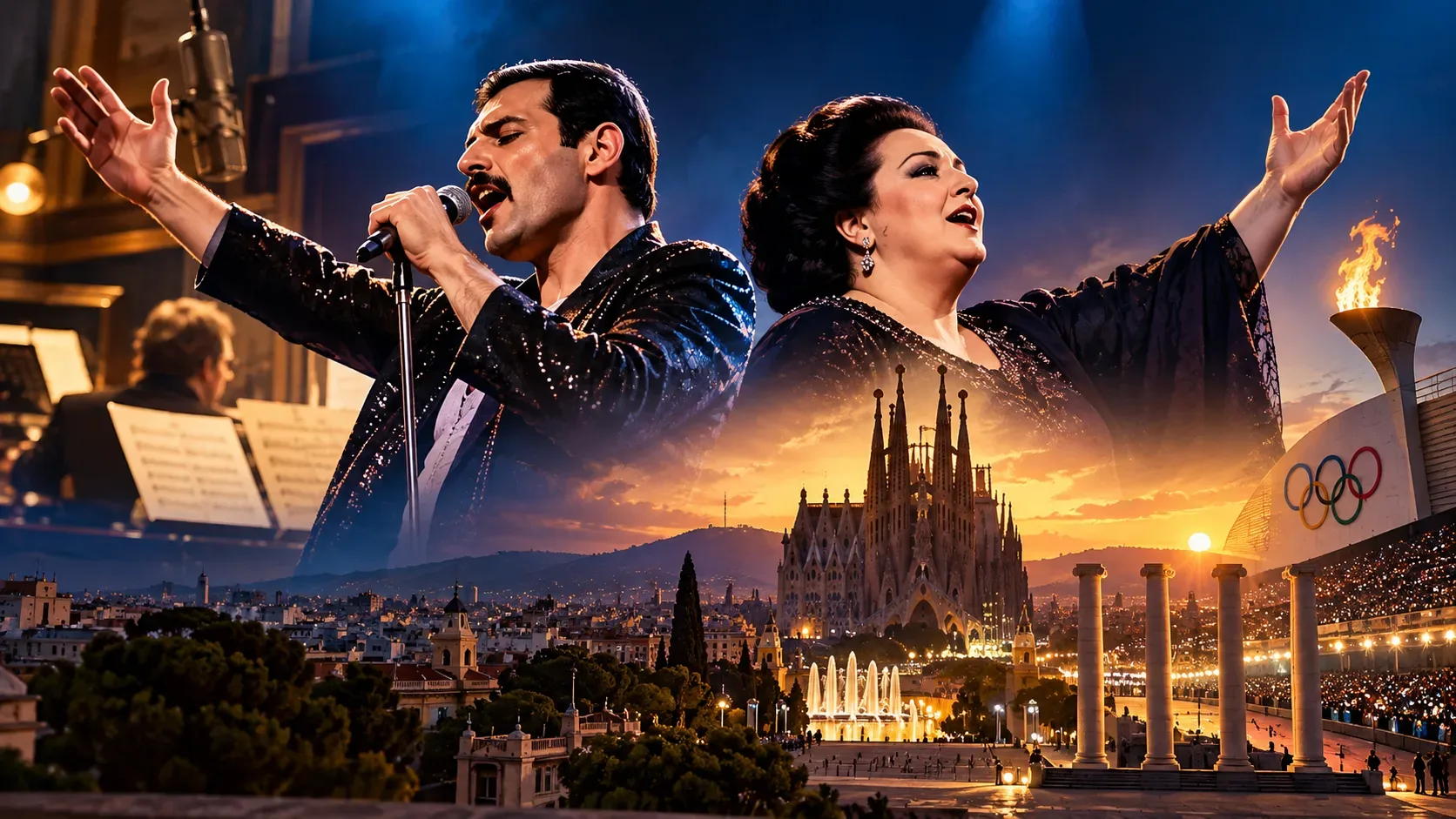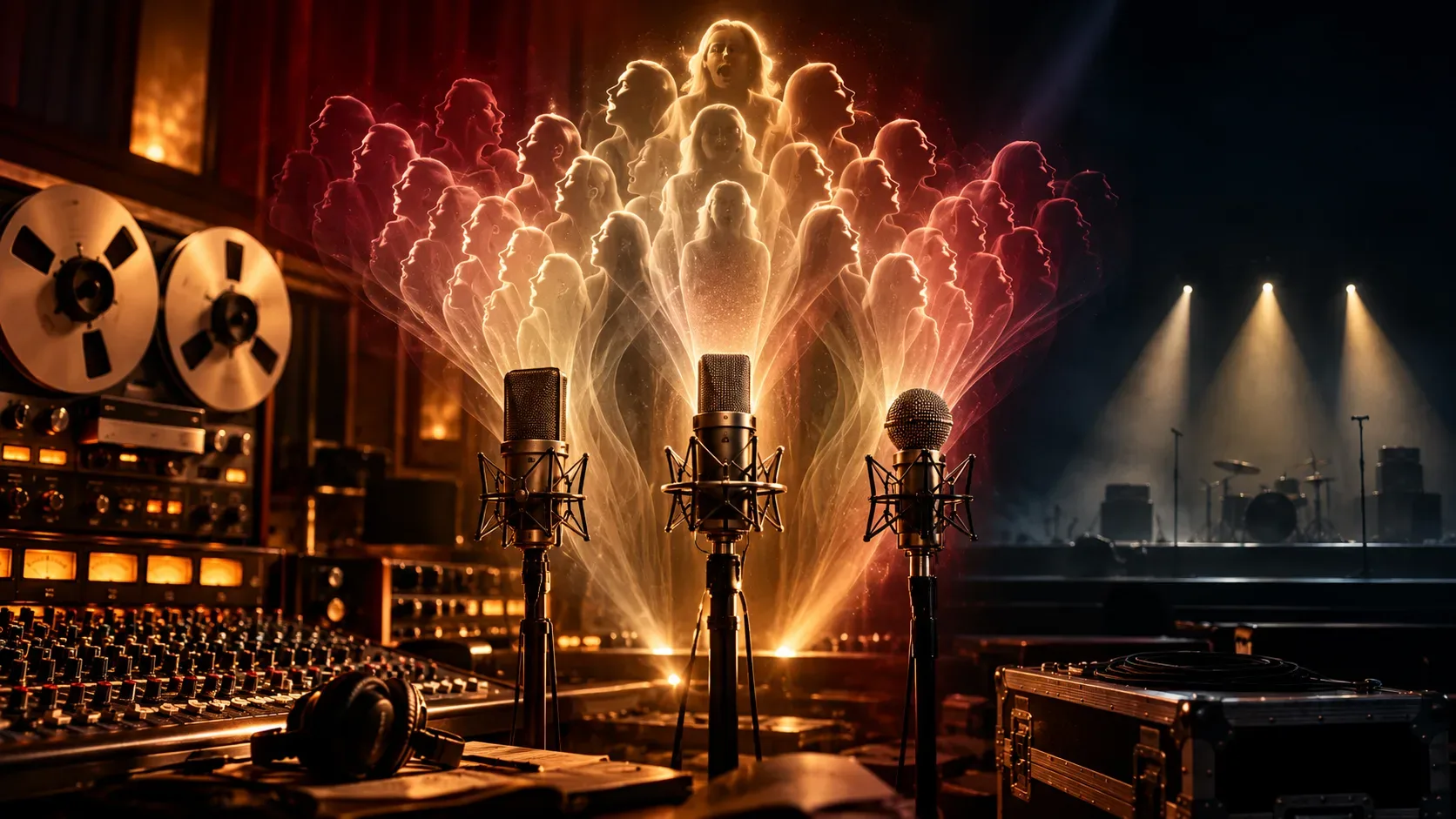
On Bohemian Rhapsody, Queen made three singers sound like a vast choir: Freddie Mercury, Brian May and Roger Taylor recorded successive vocal parts, then layered and combined them on tape. Onstage, the band did perform the song, but did not reproduce the entire operatic arrangement with live vocals. At many shows, a recording supplied the central passage while the musicians left the stage, before they returned for the hard-rock section.
Who sang the opera, and what about John Deacon?
The three singers behind the operatic vocals were Mercury, May and Taylor. Mercury wrote the song and worked out the harmonies; May sang alongside his guitar work; and Taylor contributed vocal layers, including the high register. John Deacon remained a crucial member of the group and played bass on the recording, but he was not one of the three singers building that operatic vocal texture. This matters because Queen had four members, while the layered choral effect in this passage came from three performers.
How did the studio turn three voices into a crowd?
While recording the 1975 album A Night at the Opera, the band worked on the composition in separate sections. Producer Roy Thomas Baker recalled recording the ballad and rock backing tracks while leaving a space on the tape for an operatic passage that had yet to take shape. As Mercury developed new ideas, that middle section expanded. Recording began at Rockfield in Wales, followed by further work in London studios.
The key technique was overdubbing. Each musician sang a line, or a group of harmonies, and recorded additional passes of it. These takes were combined into submixes, freeing tracks for further performances. This process, commonly called bouncing or track reduction, built up a large sound without requiring dozens of singers in the room at once. Placing voices across the stereo image helped the entrances and replies resemble different characters in a miniature opera.
It was more than a matter of loudness. The arrangement moves between registers, harmonies and conversational phrases, creating a scale and theatricality unlike a conventional three-person choir recording. In an essay published by the US Library of Congress, Don Breithaupt describes voices appearing in different stereo positions and the mixture of dry, roomy and more saturated sounds.
Were there 180 overdubs or about 120 vocal tracks?
The sources do not give identical figures, and the numbers should not be presented as one agreed measurement. The Queen biography hosted by Hollywood Records mentions 180 vocal overdubs. A separate label press release marking the song's 40th anniversary describes roughly 120 layered vocal tracks and more than 70 hours devoted to the operatic parts. A historical feature on Queen's official website also repeats Baker's account of 180 overdubs. These are figures stated in different documents; the cited sources do not provide a technical reconciliation.
None of this means that 120 or 180 physical tracks were available at the same time. The label's release refers to a 24-track machine, and the repeated submixing explains how so many performances could be accumulated. Accounts also describe the tape wearing down under repeated use. The reliable conclusion is that the recording involved extensive vocal layering and track reductions, not an exact count of simultaneous singers or channels.
Why didn't Queen sing the whole passage live?
The challenge was recreating the result of so many separate studio takes in real time with a four-member band. The three singers could not perform every line they had recorded at different moments simultaneously. Instead, the group preserved the operatic sound with a recorded playback and concentrated the live performance on sections they could sing and play directly.
In a retrospective issued by Hollywood Records in 2023, Brian May explains that Queen saw little point in trying to reproduce the immense multipart operatic passage with just four people. Their stage solution was to leave during the opera, change outfits and return for the song's heavy section. The tape thus served a musical purpose, while the musicians' temporary absence became part of the show.
The arrangement varied on early tours. Queen's own historical material records performances in which the song's sections were separated, before the recorded opera became part of the better-known stage presentation. So it is inaccurate to say that Bohemian Rhapsody was never played live. What Queen did not fully recreate live was the multilayered choral texture produced in the studio.
What does that decision tell us about the recording?
The operatic section was not impossible music to sing: it was an arrangement conceived with recording technology in mind. On the record, the trio could multiply their voices through repeated takes and submixing. Onstage, Queen retained that sound through playback and returned to live playing when the instruments took over. The contrast reveals how studio technique became part of the song's composition.
Sources and references
- Hollywood Records: Bohemian Rhapsody 40th anniversary press release
- Hollywood Records: Queen The Greatest Live, episode 37 (October 13, 2023)
- Library of Congress: Don Breithaupt essay on Bohemian Rhapsody
- QueenOnline: Nathan Hodges feature on the Rockfield sessions (2019)
- Sotheby’s: Arsalan Mohammad on the song’s creation (2023)