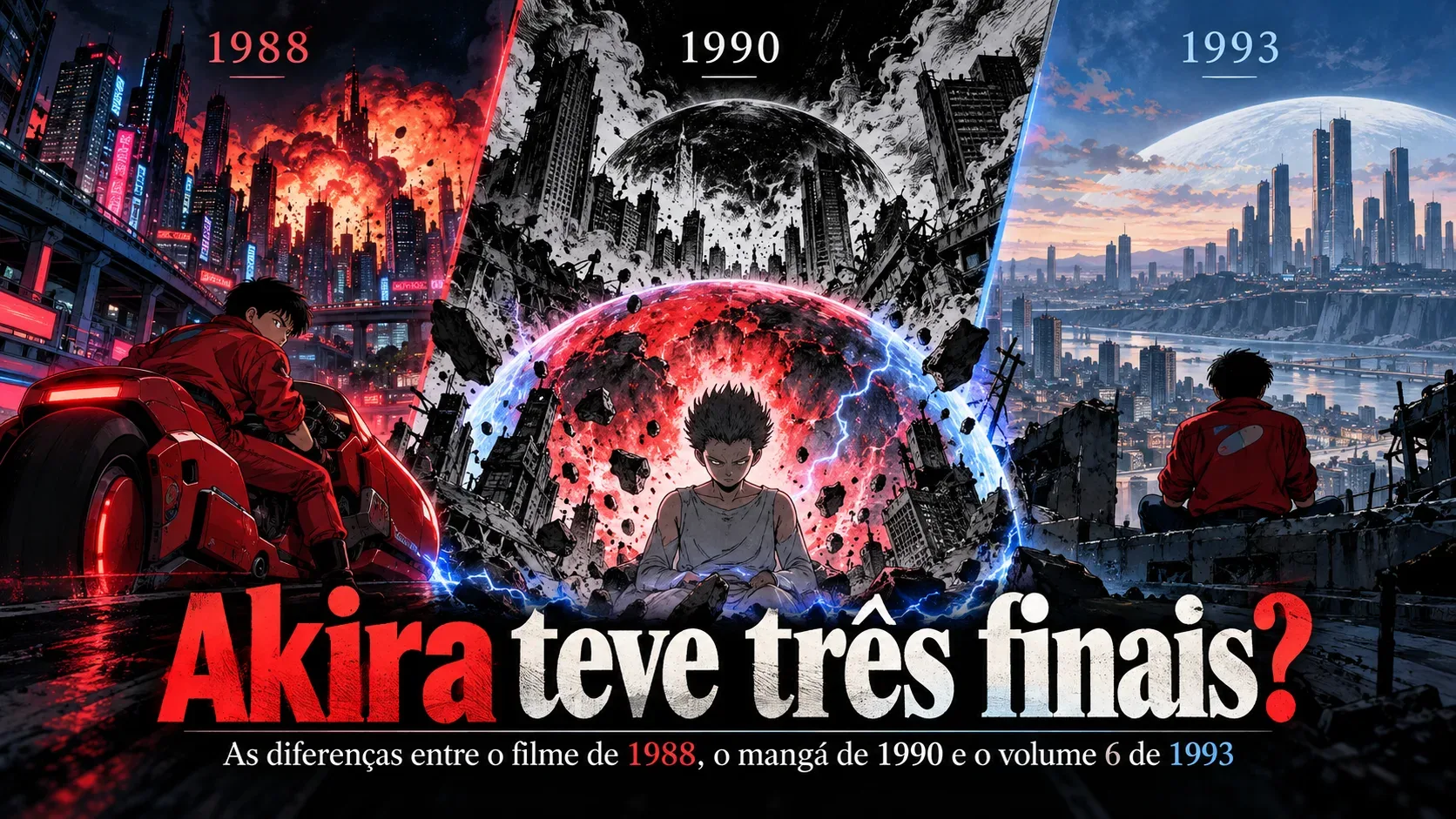
Yes, AKIRA can be said to have three endings, but not three independent stories. The milestones are the conclusion created for the 1988 animated film, the manga's final chapter published in Young Magazine in 1990, and the epilogue added to the Japanese sixth collected volume in 1993. The third does not erase the second: it continues beyond the point where the magazine serialization stopped.
This is a publishing distinction. Katsuhiro Otomo directed the film adaptation before finishing the manga, while the magazine and collected volume document different stages of the same printed work. According to Masahiro Kurata's reporting for Real Sound, the final volume added more than 30 pages following the serialized ending.
Spoiler warning: the discussion below reveals how the AKIRA film and manga end.
1988, 1990 and 1993: what does each date mean?
| Milestone | Version | Documented conclusion | Main distinction |
|---|---|---|---|
| 1988 | Animated feature directed by Otomo | After Tetsuo's crisis, Akira and the young espers intervene; Kaneda and Kei leave the devastated site and head toward the city. | A cinematic ending devised while the manga was still unfinished. |
| 1990 | Final chapter in Young Magazine | After Akira and the other participants in the climax depart, Kaneda and Kei watch the sunrise over a ruined Neo-Tokyo. | The actual stopping point of the serialized story. |
| 1993 | Collected volume 6, final section titled PART6 Kaneda | An epilogue of more than 30 pages takes the story past the sunrise scene. | It adds political consequences and a new stance for Kaneda and his allies. |
Why doesn't the 1988 film end like the manga?
The film reached theaters while AKIRA was still being serialized. Otomo paused work on the manga during production of the animated feature, then returned to complete it in 1990. There was therefore no finished manga ending in 1988 that could simply be transferred to the screen.
The movie reorganizes the characters and concentrates on Tetsuo, Kaneda, and psychic power spiraling out of control. In the manga, Neo-Tokyo's destruction precedes the finale and opens an extended phase involving factions fighting over the devastated city, the so-called Great Tokyo Empire, and intervention by foreign forces. That stretch does not fit the film's narrative structure. Real Sound's comparison identifies shared elements in the climax, but different consequences and destinations.
That does not make either ending a correction of the other. The film is a self-contained adaptation by the original creator; the manga developed a different sequence of events before ending in the magazine.
Where did the 1990 serialization stop?
The ending published in Young Magazine is narrower than the familiar closing pages of the collected volume. As described by Kurata, after the psychic confrontation is resolved, the final image shows Kaneda and Kei facing the sunrise above Neo-Tokyo's ruins. The characters' survival and the scale of the disaster remain in the foreground.
It would be incorrect to call 1990 the publication year of volume 6: this milestone is the magazine ending. The physical edition matters because the later collected book did not stop on that same page.
What did the 1993 sixth volume add?
According to the second part of Real Sound's analysis, the epilogue places Kaneda, Kei, and their allies opposite an international delegation sent to address security and refugees in Neo-Tokyo. The group rejects outside interference and asserts autonomy over the devastated territory, invoking Akira's name. The report also describes the bikers riding away amid imagery linked to absent companions and the possibility of a new city.
The decisive change is the outlook for the future. The magazine stopped at the dawn following catastrophe; the book shows survivors taking action when others propose to reorganize the ruins. Reading this passage as a statement about reconstruction and independence is an interpretation supported by Kurata's analysis, not a definitive declaration of the ending's only meaning.
The report also relays an explanation attributed to Otomo in a 1993 radio program: work on the film had disrupted his serialization rhythm, so he chose to finish the magazine run before returning to the additional material. This is a secondhand account from that report, not an interview independently checked for this article.
Which edition should you use to compare the three milestones?
For the first, use the 1988 film. To investigate the second, look for the original 1990 magazine pages, or an editorial reproduction preserving them. For the third, the historical reference is the Japanese collected edition of volume 6 published in 1993, which contains the post-serialization epilogue.
Kodansha lists AKIRA as a six-volume series, but check the publication date of each reissue: the publisher also offers later international editions of volume 6. The release year of a reprint is neither the year Otomo finished the story in the magazine nor the date of the original sixth Japanese book. A 2024 Real Sound report shows that magazine pages and collected-book versions may differ in artwork and panel composition, not merely their covers.
Scope of this comparison: the final scenes described here are attributed to the editorial documentation and named analyses below. The 1990 and 1993 physical editions were not compared directly page by page for this article, so no claim is made that every reprint preserves exactly the same panel arrangement.
Sources and references
- Kodansha: six-volume AKIRA series catalog
- Kodansha: AKIRA, volume 6, edition details
- Real Sound, Masahiro Kurata: comparison of film and print endings, part 1
- Real Sound, Masahiro Kurata: the added epilogue, part 2
- Real Sound, Shigeru: differences between serialization and book editions
- CVM Sekai: structural differences between the AKIRA manga and film