If you want to start reading DC comics with a specific story, DC Compact Comics is usually the simpler choice: it packages recognizable works in smaller books designed as entry points. DC Finest makes more sense if you want to explore eras, characters, and periods of the publisher’s history through broader collections. Both lines reprint material from DC’s catalog, but their purposes, dimensions, and selections differ.
DC Finest vs. DC Compact Comics at a glance
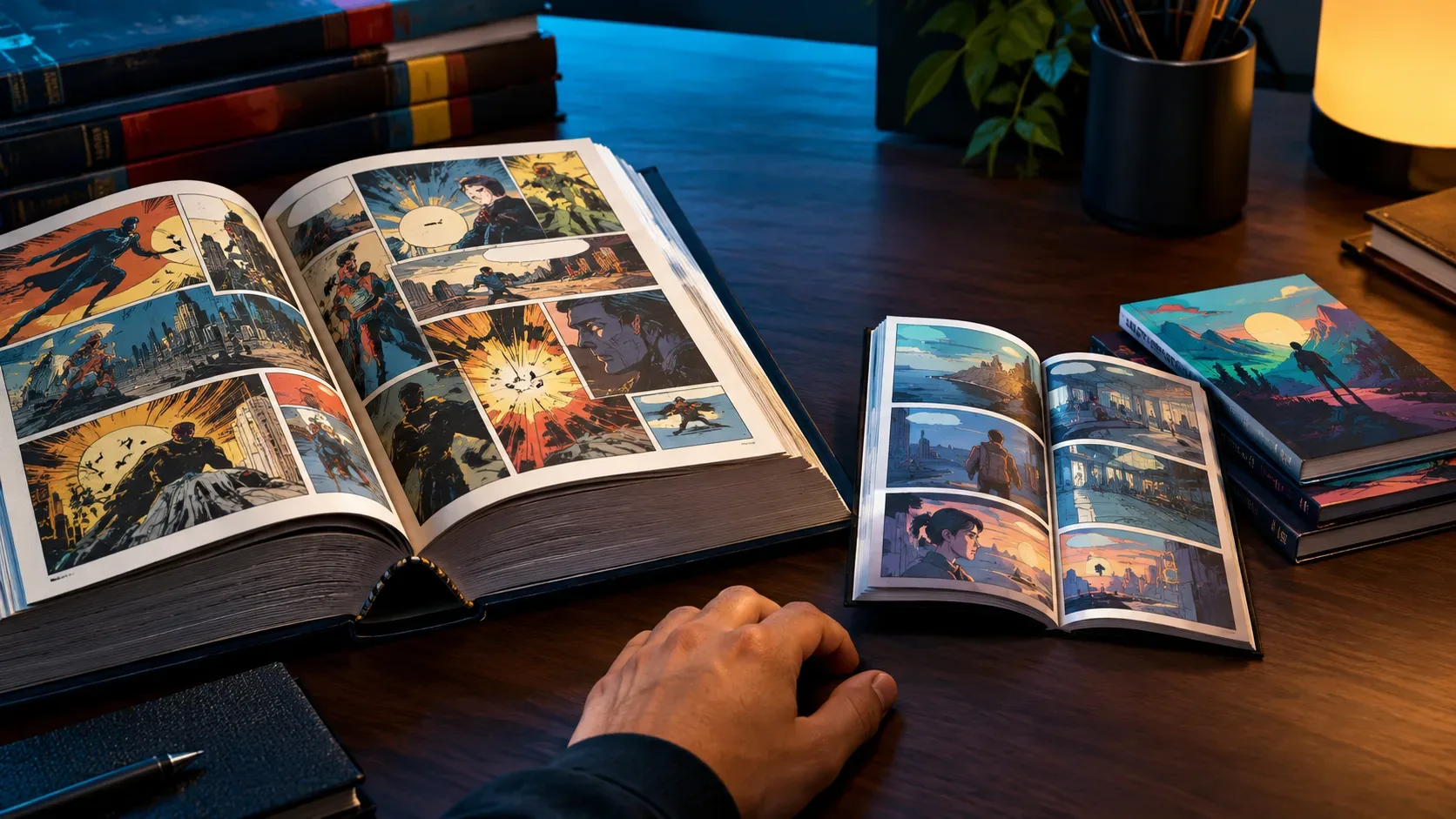
DC began publishing Compact Comics in June 2024 and introduced Finest in February of that year. The former selects recognizable stories, while the latter brings together larger slices of publishing history and genres. The key distinction is not just the page count but the reading experience each edition is built to offer.
| Criterion | DC Finest | DC Compact Comics |
|---|---|---|
| Purpose | Collect character- or genre-focused eras and periods with an archival perspective. | Offer familiar, approachable stories in compact editions. |
| Format | Larger paperback editions with substantial collected material. | 5.5 × 8.5-inch paperback in the format announced for the US. |
| Reading approach | Historical exploration and sequences of interconnected stories. | An entry point through a selected work or story arc. |
| Announced examples | Batman: Year One & Two; The Flash: The Human Thunderbolt. | Watchmen; All-Star Superman; Batman: The Court of Owls Saga. |
| Best suited to | Readers exploring an era, a character’s history, or DC’s evolving catalog. | Readers choosing a particular title as their starting point. |
What makes DC Finest different?
DC describes Finest as collections built around characters or genres rather than a single creator or monthly series. Batman: Year One & Two, for example, covers Batman’s post-Crisis on Infinite Earths era, including Year One, Year Two, and other stories from that period. The Flash: The Human Thunderbolt revisits classic Barry Allen stories, including Showcase #4 from 1956.
That makes Finest useful for seeing how a hero was portrayed at a particular point in time. But a comprehensive collection does not mean that any one volume contains that character’s entire history, from first appearance to the present. Check which years and original issues are included. Nor do you have to start with the oldest era to understand a modern comic.
What does DC Compact Comics collect?
With Compact Comics, the starting point is usually an identifiable work. DC released Watchmen by Alan Moore and Dave Gibbons and All-Star Superman by Grant Morrison and Frank Quitely. The line also included Batman: The Court of Owls Saga and Batman: Hush, among others. DC selected these books as approachable entry points and issued them in a smaller physical format.
DC itself presents the line as consisting of relatively self-contained graphic novels. That is a publishing principle, not a guarantee that every title ignores earlier stories or that every long-running series fits into one book. Compare the subtitle and included-issues list. A Batman book in Finest and one in Compact may contain entirely different stories.
Which line is better for a first read?
- Want to sample a story without building a large collection? Consider a Compact Comics volume whose subject interests you, such as Watchmen or All-Star Superman.
- Want to understand a Batman era, the origin of a particular interpretation, or a sequence of stories from one period? A Finest volume devoted to that period may offer more context.
- Enjoy comics history, first appearances, and changes in storytelling style? Finest’s archival selections are better suited to that goal.
- Already know the exact work you want? Choose based on the contents, rather than assuming one line is always better than the other.
DC’s own guide for new Batman readers stresses that you do not need to read every decade since the character’s debut. The practical recommendation is therefore to begin with the story that interests you, then branch out. Finest helps you go deeper; Compact helps you try a title. Neither requires a universal purchasing order.
How to avoid buying the wrong edition
- Read the entire book title, including Finest, Compact Comics, its subtitle, and any Book One designation.
- Check the list of original issues collected and whether it covers the arc you want. Books about the same hero may have different contents.
- Verify language, the publisher of any local edition, binding, dimensions, and ISBN. A US line name does not guarantee an identical format in a hypothetical Brazilian edition.
- Compare the actual price in your country and store. The US$9.99 publicized for Compact Comics at launch was a US-market reference price, not a permanent price promise for Brazil. Finest was announced with books starting at US$34.99, also for the American market.
Do not confuse either line with the Absolute Universe
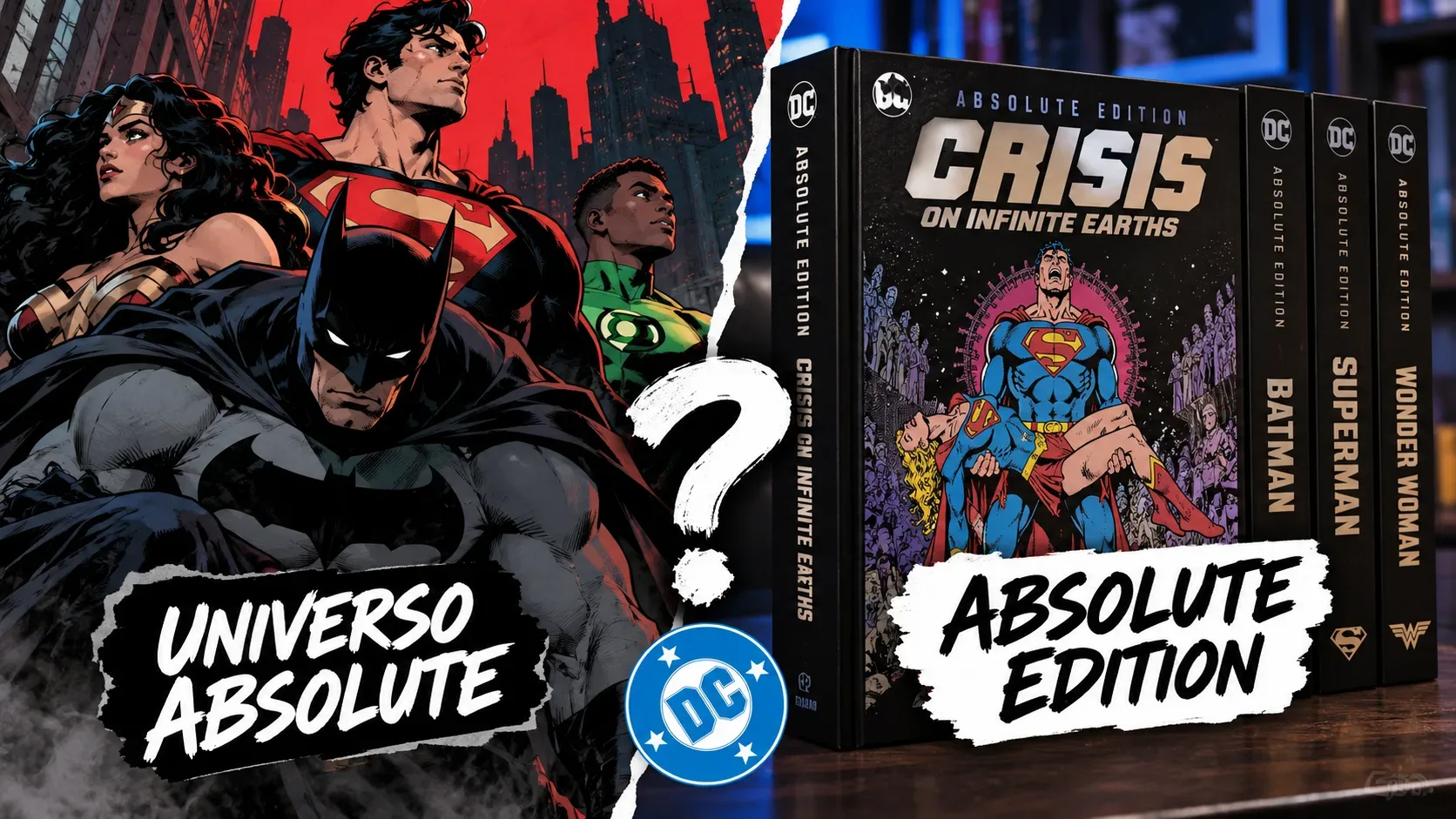
DC’s Absolute Universe, launched in 2024, introduces reimagined heroes in an alternative continuity, including Absolute Batman. It is an initiative built around new stories. Finest and Compact Comics, by contrast, are ways of selecting and republishing existing work. Buying one of these editions does not automatically place you in the Absolute Universe chronology.
The practical distinction is straightforward: choose DC Compact Comics for a first encounter with a particular story and DC Finest to explore an era or a wider selection of stories. Before buying, confirm the exact contents and edition, especially if shopping in Brazil.