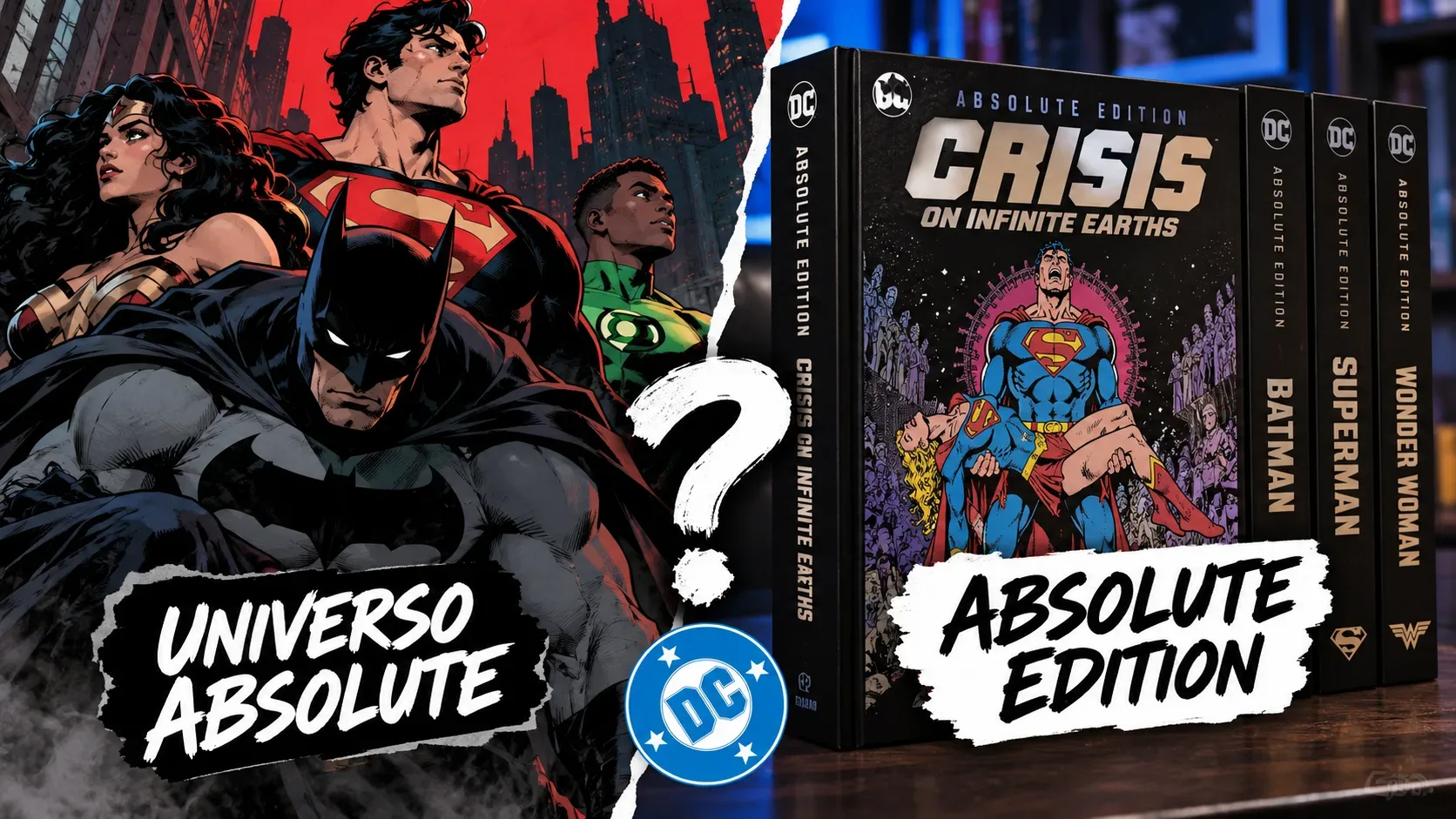
The Absolute Universe and Absolute Edition refer to two different things in DC's catalog. The former is a comics continuity featuring new versions of heroes such as Batman, Superman and Wonder Woman, introduced in 2024. The latter is a premium collected-edition format that DC used long before the new line of stories existed. Seeing “Absolute” on a cover does not, by itself, mean that the book belongs to the Absolute Universe.
The name is genuinely reused, but the official pages consulted explain how it is used rather than giving a formal reason why the publisher chose the same word again. The most reliable distinction is whether a title identifies a version of a character or a physical edition of a previously published story.
What is DC's Absolute Universe?
The Absolute Universe emerged through the DC All In publishing initiative, announced for October 2024. Rather than replacing the main continuity, the initiative opened an alternative reality in which familiar figures have different backgrounds and circumstances. DC All In Special #1, written by Scott Snyder and Joshua Williamson, establishes this new status quo and links its origin to the confrontation with Darkseid.
The distinction is apparent in the initial series. In Absolute Batman, by Scott Snyder and Nick Dragotta, Bruce Wayne does not have the fortune, mansion or butler associated with his traditional counterpart. Absolute Wonder Woman, by Kelly Thompson and Hayden Sherman, reimagines Diana without her usual upbringing among the Amazons. Absolute Superman, by Jason Aaron and Rafa Sandoval, starts with a Clark Kent deprived of familiar elements of his classic story.
These are new stories set in their own continuity, not more expensive reprints of older adventures. The line launched in 2024: Absolute Batman #1 on October 9, Absolute Wonder Woman #1 on October 23 and Absolute Superman #1 on November 6, according to DC's official announcement. These dates reflect the publisher's announced retail schedule, not a guarantee of simultaneous Portuguese-language publication in Brazil.
What does Absolute Edition mean?
Absolute Edition identifies a publishing format, commonly involving oversized hardcover volumes, slipcases and supplementary material. The selection of content and physical features varies from book to book. The term describes how a work is presented, not the fictional universe in which it takes place.
A particularly clear example is Crisis on Infinite Earths: The Absolute Edition. DC's official catalog lists this edition with a U.S. release date of November 30, 2005, almost 19 years before the Absolute Universe launched. It collects the original 12-issue miniseries, published in 1985, written by Marv Wolfman and penciled by George Pérez.
For this particular edition, DC describes a slipcased set of two hardcover books: a 368-page volume containing the restored and recolored story and a 96-page companion featuring production documents, commentary and indexes. This is a special presentation of a landmark work; it does not turn Crisis on Infinite Earths into a story from the Absolute continuity created in 2024.
Absolute Universe vs. Absolute Edition: a direct comparison
| Question | Absolute Universe | Absolute Edition |
|---|---|---|
| What does it describe? | An alternative fictional continuity within DC. | A premium collected-edition format. |
| When does it appear in this comparison? | The publishing line launched in 2024. | Already documented in DC's catalog in 2005. |
| What changes? | The versions of characters and the stories being told. | The physical presentation and, depending on the book, editorial extras. |
| Example | Absolute Batman #1. | Crisis on Infinite Earths: The Absolute Edition. |
| Is prior reading required? | The line was designed as an entry point for new readers. | That depends on the collected work, not on the words “Absolute Edition.” |
Why does the shared name cause confusion?
In both cases, DC uses “Absolute” in product names, but its official pages describe different categories: one concerns comic series and narrative continuity, while the other specifies the features of a collected edition. The documented conclusion is that the term serves different commercial and editorial functions. These sources do not establish which internal branding decision led to the same word being chosen.
Another name can complicate searches: Absolute Power. This is an earlier event in the context of DC All In, cited by DC when explaining the new universe's emergence. It is not synonymous with Absolute Edition, and the name alone does not mean its chapters are set in the new continuity.
How can you tell which Absolute you are looking at?
- “Absolute Batman #1”: the issue number and the description of a new Bruce Wayne indicate a series set in the Absolute Universe.
- “Crisis on Infinite Earths: The Absolute Edition”: the collected-volume designation, hardcover format, slipcase and extras indicate a premium edition of the classic story.
- “DC All In Special #1”: this is the special issue establishing the context for the new line; its title does not designate an Absolute Edition hardcover.
To follow the reimagined heroes, look for series belonging to the Absolute Universe. To buy a particular story in a collector's edition, inspect the volume's listing: collected contents, date of the original work, physical format and extras. Premium packaging does not mean a story is recent, and “Absolute” in a series title does not guarantee a hardcover book.
Sources and references
- DC: DC All In announcement and initial Absolute Universe series (July 18, 2024)
- DC: announcement about DC All In Special #1 and the Absolute Universe's origin (October 4, 2024)
- DC: explanation of Absolute Batman's separate continuity (October 15, 2024)
- DC: catalog listing for Crisis on Infinite Earths: The Absolute Edition (2005)