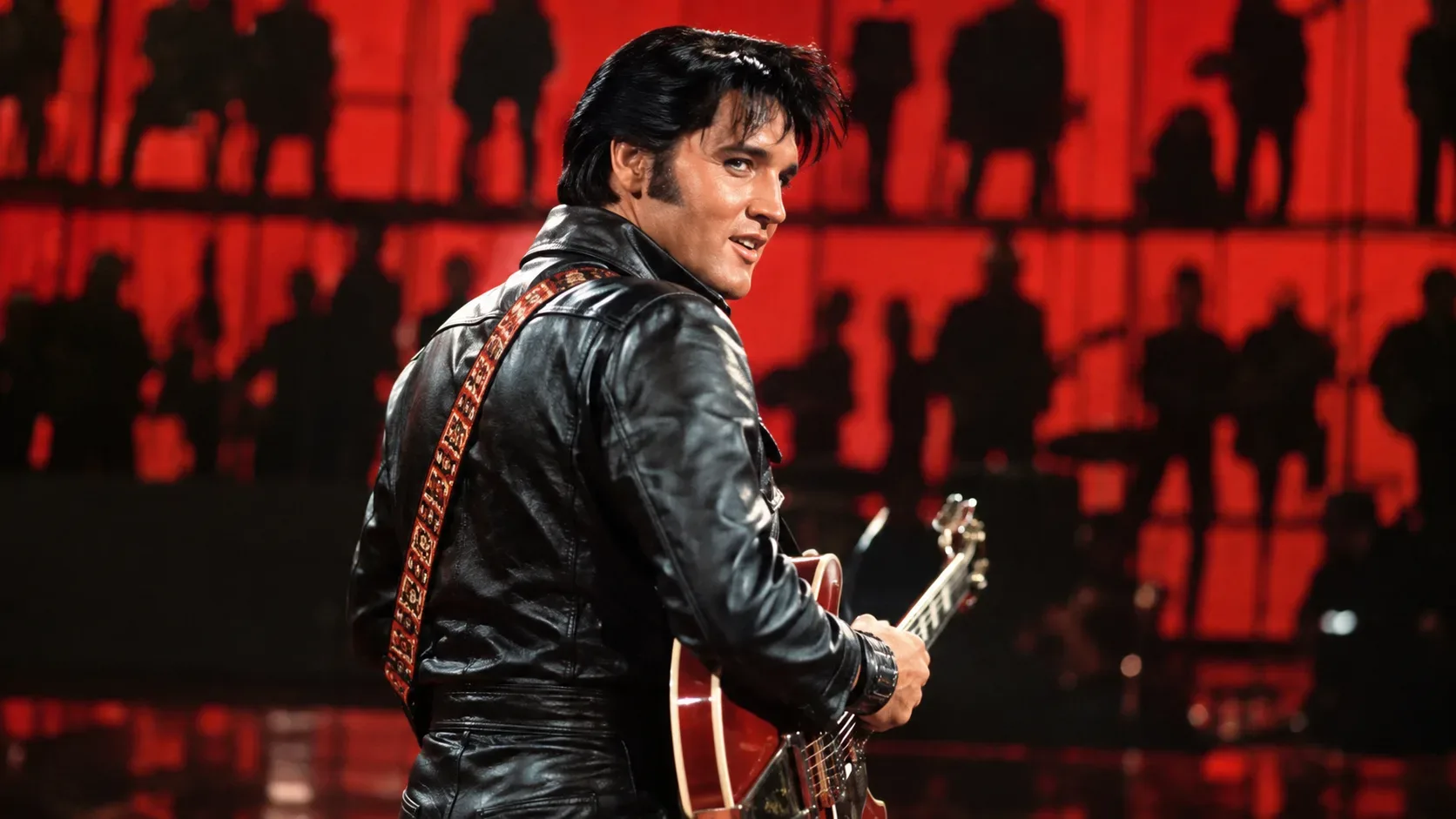
Elvis Presley's NBC special, broadcast on December 3, 1968, helped change the direction of his career by putting music and stage presence back at the center of his public image. After years largely devoted to Hollywood movies and their soundtracks, he performed before an audience, revisited the rock and roll of his early career, and introduced a new song of hope, If I Can Dream. The program paved the way for a more active period of recording and concerts starting in 1969, although that shift also depended on other decisions and collaborators.
The production was originally titled simply Elvis. The name '68 Comeback Special, by which it is now widely known, came to describe the television program retrospectively. It was taped in June 1968 and aired in December: it was not broadcast as a live, real-time concert.
Before the special: a movie star eager to return to music
Elvis remained famous throughout the 1960s, but his work had moved away from the performances that made him a sensation in the 1950s. Hollywood occupied much of his schedule, along with soundtrack albums. Some projects were commercially successful; at the same time, the formulaic nature of several productions narrowed perceptions of his musical range. In 1968, movies such as Stay Away, Joe, Speedway and Live a Little, Love a Little still represented that phase of his career.
The special was his first appearance on US national television since 1960, when he had joined Frank Sinatra on a television program. He had also spent more than seven years away from regular performances before an audience. In this sense, “comeback” mainly describes the return of Elvis the performing singer, rather than the reappearance of someone who had vanished from popular culture.
From a Christmas concept to a show built around Elvis
Manager Colonel Tom Parker negotiated the NBC project, while the Singer company sponsored it. A proposal initially associated with Christmas evolved into something else. According to Graceland's chronology and director Steve Binder's recollections reported by Vanity Fair, the creative team favored a focus on Elvis's musical roots and his ability to connect directly with an audience. The show retained a Christmas song but did not become a program devoted entirely to the holiday.
Binder directed the special; Bob Finkel served as executive producer, Bones Howe as musical producer and Billy Goldenberg as musical director. Costume designer Bill Belew created the black leather outfit that would become inseparable from its image. The televised performances were filmed from June 27 to 30, 1968. Through direction, song choices, clothing and audience interaction, the program offered a different image from that of the romances and musical comedies in Elvis's movies.
What did viewers see and hear in the 1968 special?
The program moved between choreographed production numbers and more direct musical performances. Instead of relying on celebrity guests, it kept Elvis at the center. Several moments help explain the special's lasting reputation:
- Trouble and Guitar Man: the opening brings rock and roll energy to a musical framework that runs through the show's narrative.
- Sit-down sessions: Elvis sings, talks and plays alongside other musicians. They included guitarist Scotty Moore and drummer D. J. Fontana, who were associated with his early career. Their informality contrasts with the carefully staged image of his films.
- Stand-up performances: wearing Belew's black outfit, the singer revisits familiar hits before an audience in a concert-like visual setting.
- Gospel roots: a religious music sequence foregrounds long-standing influences on Elvis's repertoire and features the vocal group the Blossoms, whose members included Darlene Love.
- Memories and the finale: the special also introduces newer material and saves If I Can Dream for the closing number.
These portions were not a single uninterrupted concert. They were produced and edited for television. The interplay between intimate sessions and elaborate numbers showed different sides of the same artist: a rock singer, an interpreter of ballads and a performer deeply shaped by gospel.
Why was If I Can Dream the defining moment?
In the United States, 1968 was marked by social upheaval and the assassinations of Martin Luther King Jr. in April and Robert F. Kennedy in June. According to Graceland and Binder's account to Vanity Fair, these events deeply affected Elvis and informed the conversations that led to If I Can Dream, written by W. Earl Brown specifically for the finale.
The song imagines a future with greater understanding and brotherhood. In the closing number, Elvis appears in white against a backdrop of red lights. The performance creates a visual and emotional contrast with the black leather and rock and roll of earlier segments. Rather than assign him a detailed political position that the available documentation does not establish, the supported point is that he chose to deliver a public message of hope in that context.
Also released as a single, If I Can Dream reached number 12 on the US pop chart cited in Graceland's chronology. The December 3, 1968 NBC broadcast drew a substantial share of television viewers and reinforced the sense that Elvis still had creative possibilities beyond familiar movie formulas.
What actually changed in his career after the broadcast?
The most tangible results followed in 1969. In January and February, Elvis recorded at American Sound Studio in Memphis in sessions that led to the album From Elvis in Memphis and recordings associated with songs such as In the Ghetto and Suspicious Minds. That musical chapter involved other people and decisions, so it would be inaccurate to say the television program alone produced those successes.
On July 31, 1969, he began a run of shows at the International Hotel in Las Vegas, marking his return to regular appearances on major stages. His concert schedule later expanded. The TV comeback was therefore a decisive showcase for that transition, not a magical turning point that solved every career challenge.
Nor did Elvis immediately leave Hollywood in December 1968. He still fulfilled film commitments and appeared in Change of Habit, released in 1969 and regarded as his final acting role in a feature film. His professional priorities shifted over a period of months.
A timeline to keep the dates straight
| Period | What happened |
|---|---|
| January 1968 | NBC announced plans for an Elvis television special. |
| June 27 to 30, 1968 | The performances for television were taped. |
| December 3, 1968 | Elvis aired on NBC in the United States. |
| January and February 1969 | Elvis recorded new material at American Sound Studio in Memphis. |
| July 31, 1969 | His engagement at the International Hotel in Las Vegas began. |
The special's legacy extends beyond black leather
The combination of early repertoire, intimate performances and a new song with a powerful message helps explain why the show continues to be revisited. Anniversary reissues have recovered additional performances filmed in 1968; in 2019, NBC aired a tribute featuring artists from later generations, accompanied by an RCA/Legacy music release.
The program did not erase the contradictions of Elvis's career, nor can it single-handedly explain his later triumphs and difficulties. Its historical role is more specific: it demonstrated a viable alternative to the movie cycle, reconnected him with an audience and showed that his musical influences could still speak to an era of profound change.