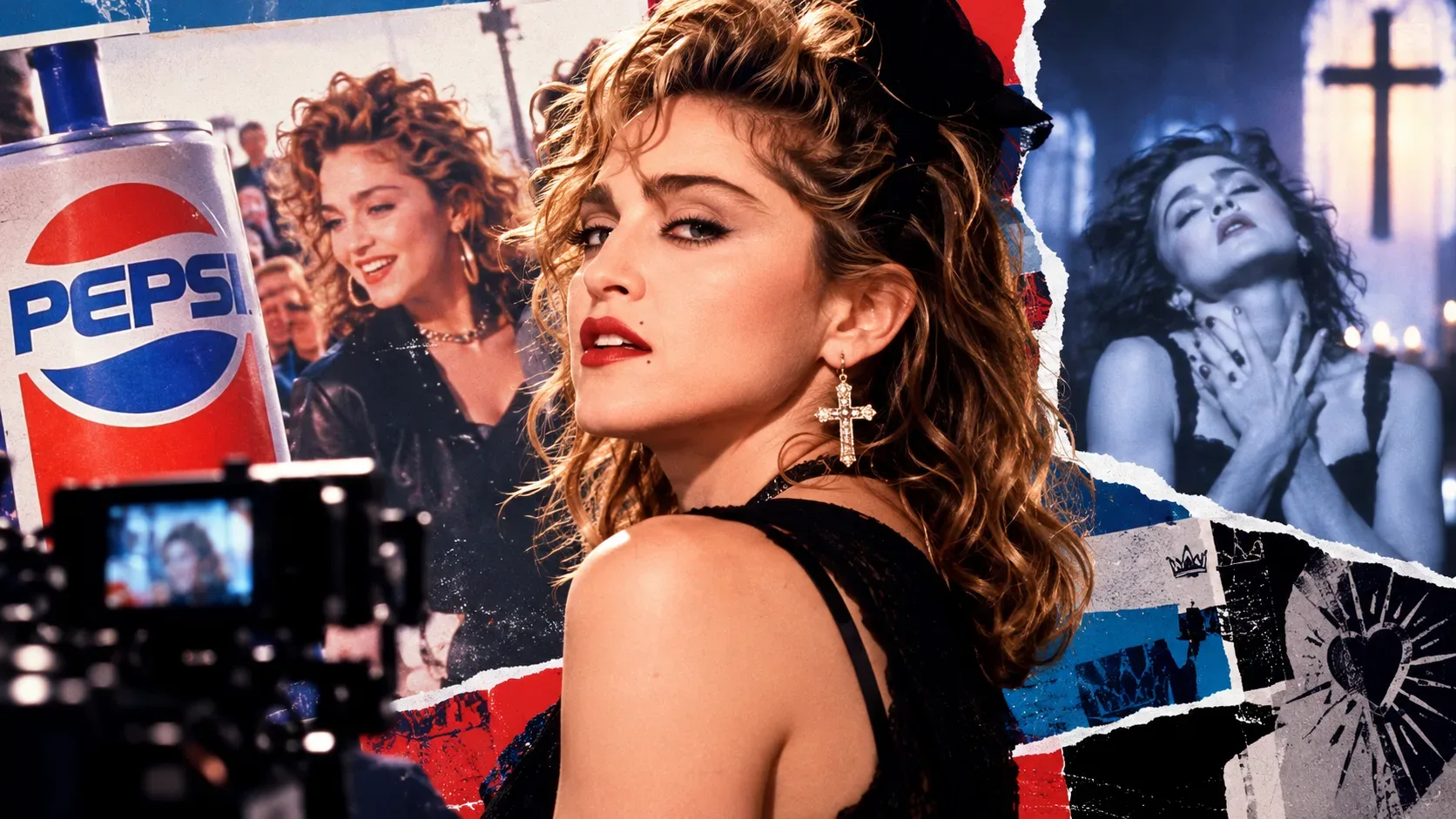
Pepsi ended its advertising campaign with Madonna in 1989 after the music video for Like a Prayer sparked protests from religious groups and threats to boycott the brand. The crucial distinction is that the Pepsi commercial and the music video were separate productions. They used the same song, but the ad did not contain the images that drew the strongest objections. The commercial had already aired when the controversy escalated.
In the advertisement, Madonna revisits her childhood. In the video directed by Mary Lambert, she also uses religious imagery to explore racism, injustice and sexuality. Mixing up the two films turns a business decision made under public pressure into a misleading account of footage supposedly produced by Pepsi.
How did Madonna's Pepsi partnership begin?
The deal was announced on January 25, 1989. According to biographer Mary Gabriel's account in Vanity Fair, the agreement, worth approximately US$5 million, included the promotional debut of Like a Prayer in a commercial and Pepsi's sponsorship of Madonna's next tour. The approach was unusual: introducing a new recording to the public through a soft-drink campaign.
Directed by Joe Pytka and known as Make a Wish, the commercial features an adult Madonna and a girl representing her eight-year-old self. The memory of a birthday party blends with dancing, school, street and church scenes. The ad includes a choir and closes by connecting childhood memories to the product. Its tone is nostalgic and celebratory.
So the commercial does include a church. What it does not include is the burning crosses, the kiss with a Black saint or the wrongful-arrest storyline featured in the music video. These were not two edits of the same film.
Why did the Like a Prayer music video cause controversy?
The music video, independently directed by Mary Lambert, premiered on MTV on March 3, 1989, the day after the commercial's international debut. Madonna's character witnesses an assault; a Black man who tries to help the victim is falsely accused. Seeking refuge in a church, she encounters an image of a Black saint, while the film combines dreams, guilt, desire and the decision to speak up for an innocent man.
The visuals include burning crosses, stigmata-like wounds and an intimate encounter with the saintly figure. These symbols drew accusations of religious disrespect. In the Vanity Fair account, Lambert explains that the burning crosses alluded to racist violence she had known. That documented artistic intention did not prevent sharply different critical responses.
These images belonged to Lambert's video, not Pytka's advertisement, and they prompted the objections. According to an Associated Press report published in April 1989, Pepsi itself said it had no involvement in producing the music video.
Pepsi commercial versus music video: what was different?
| Feature | Pepsi commercial | Official music video |
|---|---|---|
| Director | Joe Pytka | Mary Lambert |
| Concept | Nostalgic advertisement about childhood, wishes and the brand | Dramatic story about racial injustice, faith and responsibility |
| Religious imagery | Church and choir, without the video's disputed scenes | Black saint, stigmata and burning crosses |
| First broadcast | March 2, 1989, international launch | March 3, 1989, MTV |
| Production | Pepsi advertising campaign | Music video independent of the campaign |
When did Pepsi pull the campaign?
The decision unfolded in stages. Later retellings often condense it into an immediate cancellation, but contemporary reporting distinguishes the first broadcasts from the public confirmation that Pepsi was dropping the campaign.
- January 25, 1989: Pepsi and Madonna announce their agreement.
- March 2: the Make a Wish commercial makes its international debut featuring Like a Prayer.
- March 3: the independent music video premieres on MTV, intensifying objections to its religious symbols.
- March 10: the American Family Association calls for a Pepsi boycott; further religious pressure follows in subsequent weeks.
- April 4: the Associated Press reports confirmation that Pepsi has dropped plans to keep using Madonna in its advertising after complaints and boycott threats.
According to the Associated Press report, the ad ran only twice on US television in early March, although it was also shown internationally. A brand spokesperson said consumers were confusing the music video with the commercial. The same report noted that Pepsi declined to comment on a boycott organizer's claim that the company would also withdraw tour sponsorship. The cancellation of the advertising plans is documented; not every subsequent contractual detail is equally confirmed.
What happened when Pepsi brought the ad back in 2023?
On September 7, 2023, Pepsi announced a revival of historic music campaigns for its 125th anniversary, including Madonna's commercial. The company said a remastered version would return to US national television during the MTV Video Music Awards on September 12, 2023. The revived ads received opening and closing frames featuring Pepsi's updated visual identity.
This was not an unseen advertisement premiering after 34 years: Make a Wish had already aired in 1989. In 2023, Pepsi rebroadcast it as part of its advertising heritage. On September 13 that year, Madonna publicly celebrated its return and said the campaign had been canceled because she refused to change scenes in the music video. That is the artist's recollection, reported by Billboard Brasil; it does not mean those scenes appeared in the commercial.
What does the episode reveal about Like a Prayer's legacy?
The song went on to succeed independently of the advertising deal: it topped the US Billboard Hot 100 in 1989. The Rock & Roll Hall of Fame, which inducted Madonna in 2008, recognizes Like a Prayer as an important part of her artistic evolution and highlights her willingness to engage with religious, sexual and political taboos in pop culture.
The episode matters because it revealed a concrete tension. Pepsi wanted to associate its brand with a song that could reach a vast audience; Madonna separately released a music film that did not follow the commercial's storyline. The campaign stopped amid conservative criticism, while the video continued circulating and generating debate. Its 2023 return did not erase the 1989 dispute. Instead, it illustrated the gap between the brand's commercial concerns at the time and the way it chose to celebrate the partnership decades later.
Sources and references
- Vanity Fair: Mary Gabriel's account of Madonna, Pepsi and Like a Prayer
- Associated Press via The Washington Post: April 1989 ad withdrawal
- PepsiCo: official 2023 commercial revival announcement
- Billboard Brasil: Madonna's statement about the campaign's return
- Rock & Roll Hall of Fame: Madonna's official profile