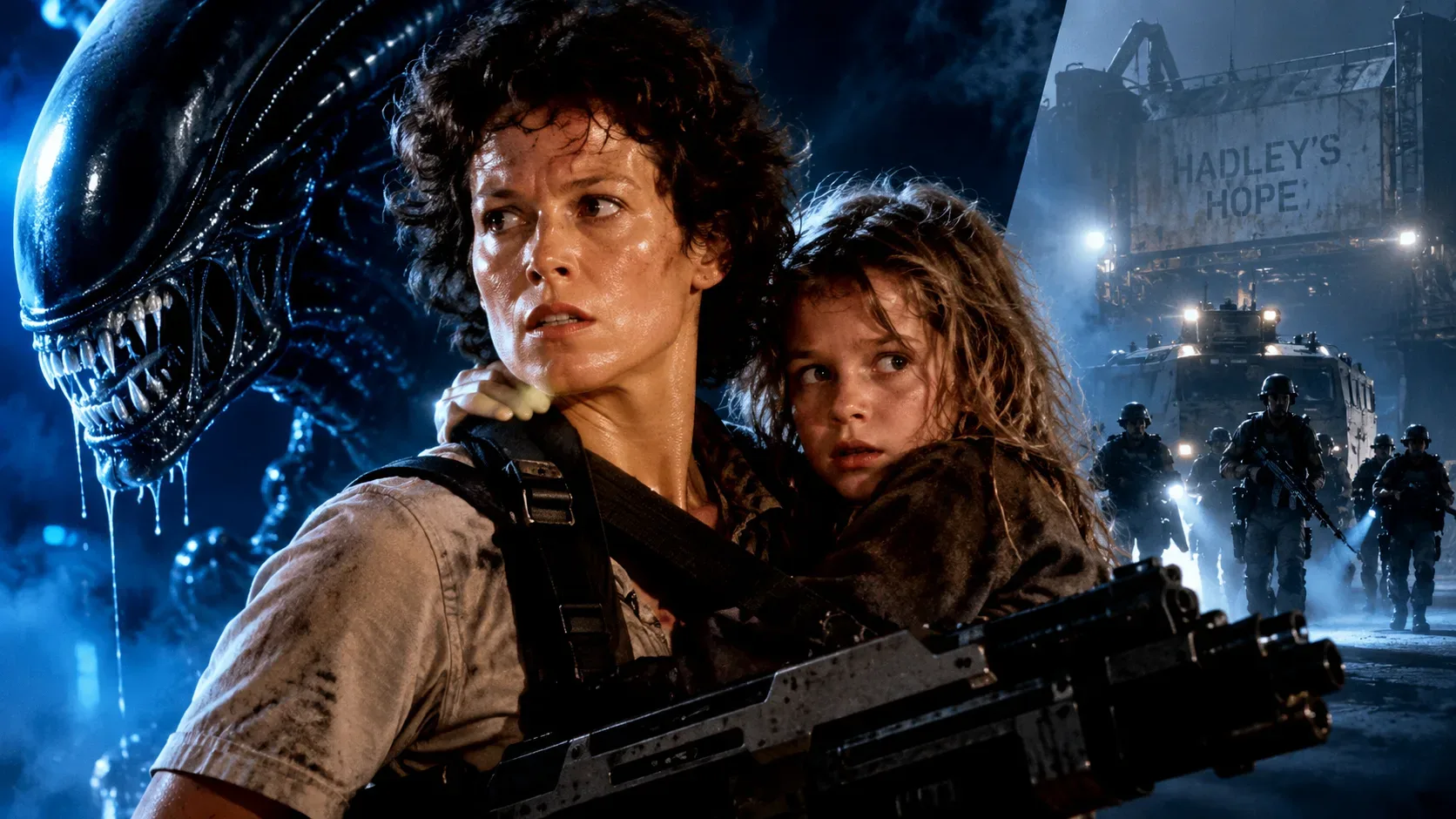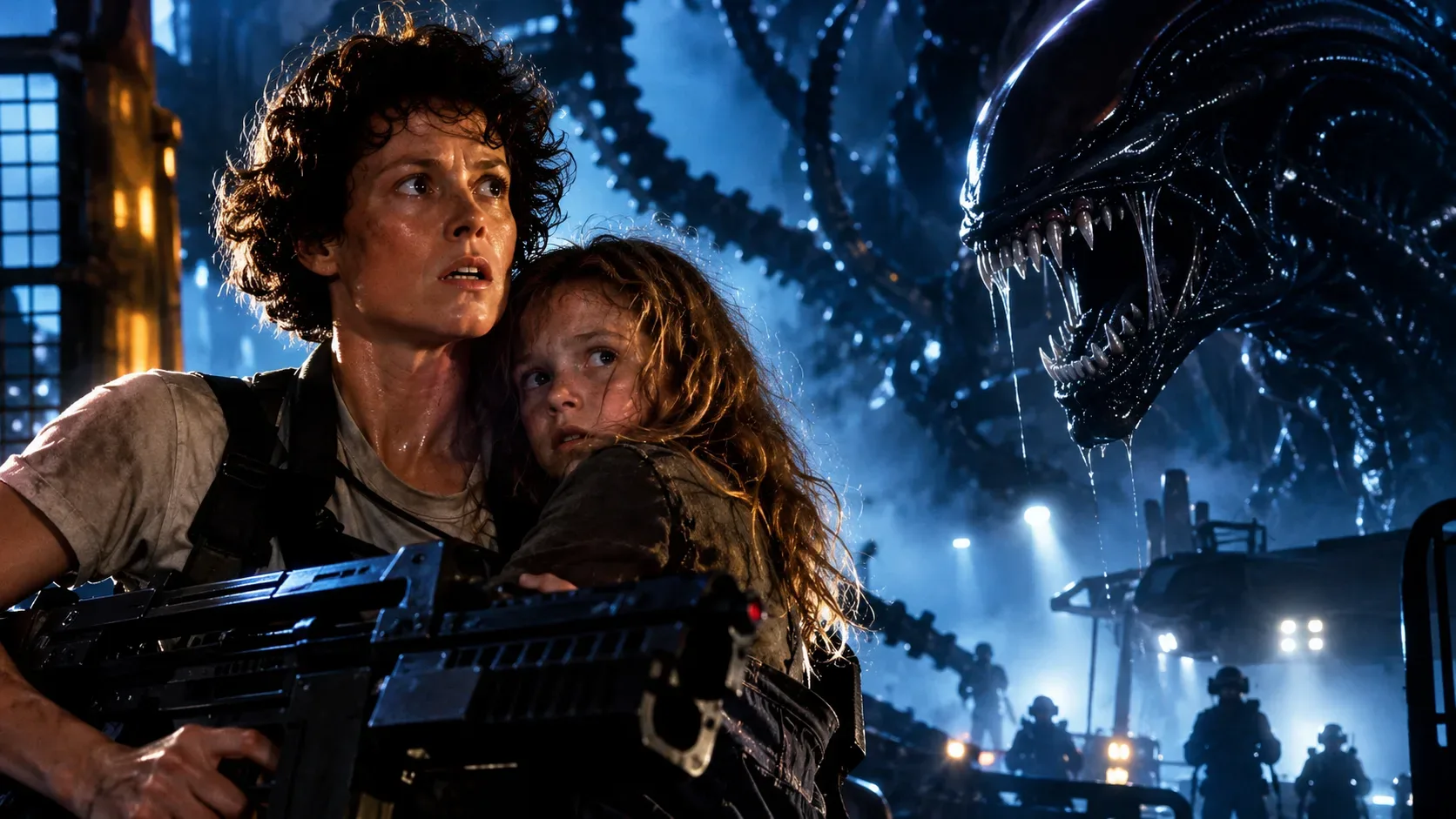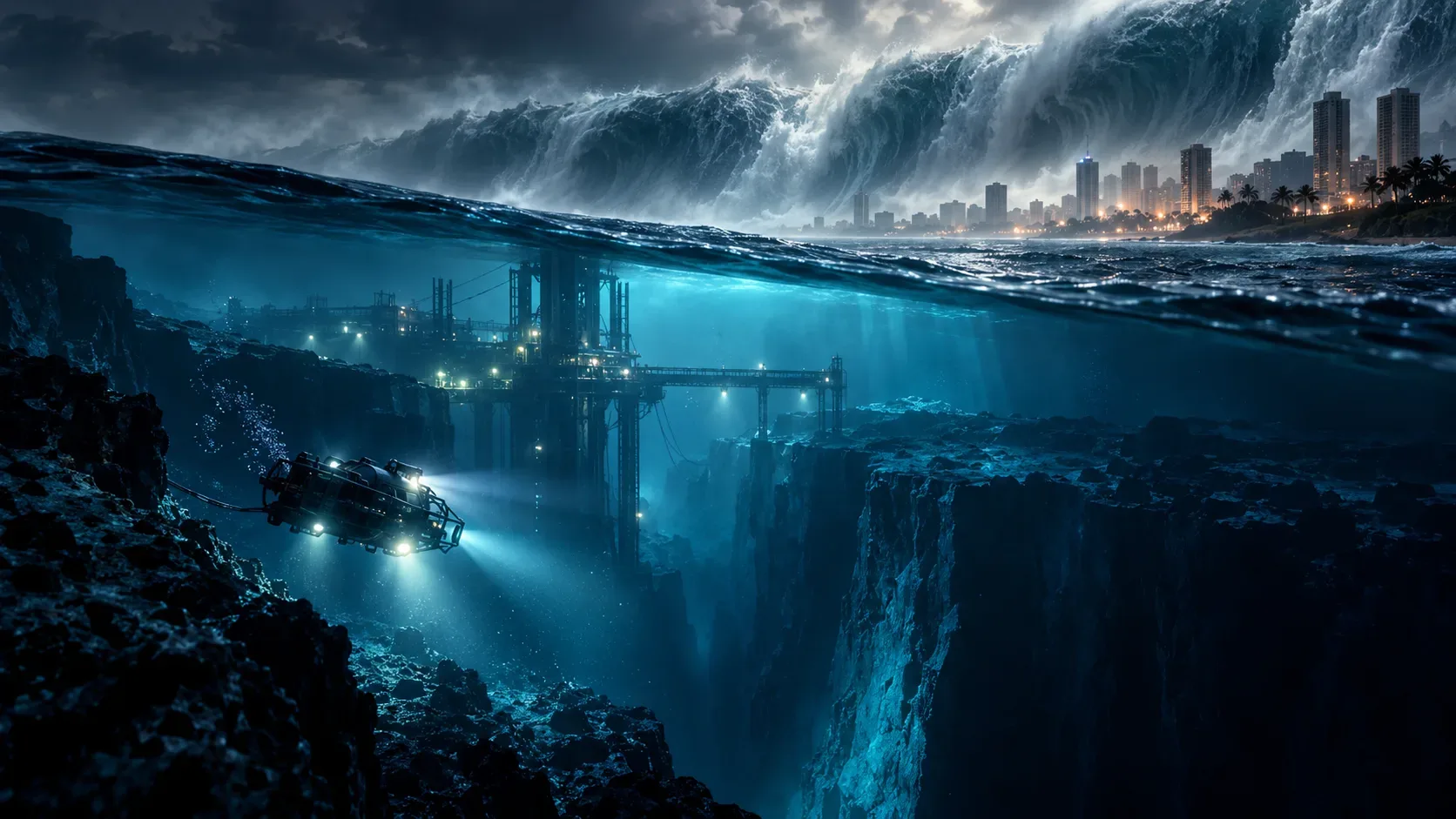
The Special Edition of The Abyss (1989) restored the giant tidal waves because they were central to the apocalyptic dimension James Cameron originally intended for the ending. To shorten the theatrical release, the director had removed the sequence and some of the context that made it meaningful. The expanded 1993 cut brought back a threat on a global scale, giving the encounter with the underwater beings consequences beyond the protagonists' survival.
The difference is one of narrative purpose, not merely spectacle. The 1989 cut focuses the resolution on the people at the heart of the story; the 1993 version makes its warning to humanity explicit. Cameron, however, acknowledged that he held final-cut authority over the original release. The Special Edition should therefore not automatically be described as the only legitimate director's cut.
Spoiler warning: the following sections reveal the endings of both versions of the film.
Theatrical cut vs. Special Edition: what changes?
The official Japanese catalog from 20th Century Studios lists approximately 140 minutes for the theatrical version and 171 minutes for the expanded version. The American Film Institute records the Special Edition's limited opening in Los Angeles and New York on February 26, 1993. The roughly 31-minute difference in running time does not mean 31 full minutes of new scenes: Los Angeles Times reporting from 1993 describes approximately 27 or 28 minutes of restored footage and around three additional minutes of credits.
| Aspect | Theatrical cut (1989) | Special Edition (1993) |
|---|---|---|
| Reference running time | Approximately 140 minutes | Approximately 171 minutes |
| Conflict at the surface | Reduced political and military context | Greater emphasis on the threat of nuclear war |
| Giant waves | Sequence removed | Threat created by the underwater beings is restored |
| Contact with the beings | Emphasis on discovery and rescue | The discovery also becomes a moral judgment of humanity |
| Other changes | More condensed characterization and connecting scenes | Relationships and supporting characters receive additional material |
This compares the central documented differences rather than attempting a scene-by-scene inventory of all restored footage.
What do the giant waves add to the ending?
In the expanded cut, the beings discovered deep in the ocean display a power that can threaten coastal cities and a naval facility. The prospect of a catastrophe on an enormous scale is tied to escalating human violence and the danger of thermonuclear war. The military conflict therefore stops being simply another source of pressure on the underwater mission: it becomes a reason for the beings themselves to respond.
The crucial point is that the waves are not presented as a disaster that has already devastated the world. The film uses them as a demonstration of force and a warning, tied to the beings' decision to spare humanity. Bud Brigman, played by Ed Harris, and his willingness to sacrifice himself for Lindsey, played by Mary Elizabeth Mastrantonio, gain significance beyond their relationship: the human capacity to love and act for another person offers an answer to that judgment.
An interpretation drawn from comparing the versions is that the theatrical cut preserves the emotional strength of Bud and Lindsey's journey, while the Special Edition connects this intimate story to a larger question: does a species inclined toward self-destruction deserve another chance? The waves make that question visible and give the resolution greater weight. There is no need to imagine that the waves actually destroyed cities to understand their dramatic role.
Why did Cameron remove the sequence in 1989?
In an interview published by the Los Angeles Times on February 22, 1993, Cameron described pressure to reduce the film's length and concerns about how theater exhibitors would respond. Test screenings also produced divided reactions to the tidal-wave material. He said he faced a choice between removing that storyline, along with the scenes needed to explain it, and cutting down the central love story.
His decision protected a crucial sequence involving Bud and Lindsey, particularly the desperate effort to revive her, which Cameron considered especially powerful in terms of performance. Removing the worldwide threat seemed a more direct way to shorten the film without dismantling the emotional effect of those scenes.
This should not be presented as a unilateral order from the studio. Cameron himself said that Fox wanted a shorter movie but did not dictate which specific scenes had to go. The theatrical cut was released under his control, even though he later felt that its omissions had changed the project's tone and intention.
What else returned besides the waves?
The restored scenes also rebuild the political situation at the surface and develop relationships on the underwater platform. According to the February 1993 report, passages involving Bud and Lindsey were reinstated, as were moments allowing more room for supporting characters. That brings together two scales that were more separate in the original release: an intimate emotional crisis beneath the ocean and the threat of nuclear conflict in the world above.
The restoration also required sound work and finishing. In a May 7, 1993 report, the Los Angeles Times explained that the original production-sound recordings had not been properly preserved and that dialogue had to be reconstructed from surviving materials. The Special Edition was therefore more involved than simply inserting finished scenes back into the edit.
Is the Special Edition the true director's cut?
Not in the sense that the 1989 version was assembled without Cameron's approval. In the LaserDisc edition's notes, as examined by the Los Angeles Times, the filmmaker made clear that he had contractual final-cut authority and believed in the version first released. He also explained that shortening the movie had altered more than its pace: it had altered its purpose. For him, the Special Edition fulfilled the script's original goals, but it remained another cut, not a correction that made the previous version cease to exist.
The contrast is useful: the theatrical version offers an adventure more tightly focused on Bud and Lindsey's experience; the Special Edition develops the political dimension, makes the danger of the waves explicit, and ties salvation to humanity's ability to move beyond its own violence. Which version works better depends on how much weight a viewer places on each focus.
Which version should you watch?
Anyone looking to understand why the giant waves matter should choose the 1993 Special Edition: it provides the context and resolution of the apocalyptic storyline. Anyone interested in the film audiences originally saw in 1989 can begin with the theatrical cut and then compare the third act of both edits.
These cuts should not be confused with picture formats or streaming availability. The Japanese 20th Century Studios catalog documents a 4K UHD release dated April 10, 2024, with both running times, but that information concerns the Japanese product; it does not confirm availability, catalog listings, or access terms in Brazil. When looking for a copy, check whether the advertised option is the theatrical cut or the Special Edition.