The 2010 restoration of Metropolis recovered more than 25 minutes of footage previously thought lost and reconstructed Fritz Lang's editing with the help of a print discovered in Argentina in 2008. The new 4K version, scheduled by the Friedrich-Wilhelm-Murnau Foundation for the second half of 2027, is a project to restore and redigitize the picture. As of October 22, 2026, no additional recovered scenes had been announced for that edition, nor was there an exact premiere date or a confirmed Brazilian release.
That distinction matters. In 2010, the breakthrough was the recovery of parts of the story audiences could no longer see. The stated goal for 2027 is to improve the presentation of a film whose most extensive surviving reconstruction already exists.
The 1927 film did not survive as one intact, complete print
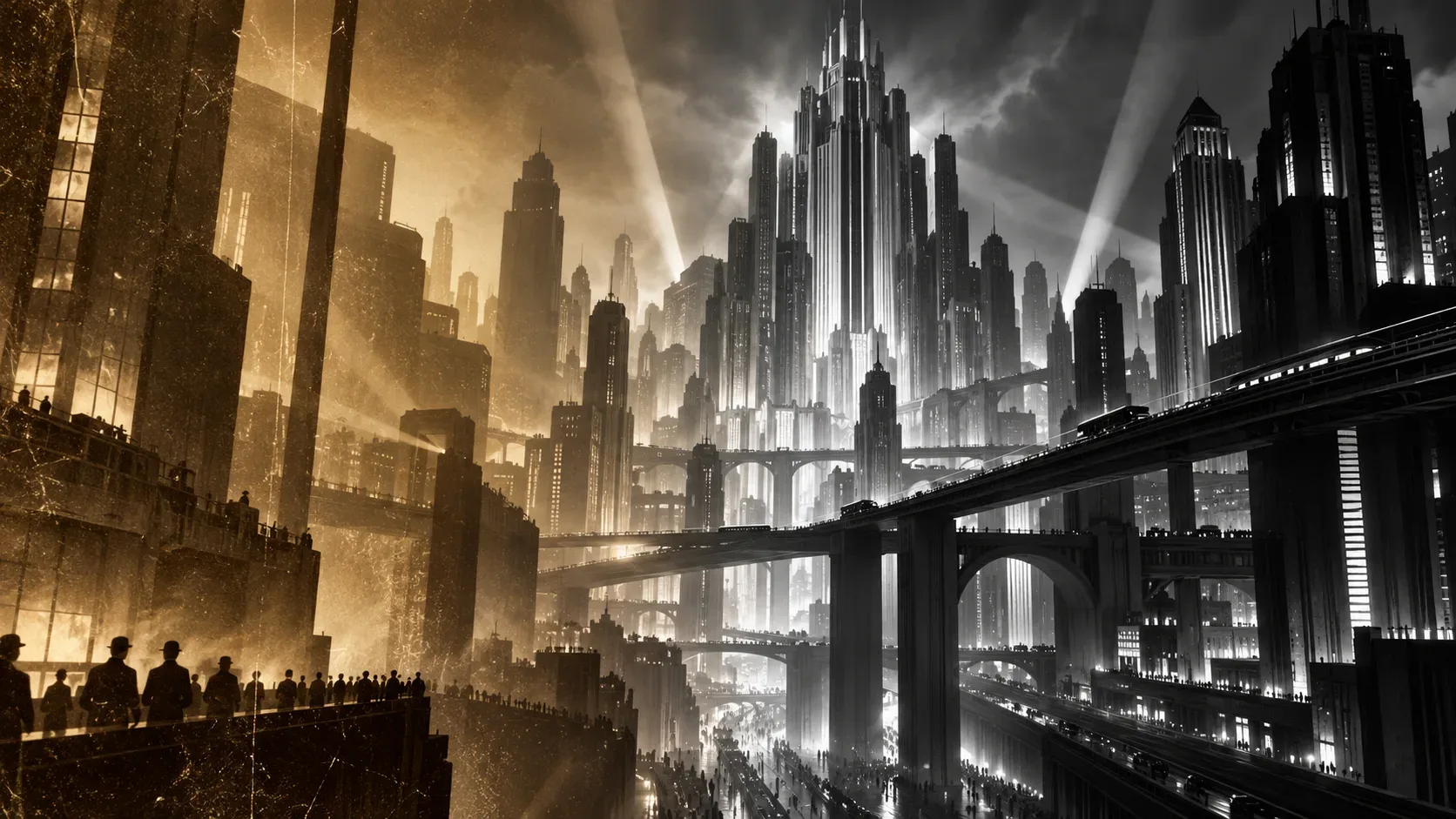
Metropolis premiered on January 10, 1927, at Berlin's Ufa-Palast am Zoo. Lang's science-fiction film, written by Thea von Harbou, takes place in a futuristic city divided between the ruling elite and the workers who keep its machinery running. Soon after the premiere, distributors shortened the film by almost a quarter. What survived across the following decades were copies with cuts and differences in editing, rather than an intact master of the opening-night version.
That is why the word “original” needs context. There is the work released in 1927, there are historical records of its editing, and there are reconstructions assembled from materials held in different archives. A restoration can move closer to the premiere without becoming a physically complete print of it.
What the 2001 reconstruction had already achieved
Before the Argentine discovery, the Murnau Foundation and its partners had gathered the best materials then known. The reconstruction presented in 2001 represented certain missing passages with still photographs and explanatory text, allowing audiences to follow the narrative connections. It was a major achievement, but it had no filmed images with which to fill every gap.
Metropolis was registered in UNESCO's Memory of the World programme in 2001, specifically through the negative of the version restored and reconstructed that year. That registration did not anticipate or certify the 2010 edition or the future 4K version.
What the Buenos Aires print actually restored in 2010
In 2008, the Museo del Cine Pablo C. Ducrós Hicken in Buenos Aires brought to light 16 mm material containing passages absent from versions then in circulation. The restoration, led by the Murnau Foundation with the Deutsche Kinemathek and in collaboration with the Argentine museum, incorporated that material and was presented on February 12, 2010, at events in Berlin and Frankfurt.
It was not a matter of appending extra scenes to the end. Restorers Anke Wilkening and Martin Koerber, interviewed by Turner Classic Movies, explained that the Argentine material also helped them reconsider the order of existing shots and recover the importance of parallel stories, particularly those involving Josaphat, Georgy (also identified as 11811), and the character known as the Thin Man. Relationships, pursuits and motivations that once seemed fragmented acquired continuity. Gottfried Huppertz's original score, reconstructed and performed in an orchestral recording conducted by Frank Strobel, is another identifying feature of this presentation.
The photographic difference is noticeable. The Argentine material came from a 16 mm reduction derived from an already worn 35 mm print. Scratches, softness and fluctuations in brightness could not be removed completely. When the image becomes rougher in certain sections of the 2010 version, that usually reflects the damaged source of recovered footage, not a fault in the viewer's file.
The 2010 reconstruction remains nearly complete, not entirely complete. Some shots and sequences are still missing. It would be inaccurate to call it the 1927 premiere version recovered without any gaps.
What the planned 2027 4K restoration actually promises
The Murnau Foundation has announced a new digital 4K version for the second half of 2027, as part of the film's centenary. The foundation currently identifies the 2010 restoration as a 2K version and says it intends to distribute the new edition directly to cinemas, festivals and event organizers. Its centenary programme mentions a hoped-for premiere at an international festival, but no specific festival or day has been confirmed.
The project has concrete backing. In a statement dated January 29, 2026, Germany's FFA film funding agency announced a grant of 114,035.41 euros to restore and redigitize the film in 4K. The agency described the effort as a way to deliver better screening quality for the hundredth anniversary.
That statement does not confirm the discovery of new negatives, the return of footage that remains lost, any specific re-editing, a 4K Blu-ray release, or a Brazilian theatrical or streaming window. Nor can a 4K resolution recreate details already absent from a surviving 16 mm source. The final image quality, treatment of damage and any presentation differences can only be compared reliably once specifications or screenings of the new edition are documented.
148 or 150 minutes: are these different Metropolis cuts?
Not necessarily. Kino Lorber lists The Complete Metropolis, its edition of the 2010 restoration, at 148 minutes. Eureka lists its release of the same reconstruction at 150 minutes. The Monocurator guide also cites a Murnau Foundation DCP record of 149 minutes and 36 seconds. These listings do not, on their own, establish three separate edits.
For silent cinema, runtimes can differ because of rounding, projection speed, presentation details or catalogue metadata. The historical estimate of roughly 153 minutes for the 1927 premiere is not automatically the running time of a complete print available today, either. To identify the edition you are watching, check the reconstruction year, restoration credits, Buenos Aires footage and score details together rather than relying on the clock alone.
The Metropolis versions compared
| Milestone | What it represents | What changed or is planned | Important limitation |
|---|---|---|---|
| 1927 | Berlin premiere | Historical reference for the initial edit | No single intact print of that version survives |
| 2001 | Reconstruction using then-known materials | Reassembled the film and marked gaps with photographs and text | Many moving-image passages were still absent |
| 2010 | 2K reconstruction and restoration | Recovered over 25 minutes, parallel stories and editing relationships | Damaged footage and some gaps remain |
| 2027 (planned) | New 4K restoration and digitization | Aims to improve presentation for the centenary | No newly recovered scenes or Brazilian release confirmed |
For viewers who want the most extensive version of the story documented so far, the edition identified as the 2010 restoration remains the reference point. The 2027 project should be followed as an announced technical update, not a discovery of a secret, entirely complete cut.
Sources and references
- Murnau Foundation: Metropolis centenary and 4K plan
- Murnau Foundation: 2010 reconstruction project
- FFA: funding for 4K restoration and digitization, January 29, 2026
- Turner Classic Movies: interviews about the 2010 restoration
- Kino Lorber: The Complete Metropolis release (148 minutes)
- Eureka: 2010 reconstruction edition (150 minutes)
- UNESCO: registration of the reconstructed 2001 version's negative
- Monocurator: edition and runtime comparison