No, you do not need to play Hades before Hades II. Supergiant Games describes its new adventure as a direct sequel set after the events of the first game, but explicitly states that no knowledge of the original or of Greek mythology is required to enjoy it. Returning players will recognize family ties and references; newcomers get a different lead character and a conflict they can follow on its own terms.
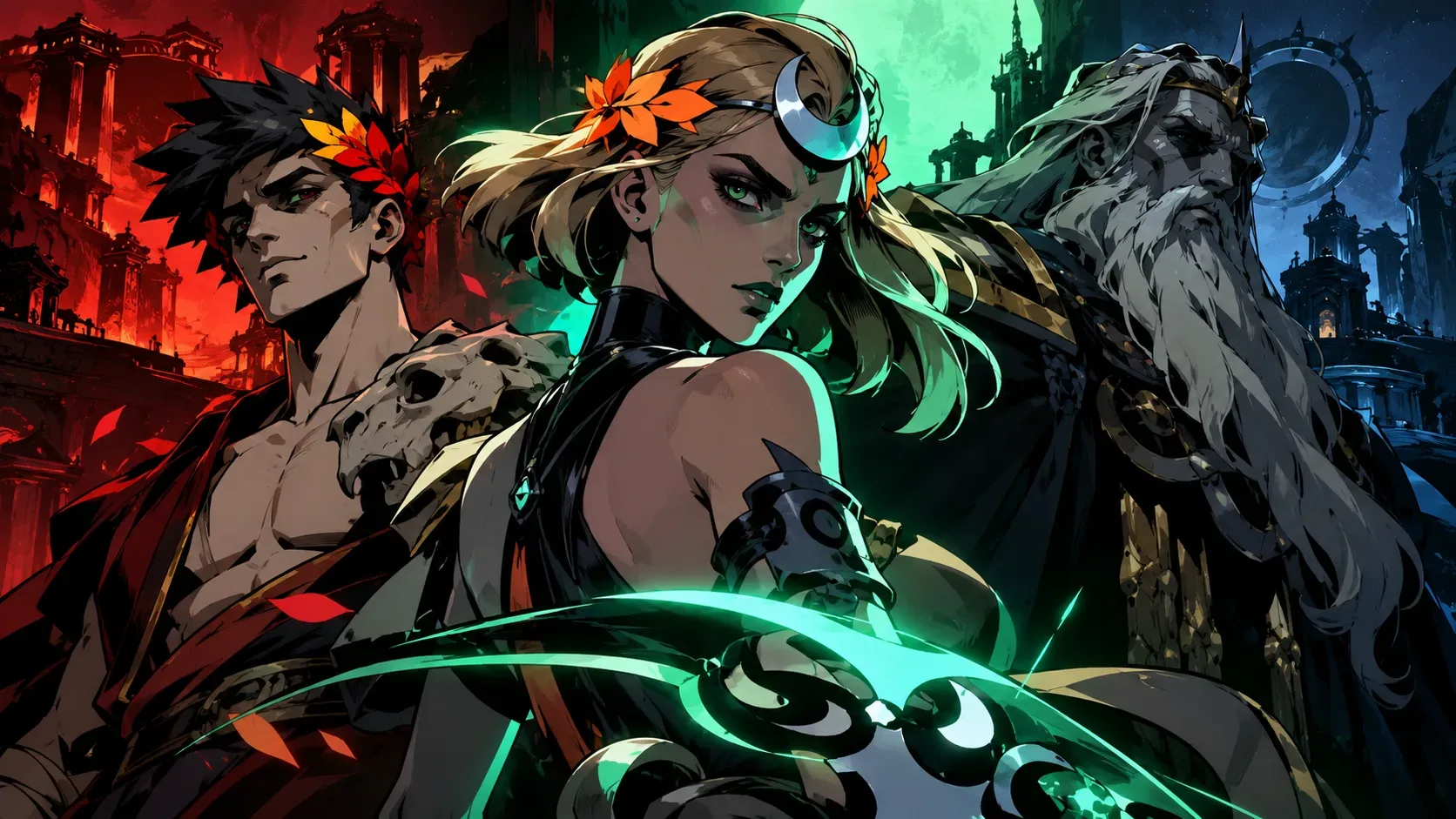
Three names are enough to understand the setup without uncovering major twists: Melinoë, the heroine of Hades II; Zagreus, her brother and the lead of Hades; and Chronos, the Titan of Time who threatens their family and the Olympian gods. This guide sticks to the officially disclosed premise, without revealing either game's ending or the eventual fate of its characters.
Is Hades II a sequel or a standalone story?
It is a narrative sequel, not a reboot. In the original Hades, players follow Zagreus as he repeatedly attempts to escape the Underworld and defy the authority of his father, Hades. Those runs also create opportunities for conversations and relationships that gradually establish the divine family's background.
Hades II takes place afterward but shifts the focus to Melinoë, Princess of the Underworld and a practitioner of witchcraft. In Supergiant's official setup, Chronos escapes imprisonment deep beneath the Underworld and wages war against Olympus. The studio's FAQ does not specify the exact number of years separating the stories, so newcomers do not need to reconstruct a detailed timeline before starting.
Melinoë, Zagreus and Chronos: the family connections
The most useful relationship is straightforward: Melinoë and Zagreus are siblings, Hades is their father, and Chronos is Hades' father. That makes Chronos the protagonists' grandfather within the genealogy used by the games. The Titan's name appears as Chronos in Supergiant's English-language material and as Cronos in the Brazilian Xbox Wire article.
| Character | Relationship and role | What to know before playing |
|---|---|---|
| Melinoë | Zagreus' sister and protagonist of Hades II | She is the Princess of the Underworld and uses sorcery and her own weapons. |
| Zagreus | Melinoë's brother and protagonist of Hades | His earlier journey adds context but is not a required first step. |
| Hades | Father of the siblings and son of Chronos | He is the god associated with ruling the Underworld and a central family figure. |
| Chronos (Cronos) | Hades' father; grandfather of Melinoë and Zagreus | He is the Titan of Time presented as the sequel's major threat. |
| Hecate | Goddess associated with magic and crossroads | She establishes the witchcraft theme and is not part of this direct family line. |
This is a map of the games' own interpretation of mythology, not an attempt to reconcile every ancient variation into a single family tree. Supergiant itself explains that it reimagines classical traditions for its storytelling.
What is the minimum timeline needed for Hades II?
- Original Hades: Zagreus tries to leave the Underworld. His repeated journeys and meetings with gods and other characters develop the family story.
- After the original game: the sequel begins from a new crisis. According to its official introduction, Chronos breaks free and goes to war against Olympus.
- Hades II: Melinoë takes the central role and challenges the Titan's forces with magic, weapons and divine support.
This outline covers the order of events and the sequel's premise only. It does not disclose how Hades ends, what happens to Zagreus during the new crisis, or the ending of Hades II. Those discoveries belong to the games themselves.
What do you actually gain by playing Hades first?
The main benefit is additional context. Understanding Zagreus' relationship with his father, recognizing familiar characters and seeing how the gods participate in each run can make certain conversations and references more rewarding. It also teaches a core storytelling idea: repeating a route does not mean experiencing exactly the same events every time.
- Helpful: familiarity with family dynamics, divine boons and storytelling spread across many runs.
- Not required: completing every activity, meeting every character or consulting a mythological family tree before Hades II.
- Also unnecessary: seeing the first game's ending to follow the basic premise of Melinoë's journey.
There is one practical caveat. Because Hades II takes place later, some connections may hint at information that players hoping to experience the first game completely blind would rather encounter themselves. That is a matter of preferred playing order, not a comprehension requirement.
What about combat: must you master Zagreus before Melinoë?
No. Both games use action-oriented, repeated runs with upgrades and encounters that vary from attempt to attempt. The original Hades FAQ describes this loop as a defining feature of the roguelike genre. The sequel retains that foundation while introducing its own systems and a different playable character to learn.
In Xbox Wire's Brazilian comparison, Zagreus emphasizes quick dashes and a ranged cast, while Melinoë has a longer sprint, a Magick resource for empowered Omega moves and an ability that controls nearby space. Her weapons are different, too. Prior experience with Hades may make some systems easier to recognize, but it does not replace learning Hades II's controls and tactics.
Which game should you start with?
- Want the family story from the beginning? Play Hades, then Hades II. Release order also preserves more of the original game's discoveries.
- Want to try Melinoë right away? Start with Hades II. The developer explicitly says prior knowledge is unnecessary.
- Already know a summary of Hades? It can offer context, but it is not a prerequisite for the new campaign or its combat systems.
This guidance applies to the finished game, not just Early Access. Hades II reached version 1.0 on September 25, 2025, and the official FAQ, updated on April 14, 2026, still says the original is optional. The decision is whether to discover as many family connections as possible beforehand or encounter them through Melinoë's perspective.
Sources and references
- Supergiant Games: Hades II FAQ (updated April 14, 2026)
- Supergiant Games: original Hades II announcement (December 9, 2022)
- Supergiant Games: original Hades FAQ
- Xbox Wire Brazil: comparison of both games' combat, weapons and routes (March 26, 2026)
- Supergiant Games: Hades II version 1.0 launch (September 25, 2025)