Spoiler warning: this article reveals the entire ending of The Sandman Season 2 and the concluding comic-book arcs.
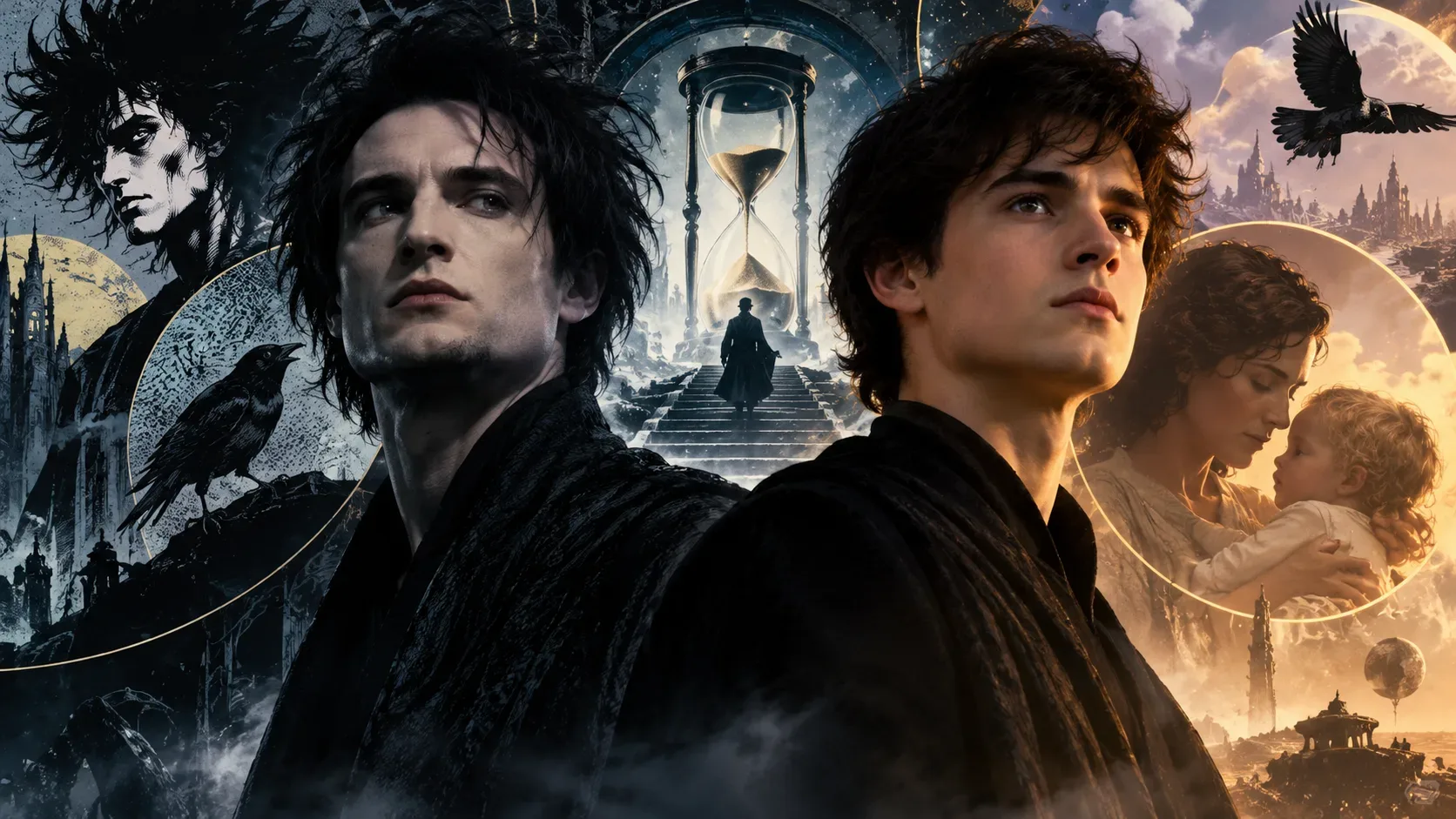
Daniel Hall becomes the new Dream of the Endless, but he is not Morpheus resurrected as the same person. He inherits the cosmic office, the realm and part of his predecessor's legacy, including memories, without replicating his identity or temperament. Netflix preserves that succession from the comics while changing Daniel's origin and emphasizing different aspects of Morpheus's farewell and his relationship with Lyta.
Daniel is Dream, but Morpheus has not come back to life
In The Sandman, Dream is both an office held by one of the Endless and a way of referring to its holder. Morpheus, played by Tom Sturridge, is the incarnation followed through most of the story; Daniel does not take on Morpheus's personal name. Rebirth describes the continuity of Dream, not the unchanged return of Morpheus's consciousness.
Showrunner Allan Heinberg told Netflix that the old Dream had to die and be reborn in Daniel as a different Dream. Speaking to TheWrap, he also explained that Jacob Anderson needed to portray someone connected to Sturridge's character without imitating him. That distinction matters: the power continues, but the individual changes.
How does baby Daniel become the new Dream on Netflix?
The connection begins in Season 1. Lyta Hall becomes pregnant with a child fathered by Hector, her deceased husband, during a dream that becomes real because she is close to Rose Walker, a dream vortex. Since the child was conceived in the Dreaming, Morpheus lays claim to him. This does not make Morpheus Daniel's biological father: Lyta and Hector remain his parents.
In Season 2, Morpheus grants his son Orpheus the death he has requested. By spilling family blood, Dream draws the attention of the Kindly Ones, vengeful powers that ravage his realm through Lyta. In Episode 8, Loki throws the infant Daniel into a fire, which, according to Netflix's official explanation, burns away his humanity and prepares him to become Dream.
In Episode 10, Morpheus takes Death's hand and dies. Daniel then assumes an adult form played by Jacob Anderson; in Episode 11, he takes his predecessor's place, wearing white and carrying the green stone associated with Dream's power. Only eight months old, he has to learn to rule while Lucienne and Matthew still grieve Morpheus. The change in protagonist does not erase the other characters' loss.
Daniel's conception is different in the comics
The clearest difference concerns Lyta and Hector's backstory. As DC explains, Lyta was already pregnant with Hector's child when the couple entered the Dream Dimension. There, the dead Hector served as a makeshift Sandman under the influence of the dream creatures Brute and Glob. That plot drew on characters and events from earlier DC superhero continuity. Daniel is born after Lyta's stay in the dream world and is subsequently claimed by Morpheus.
On television, the pregnancy begins inside Lyta and Hector's dream, enabled by Rose Walker's vortex powers. The adaptation streamlines the earlier superhero backstory and focuses on Lyta, her son and the ruler of the Dreaming. Both versions retain Daniel's parents and his extraordinary link to dreams, but not the same chronology of conception.
Did Daniel inherit Morpheus's memories and personality?
In the comics, the A.V. Club's critical discussion of The Wake describes Daniel taking on Morpheus's memories and elements of his appearance. That does not turn him into a duplicate: he is a new manifestation of Dream, whose human beginnings influence his decisions. Morpheus remains the name of the incarnation that died.
On screen, the inheritance is conveyed chiefly through the continuing office and Daniel's connection to the Dreaming. Critical coverage also speaks of echoes of the old ruler's memories, but Netflix's official account stresses something more directly established about the finale: Daniel is inexperienced, asks questions and needs help from Lucienne and Matthew. Those accounts do not establish that he remembers every event Morpheus experienced or that both characters share an identical consciousness.
His response to Lyta makes the contrast visible. Morpheus often sought to enforce the authority of his office; the new Dream is presented as more open to compassion and forgiveness. This is a reading supported by the finale and the characterizations in interviews, not a rule that every future Dream must resemble Daniel.
Has Lyta lost her son, or is she still the new Dream's mother?
Both ideas are part of the story's tension. Lyta loses life with Daniel as a human child when he becomes the cosmic Dream, but that does not erase where he came from or the fact that she is his mother. In Netflix's final episode, the new Dream forgives Lyta for what she did under the influence of the Kindly Ones, embraces her and promises to visit her in dreams, as described in TV Insider's detailed account.
The comics likewise allow Daniel and Lyta a moment of reconciliation, yet her grief carries into later stories. DC's description of The Sandman Presents: The Furies states that, three years after Daniel leaves to fulfill his destiny, Lyta still suffers deeply over the loss of her only son. The reconciliation staged by Netflix therefore should not be mistaken for an immediate resolution of her pain in print.
What changes between the comics and Netflix?
| Aspect | Comics | Netflix series |
|---|---|---|
| Identity | Daniel succeeds Morpheus as a new manifestation of Dream. | The succession remains; Jacob Anderson plays the new Dream. |
| Origin | Lyta is already pregnant when she enters the dream world with Hector; Brute and Glob are part of the backstory. | Conception takes place in Lyta and Hector's dream, made possible by Rose Walker's power. |
| Morpheus's farewell | The concluding arc gives more space to waiting and the burden of his fate. | Heinberg emphasizes Dream's active attempt to save his realm before choosing death. |
| Memory and demeanor | Daniel inherits Morpheus's memories but not his personal identity. | The show foregrounds inexperience, humanity and a more forgiving disposition. |
| Lyta | The bond remains, but loss and its consequences carry into later stories. | A moment of forgiveness between mother and son is prominent in the finale. |
The central plot comes from The Kindly Ones and The Wake, adapted in a condensed form. Ashley Hurst's comparison for What's on Netflix documents that compression and other character changes. The important distinction here is between the mythology that carries over and the events the adaptation rearranges.
So Daniel can be called the same Dream only if Dream means the enduring cosmic role and realm. If the question is whether Morpheus survives under a different face, the answer is no: Morpheus's death is real within the story, and Daniel begins a different way of inhabiting that office.
Sources and references
- Netflix Tudum, Keisha Hatchett (July 24, 2025): Season 2 ending
- Netflix Tudum: Season 1 ending explained
- TheWrap, Jacob Bryant (July 25, 2025): Allan Heinberg interview
- DC, Alex Jaffe (2022): Daniel Hall and comic-book continuity
- DC: The Sandman, Vol. 10, The Wake, 30th Anniversary Edition
- DC: The Sandman Presents: The Furies
- A.V. Club (2013): critical discussion of The Wake and Daniel’s memories
- What’s on Netflix, Ashley Hurst (2025): adaptation comparison
- TV Insider, Erin Maxwell (July 24, 2025): Daniel and Lyta in the finale