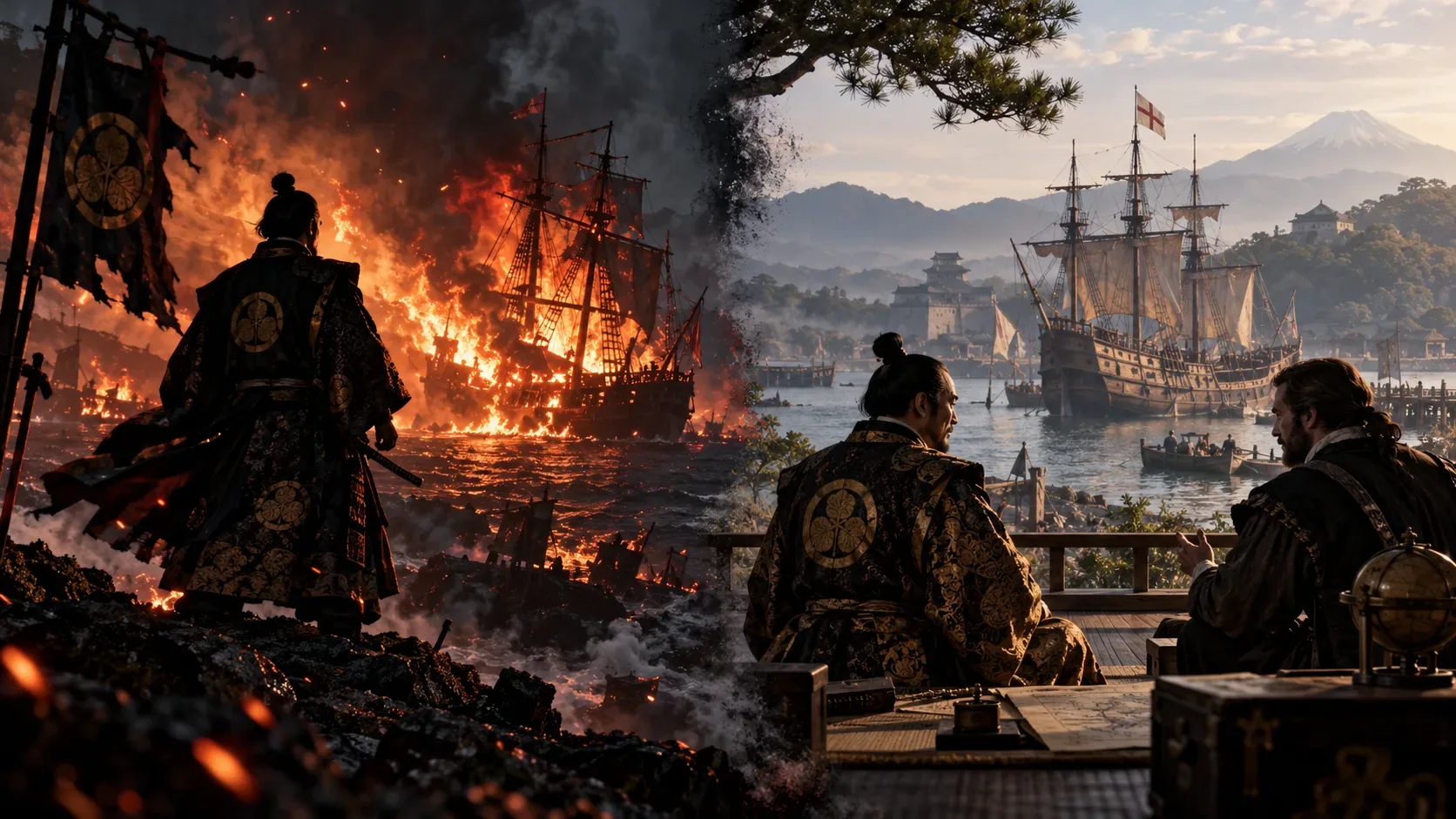
Spoiler warning: this article discusses the ending of Shōgun (2024), season 1, episode 10.
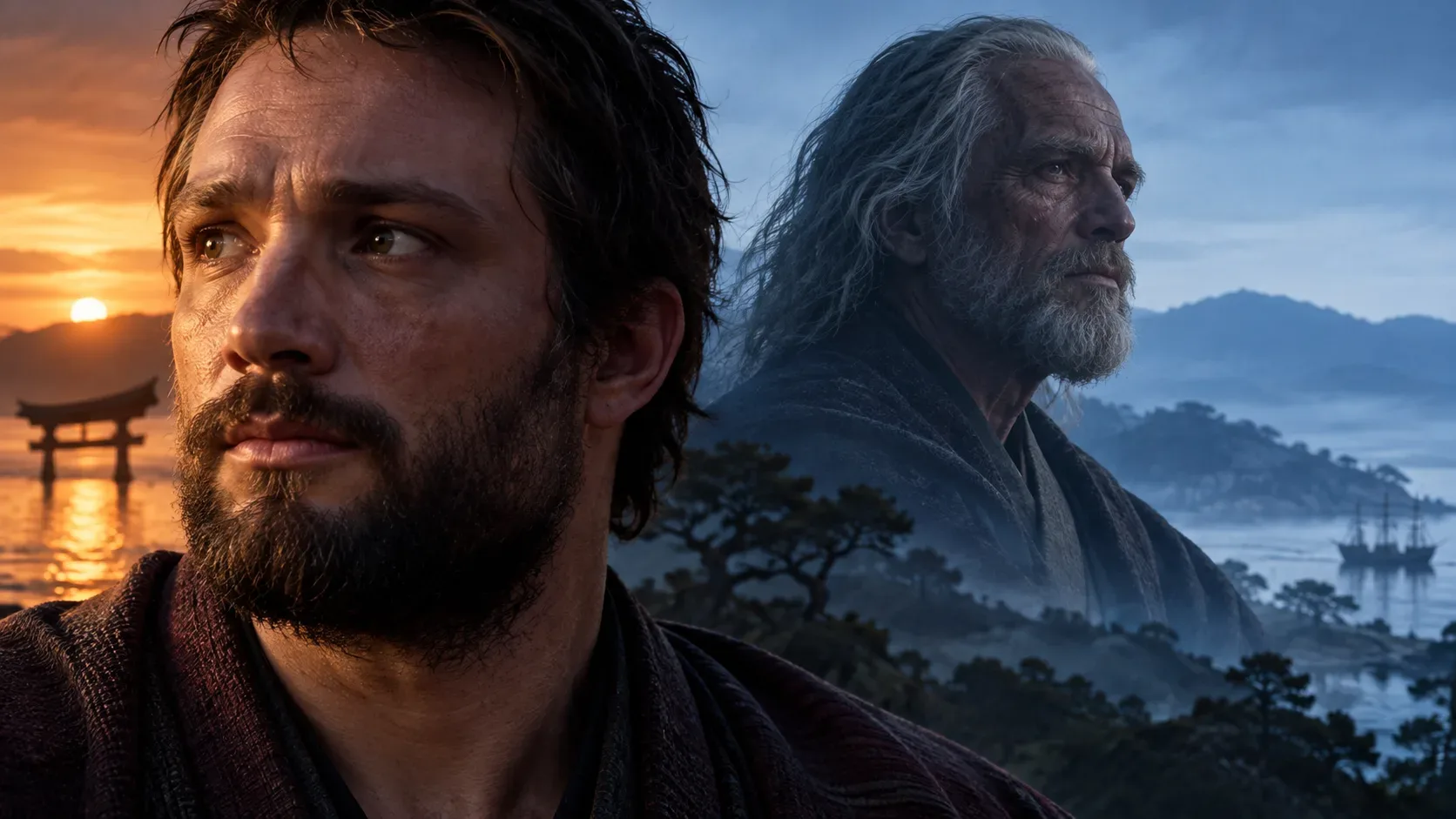
The elderly Blackthorne is not a confirmed flash-forward to the future of Shōgun. The opening of “A Dream of a Dream” depicts a dream or vision of a possible life imagined by the younger Blackthorne. Showrunner Justin Marks explained the device on FX’s official podcast: it initially looks like an old man remembering his past, but ultimately reveals a young man imagining the future he might have had. The episode does not establish that he ends his life in England.
Why does the opening look like a fixed future?
Episode 10 begins with an aged Blackthorne in bed in England, surrounded by mementos from Japan. He is holding the crucifix that once belonged to Mariko. The editing invites us to think his journey is already over and that the ensuing story will be told from its endpoint. FX’s official viewer guide carefully describes the scene as a dream or vision of the future, without identifying it as an event that definitely takes place.
The narrative then returns to the aftermath of the explosion in Osaka: Yabushige wakes Blackthorne, who discovers Mariko’s body. Dave Nemetz’s TVLine recap also describes another glimpse of an older Blackthorne later in the episode. These shifts are part of the storytelling device. By themselves, they establish neither literal time travel nor an old age the character actually lives through.
Mariko’s crucifix provides the decisive clue
The key to reconsidering the opening is the object held by elderly Blackthorne. Toward the end, he accompanies Fuji onto the water for a farewell to their dead. Fuji releases her family’s ashes into the sea, while Blackthorne lets Mariko’s crucifix sink beneath the surface. The object still in his hands in the supposed future is now gone.
In William Goodman’s Men’s Health interview, Justin Marks explains the decision explicitly: by releasing the crucifix, Blackthorne makes that particular opening future impossible, because his older imagined self still possessed it. This is the creators’ explanation of the dramatic structure, not evidence of any supernatural rule governing objects or visions.
What Justin Marks and the editors actually confirmed
Speaking to host Emily Yoshida on FX’s official episode 10 podcast, Marks calls the opening a “false dream.” The team wanted viewers to first read it as the memories of a regretful elderly man. The reversal is that Blackthorne is still young, imagining a future governed by the same ambitions. When he offers his life to protect Ajiro and Toranaga stops him, Blackthorne symbolically puts an end to the identity he brought with him to Japan.
Editor Maria Gonzales told Matt Feury at Frame.io Insider that an earlier cut included an elderly Blackthorne living in Japan. That material was changed and portions of the episode were restructured. Gonzales characterizes the opening that survived in the released version as closer to a dream or nightmare than reality. Her comments concern a previous edit; they do not establish that those additional scenes appear in the broadcast episode.
So what ultimately happens to Blackthorne?
The on-screen ending does not settle where or when he will die. He helps his new community haul the remains of the Erasmus from the water and begins to find a different place among its people. FX’s guide describes his new life in Japan as continuing indefinitely, while the official podcast’s narration explicitly notes that his eventual fate remains unwritten within the show.
That rules out two easy assertions: the elderly man in England does not prove Blackthorne eventually goes home, and the ending in Ajiro does not prove he will never leave Japan. William Adams, the historical inspiration for Blackthorne, had his own documented life. His biography cannot be used to turn either possibility into an established event in this fictional story.
How does the dream change the meaning of the finale?
The opening imagines a man who has grown old without letting go of the past; the ending follows his younger self as he begins to relinquish control and the achievements he once pursued. On the FX podcast, actor Cosmo Jarvis describes Blackthorne’s journey as a shift away from self-serving ambition toward an action made for other people. The creators’ intended reading is not that Blackthorne has glimpsed an unavoidable fate, but that he can reject one possible version of his life.
Sources and references
- FX, official episode 10 guide: A Dream of a Dream
- FX, official episode 10 podcast with Justin Marks and Cosmo Jarvis
- Men’s Health, William Goodman’s interview with Justin Marks and Rachel Kondo
- Frame.io Insider, Matt Feury’s interview with editors Maria Gonzales and Aika Miyake
- TVLine, Dave Nemetz’s recap of the finale