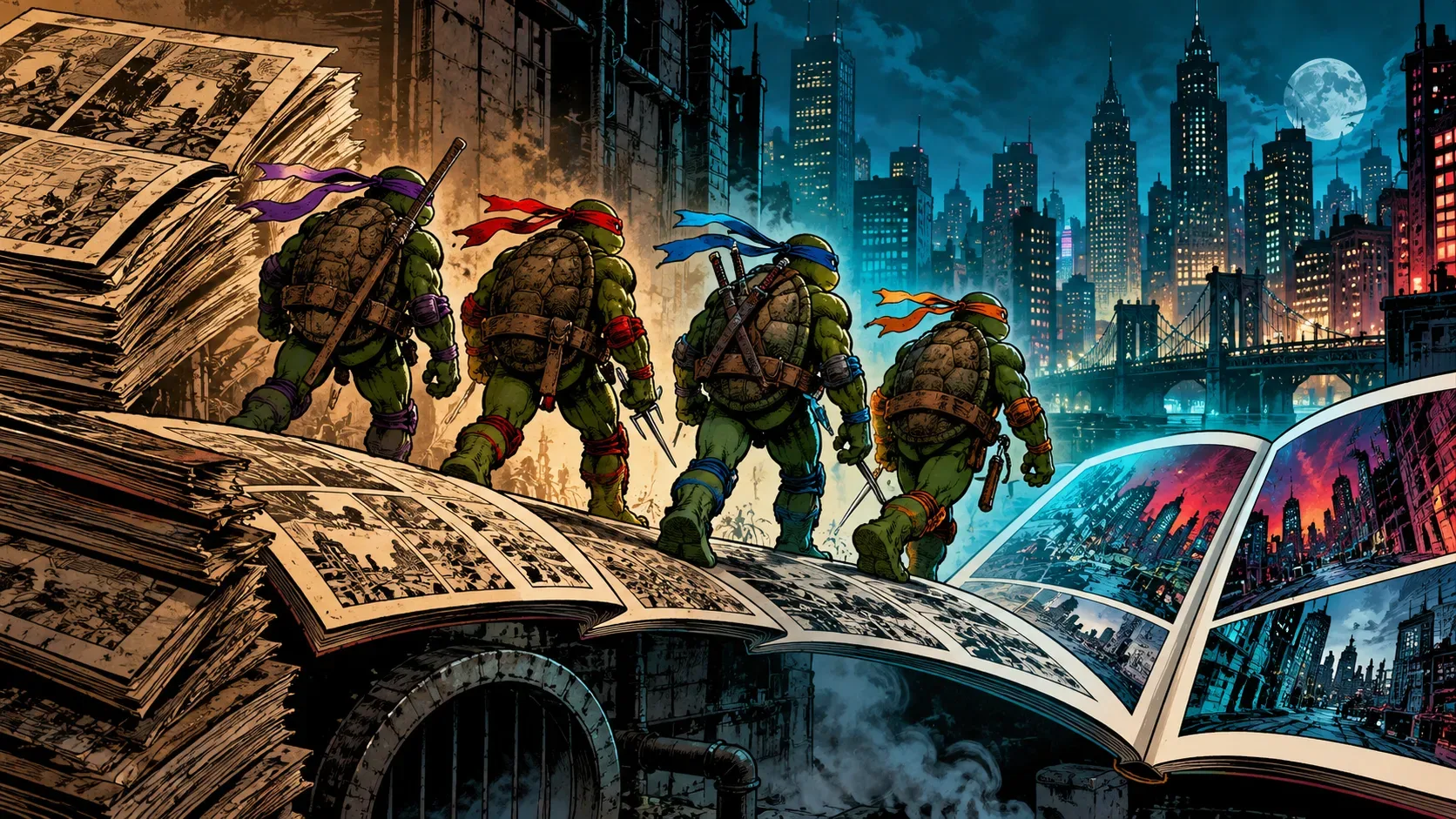
Yes. IDW's Teenage Mutant Ninja Turtles series launched in July 2024 continues the story that began in 2011. Returning to issue #1 marks a new publishing era, initially written by Jason Aaron, rather than a reboot that erases the previous 150 issues. Crucially, the new starting point was designed to work even for readers who have not followed the entire saga.
This guide focuses on continuity and reading order without revealing how the 2011 to 2024 run ends. It mentions the officially published premises of the final issues and the subsequent series.
What happened to the 2011 series before the new #1?
IDW began its own ongoing Teenage Mutant Ninja Turtles comic in 2011. It reached issue #150, published on April 24, 2024. Tom Waltz wrote the first 100 issues; Sophie Campbell became the main writer with #101 and guided the concluding stretch. According to the official description of #150, its finale concerns Donatello, the threat of Armaggon, and time-related consequences.
That issue ends the numbering established in 2011, but it does not end the fictional universe. This is why the special Teenage Mutant Ninja Turtles: Alpha, released in June 2024, and the new series beginning in July can follow earlier events without retelling the characters' origins.
Why does Jason Aaron's series start at #1 if it is the same continuity?
In a prelaunch interview with ComicBook.com, Jason Aaron said he did not intend to restart the timeline. His aim was to draw on the important parts of the preceding run and make them understandable to someone arriving for the first time. The publisher, meanwhile, promoted the July issue as a new jumping-on point.
The initial setup helps explain that decision. The four brothers are away from New York and separated from one another. The new #1, published on July 24, 2024, focuses on Raphael, who is in prison, with art by Joëlle Jones. The early stories also introduce Michelangelo living in Tokyo, Leonardo traveling the world in search of peace, and Donatello held captive. Instead of requiring a summary of dozens of previous story arcs, the narrative first establishes each brother's immediate predicament.
So a new issue number does not mean a new origin. The events of 2011 through 2024 still count; returning readers will notice more connections, while newcomers are given context as the story unfolds.
Is Alpha required, and what does the first collected volume contain?
Teenage Mutant Ninja Turtles: Alpha #1 sits between the old #150 and the 2024 #1. The special includes a story about Old Hob and the mutant community, written by Tom Waltz and drawn by Gavin Smith, alongside a ten-page prelude to the new run, written by Aaron and drawn by Chris Burnham, focusing on Donatello. It serves as a bridge for readers who followed the previous finale, but it is not essential to understanding the opening of the relaunched series.
There is an important detail when buying collected editions: Teenage Mutant Ninja Turtles, Vol. 1: Return to New York contains the Alpha prelude Long Way From Home and the 2024 issues #1 through #6. The publisher's description does not say that the entire Alpha special is reproduced in this book. The volume therefore includes Aaron's prelude, but readers who also want Old Hob's companion story should check the separate special.
Reading order: where should you start without reading 150 issues?
- Start immediately: begin with Teenage Mutant Ninja Turtles (2024) #1. It is the publisher's advertised entry point, introducing Raphael's situation before the brothers' reunion develops.
- Start with the prelude: read Long Way From Home, followed by the 2024 issues. The Return to New York collection puts that opening in order, containing the prelude and #1 through #6.
- Bridge from the previous run: if you read the 2011 series, continue through #150, read Alpha #1, and then start the 2024 #1. This publication order makes the earlier consequences easier to recognize.
- Read everything: if you want to explore how this universe developed from its beginnings, start with 2011's #1. IDW's collections and compendiums provide ways to catch up; doing so adds depth but is not a requirement of the 2024 story.
To avoid confusion when selecting editions, always check the year beside the issue number: Teenage Mutant Ninja Turtles #1 (2011) and #1 (2024) begin different publishing eras within the same continuity.
Does The Last Ronin belong in this reading order?
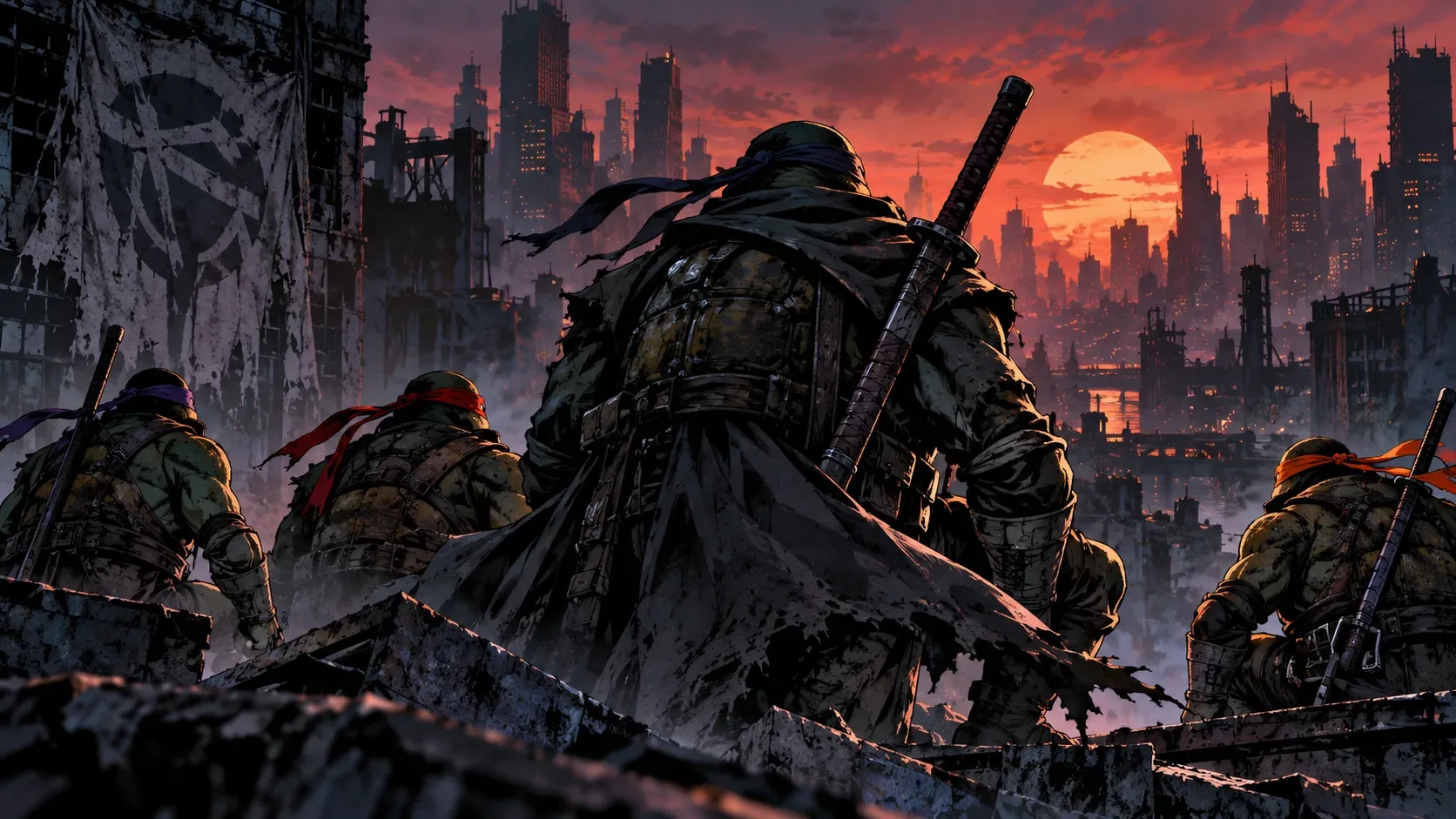
No. Teenage Mutant Ninja Turtles: The Last Ronin tells its own story, set in a devastated future and centered on one surviving Turtle. Although it was published by IDW and involves creators associated with the ongoing comic, it belongs to a different narrative branch. Writer Tom Waltz described this branch as adjacent to the original Mirage universe, rather than required reading in IDW's ongoing timeline.
You can read The Last Ronin on its own, just as you can begin the 2024 series without reading that miniseries. The crucial distinction is between shared continuity, in the case of IDW's 2011 and 2024 series, and an alternate story, in the case of The Last Ronin.
Sources and references
- IDW: compendium for the ongoing series launched in 2011
- Penguin Random House/IDW: issue #150 listing
- Penguin Random House/IDW: Alpha listing
- Penguin Random House/IDW: Teenage Mutant Ninja Turtles (2024) #1 listing
- IDW: contents of the Return to New York collected edition
- ComicBook.com: Jamie Lovett's interview with Jason Aaron, February 20, 2024
- IDW: The Last Ronin collected edition
- AIPT: interview with Tom Waltz about The Last Ronin continuity