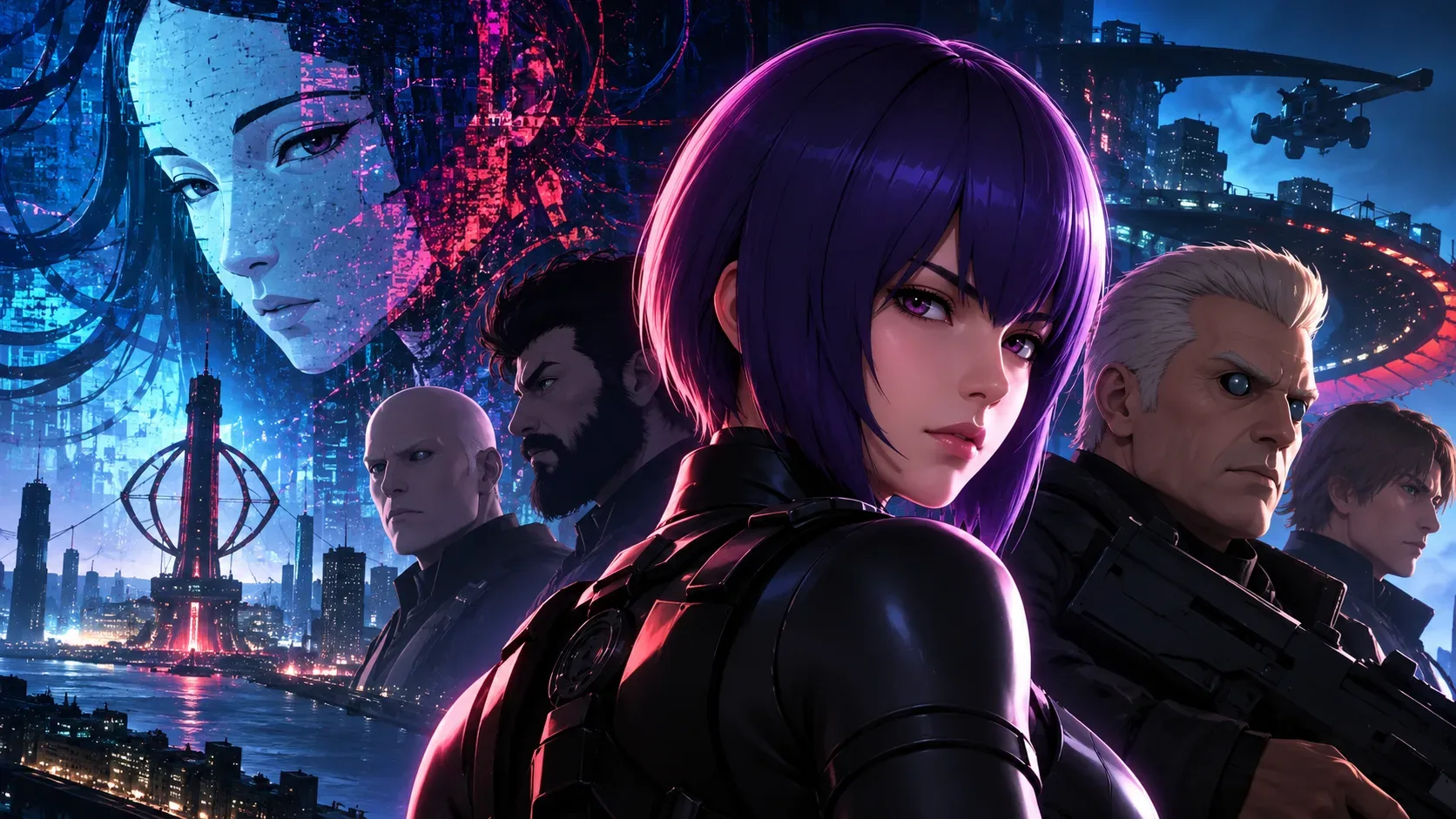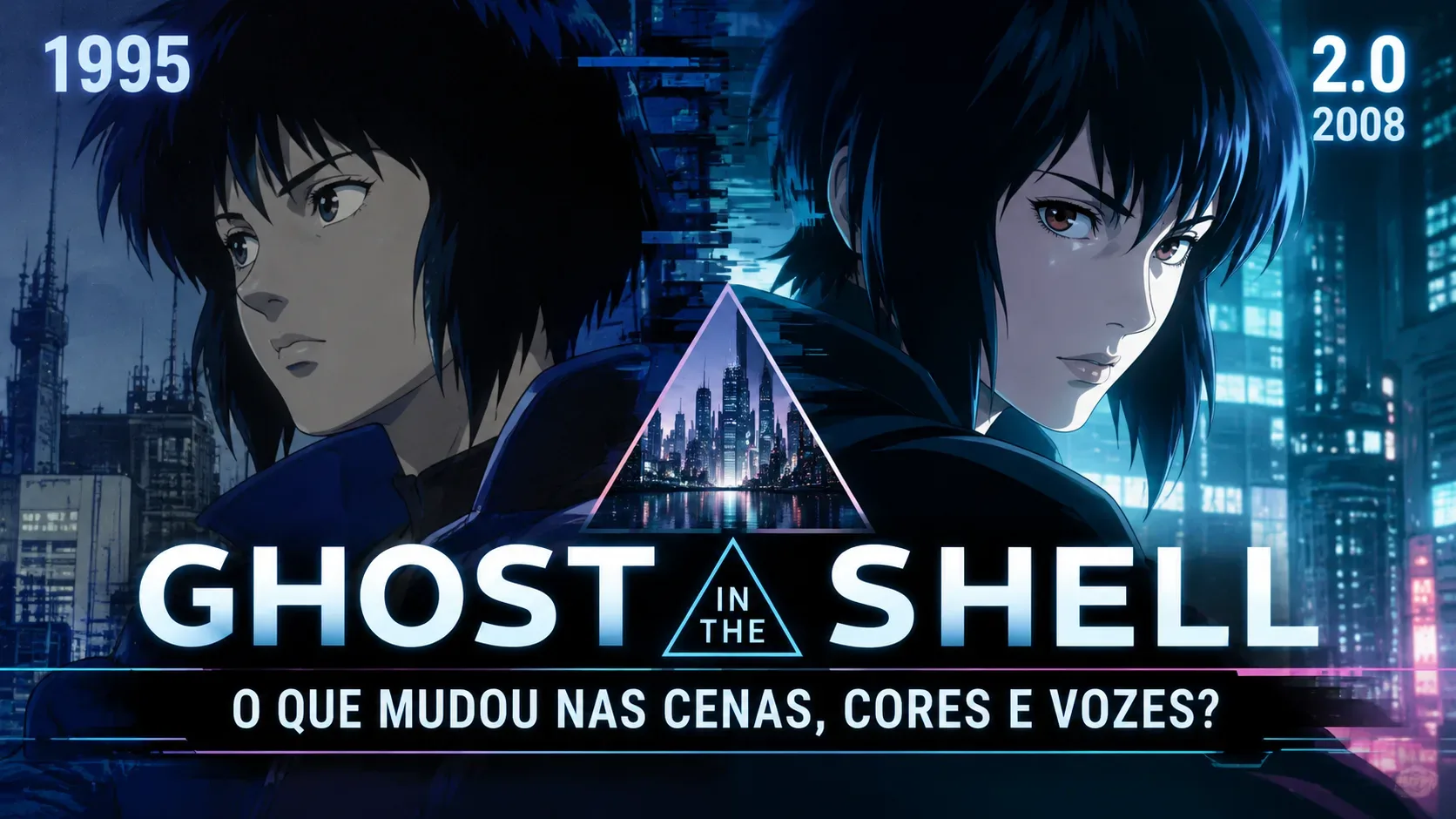
Ghost in the Shell 2.0, released in 2008, is an audiovisual revision of Mamoru Oshii’s 1995 film, not a sequel. It retains the central story but replaces selected shots with computer animation, changes colors and interfaces, rerecords the Japanese voices and rebuilds the soundtrack. To experience the film as originally released, the 1995 version is the most direct choice; 2.0 is useful for comparing the changes.
The distinction matters because the number 2.0 can suggest a second chapter. Oshii’s theatrical sequel is Ghost in the Shell 2: Innocence, released in 2004. The 2008 edition returns to the first film rather than replacing Innocence in the viewing order.
Is 2.0 a sequel or a revision of the original film?
Production I.G dates the original Japanese release to November 18, 1995, and Ghost in the Shell 2.0 to July 12, 2008. Both credits name Mamoru Oshii as director, Kazunori Ito as screenwriter and Kenji Kawai as composer. The dates and credits help distinguish a new technical presentation of the same film from a later story.
The shared narrative still follows Motoko Kusanagi and Section 9’s investigation involving the Puppet Master. Limited changes in dialogue and editing do not turn 2.0 into a separate story arc.
Differences between the 1995 and 2008 versions
| Feature | 1995 version | 2.0 version (2008) |
|---|---|---|
| Animation | Drawn animation and digital effects from the original production. | Selected shots gain new CGI, especially in the opening and virtual environments; much of the original animation remains. |
| Color and interfaces | A prominent green and blue-green palette. | Warmer digital treatment, with orange and amber tones in many shots and displays. |
| Japanese voices | Original voice recordings; the Puppet Master is voiced by Iemasa Kayumi. | Dialogue is rerecorded; Yoshiko Sakakibara takes over as the Puppet Master. |
| Music and effects | Kenji Kawai’s score and the original edition’s sound design. | Remixed score and sound rebuilt in 6.1 channels, with Randy Thom on the team. |
| Story | The theatrical edit released in 1995. | The same core plot, with minor shot and dialogue wording changes. |
Which 2D scenes were replaced with CGI?
The opening makes the change immediately visible. Motoko’s leap from a building was given new computer-generated shots, and the opening credits were redesigned. The comparison published by Movie-Censorship also documents the replacement of a shot featuring a police car and Motoko preparing her gun with a helicopter shot. Later, the diving sequence receives a substantial digital overhaul.
This does not mean the entire film was reanimated in 3D. Comparing Manga Entertainment DVDs, Movie-Censorship catalogued 46 alterations: 38 segments classified as newly animated, seven missing segments and one scene replacement. Those numbers describe that specific comparison, not 46 new plot events. The finished edit mixes 1995 footage with visual interventions from 2008.
Why did the original green shift toward orange?
The revision also transforms shots that remain recognizable. Digital maps, monitors and other effects receive new textures and color adjustments. Where the original often leans toward green or blue-green, 2.0 uses orange and amber hues in numerous passages. The shift can be visible even where the action and framing remain close to the older version.
There are therefore two different sources of visual change: some shots were actually replaced with new animation, while others retained their earlier foundation but were digitally treated. A shot comparison makes this clearer than describing 2.0 as a complete remake.
Which voices and sounds were redone?
The audio was not merely cleaned up. Japanese promotional coverage from 2008 describes renewed dialogue, music and effects, including a remix of Kenji Kawai’s score and a rebuild in 6.1 channels. Randy Thom is credited with sound design, while Production I.G lists recording work at Skywalker Sound.
For the Japanese track, the most noticeable casting change concerns the Puppet Master: Iemasa Kayumi, who voiced the role in 1995, was replaced by Yoshiko Sakakibara for 2.0. Contemporary Japanese materials also credit Atsuko Tanaka as Motoko, Akio Otsuka as Batou and Koichi Yamadera as Togusa. Rerecording dialogue did not mean replacing every performer. These facts refer to Japanese audio, not to dubs made for other countries.
Which version of Ghost in the Shell should you watch first?
For a first viewing, the 1995 cut preserves the animation, palette and performances that defined the original release. Afterwards, 2.0 can be a worthwhile comparison of how Oshii presented the material again in 2008, particularly its CGI shots and sound treatment. Neither viewing choice requires watching Innocence beforehand.
Before streaming or buying an edition, check whether it is labeled as the original Ghost in the Shell or Ghost in the Shell 2.0 and which audio track it includes. Catalogues and extras differ by country and release, and the consulted sources do not establish current availability of either version on a Brazilian streaming service.