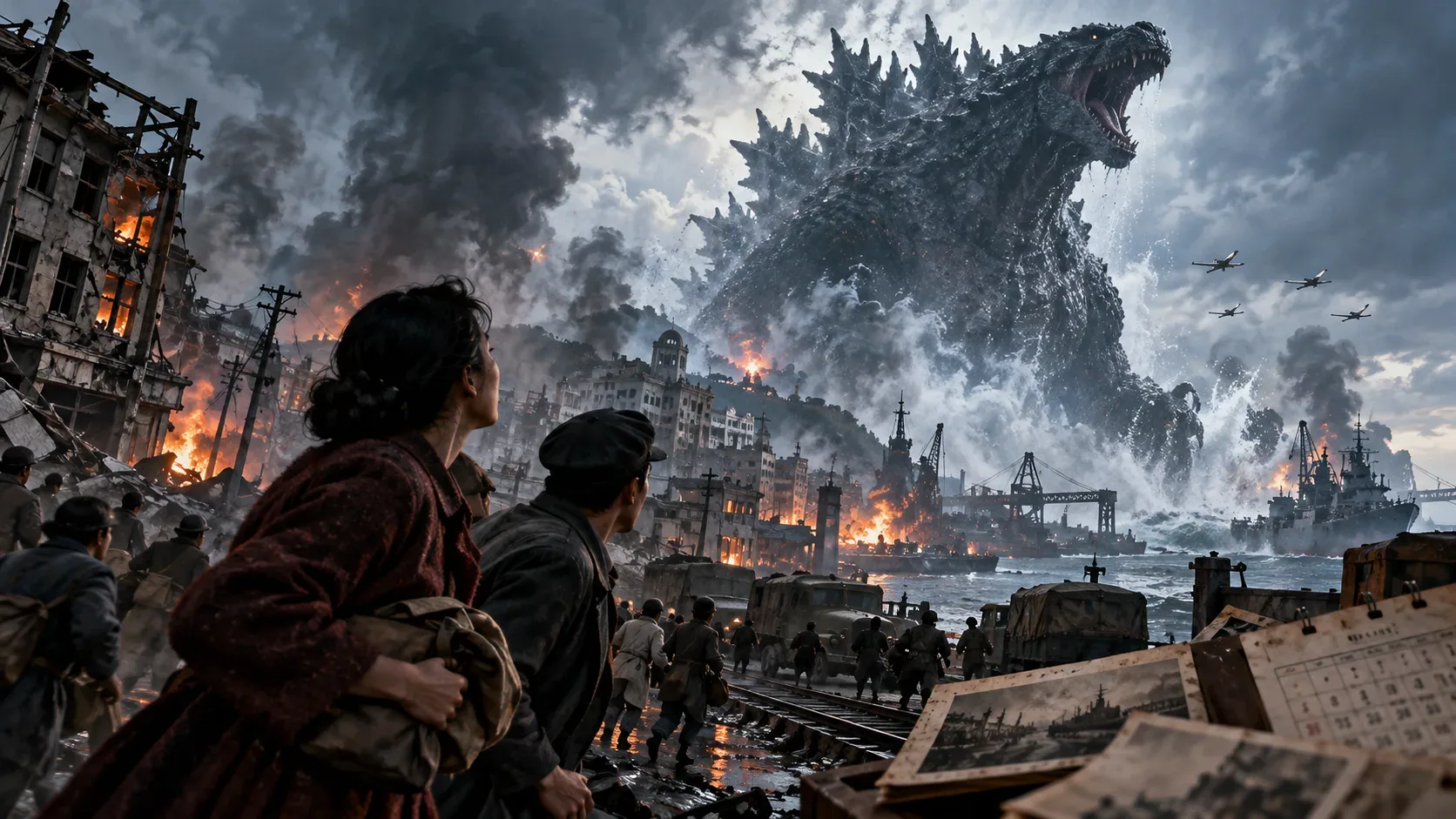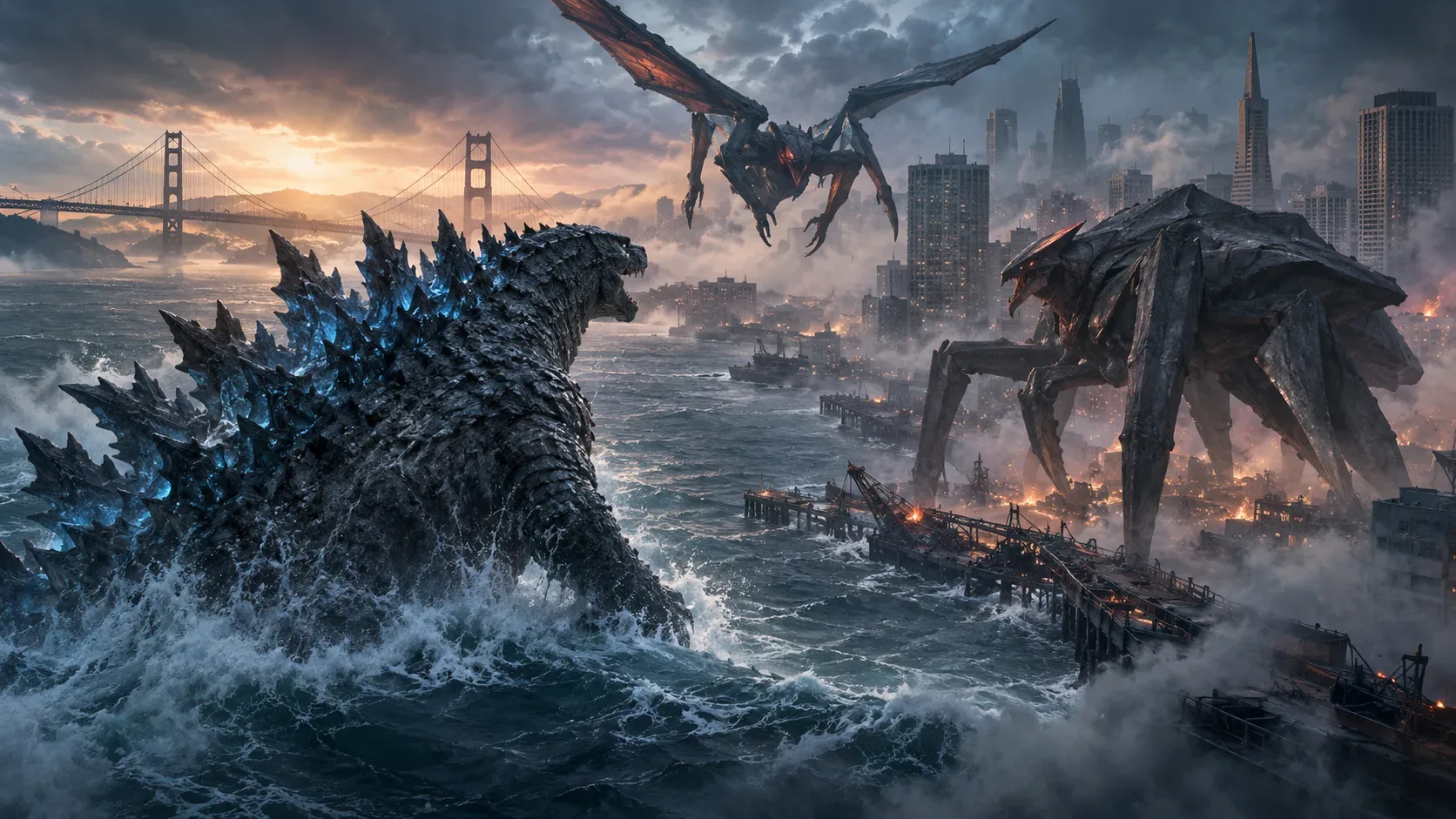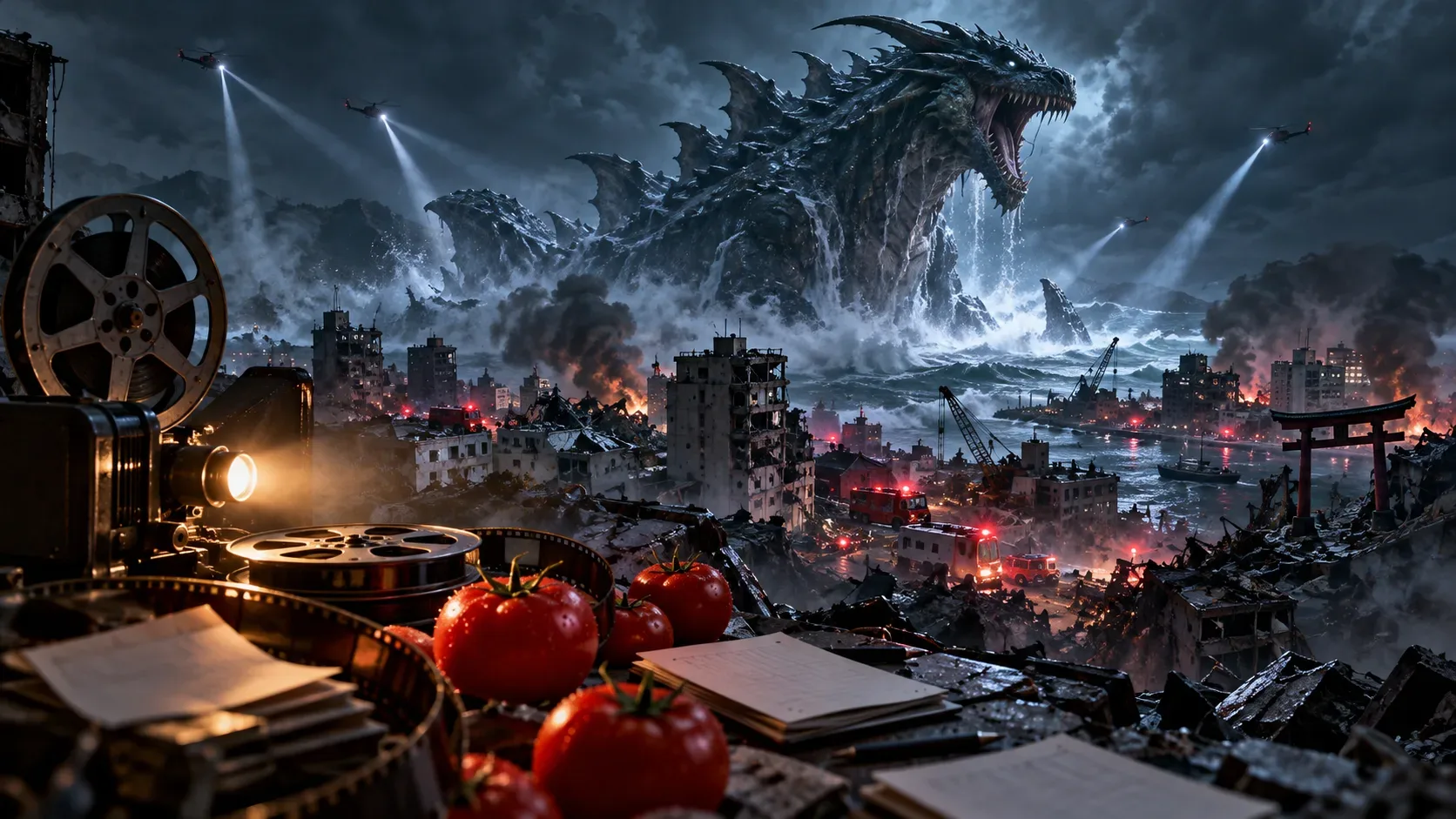
Godzilla Minus Zero reached 95% on Rotten Tomatoes’ Tomatometer, based on 41 critics’ reviews as checked on October 20, 2026. The sequel to Godzilla Minus One, written and directed by Takashi Yamazaki, premiered at the New York Film Festival in September and drew particular praise for its visual effects and the scale of its action. The response is overwhelmingly favorable, but critics are far from unanimous about its pacing and human story.
Its predecessor provides a useful benchmark: Godzilla Minus One (2023) has 99% from 213 reviews. Both are strong results, but they come from collections of criticism of very different sizes. This overview draws on reviews published by named outlets. It is not presented as a firsthand review, and it avoids revealing major plot developments.
What does 95% on Rotten Tomatoes actually mean?
The Tomatometer is the percentage of professional critics’ reviews classified as positive by the aggregator. So 95% is not an average rating of 9.5 out of 10, nor does it mean that 95% of the audience liked the movie. Rotten Tomatoes measures audience reactions separately through the Popcornmeter.
On October 20, Minus Zero’s page listed 41 critics’ reviews and zero verified audience ratings. That latter figure means there was no verified audience sample at that point, not that viewers had rejected the film. Rotten Tomatoes itself explains that both the percentage and review count can change as more assessments are published.
The movie had already screened at the New York Film Festival, while its commercial releases in Brazil and the United States were still scheduled for November. The percentage therefore describes the wave of reviews available on the date checked, not a final verdict from moviegoers.
Direct Tomatometer comparison, as shown on both films’ pages:
| Film | Tomatometer on Oct. 20, 2026 | Critic reviews counted |
|---|---|---|
| Godzilla Minus Zero (2026) | 95% | 41 |
| Godzilla Minus One (2023) | 99% | 213 |
Visual effects and spectacle draw the clearest praise
The most consistent element in the positive notices is the technical impact. Jesse Hassenger of The Guardian praises the scale of the digital sequences and the way Yamazaki combines disaster-movie scope with the physical threat of the monsters. His review notes that the director prioritizes image quality instead of simply piling on action scenes.
In Christopher Campbell’s first-reviews roundup for Rotten Tomatoes, Slant Magazine’s Eli Friedberg points to greater complexity and refinement in the destruction sequences. Next Best Picture’s Dan Bayer and GamesRadar+’s Molly Edwards are also among the critics impressed by the effects. These are attributed assessments, not evidence of a technical award already won by the new film.
Even reviewers with reservations acknowledge the spectacle. Time Out’s Phil de Semlyen finds the monster appearances visually exciting, but thinks the film takes too long to reach some of its most anticipated moments. The dispute concerns less the quality of the imagery than how those sequences are distributed across the story.
Does the human drama work? This is where critics split
Yamazaki again sets the danger in a Japan trying to recover from war, following the Shikishima family once more. Some writers see that continuity as the sequel’s emotional strength. Robert Daniels of Screen International, cited on the Rotten Tomatoes critics page, emphasizes how moving the film is; the early reactions collected by Omelete also highlight trauma and family bonds.
Jesse Hassenger, however, distinguishes between two outcomes in The Guardian: he recognizes the weight of the historical ideas and the effectiveness of new characters, but finds some of the family scenes less persuasive than those in the previous movie. His concern is not with the presence of drama, but with the execution of parts of it.
In Time Out, Phil de Semlyen awards three out of five stars and finds the stretches between major action scenes sluggish. William Bibbiani of TheWrap takes another approach: he sees Minus Zero as an ambitious and rewarding entry in the franchise, but argues that the more fantastical escalation weakens the bond between historical metaphor and spectacle. Rotten Tomatoes also lists a 5/10 review by Screen Rant’s Ben Gibbons. The high overall percentage does not erase those differences.
Is Godzilla Minus Zero better than Minus One?
There is no single answer among the critics consulted. Some see improvements in scale, effects and ambition; others prefer the dramatic focus of Minus One. William Bibbiani represents the latter view: in his assessment, the new film succeeds as a Godzilla sequel but does not match its predecessor’s thematic power. Christopher Campbell’s roundup, meanwhile, includes reviews that place the sequel alongside or above the earlier film.
Comparing 95% with 99% alone would be misleading. The gap is four percentage points in the share of positive reviews, not four points on a quality scale. Moreover, 41 reviews and 213 reviews are different sample sizes, gathered at different stages of each film’s run. The sound conclusion is that Minus Zero enters its commercial release with strong critical approval alongside specific objections about pacing and cohesion.
When can audiences decide for themselves?
According to Omelete’s September 26 report, the Brazilian theatrical release is scheduled for November 5, 2026. The US Rotten Tomatoes page lists November 6 for the American opening. Those dates apply to different markets and should not be combined into a single worldwide release date.
As screenings expand and new reviews are added, both the number of reviews and the Tomatometer may change. For now, the verified October 20 figure captures a very positive early response in which the visual spectacle has won broader agreement than certain screenplay choices. The percentage is neither an original Dantverse review score nor a consolidated measure of audience response.
Sources and references
- Rotten Tomatoes: Godzilla Minus Zero
- Rotten Tomatoes: Godzilla Minus One
- Rotten Tomatoes: methodology FAQ
- Rotten Tomatoes, Christopher Campbell: first reviews
- The Guardian, Jesse Hassenger: review
- Time Out, Phil de Semlyen: review
- TheWrap, William Bibbiani: review
- Omelete, Júlia Henn: first reactions and Brazilian release