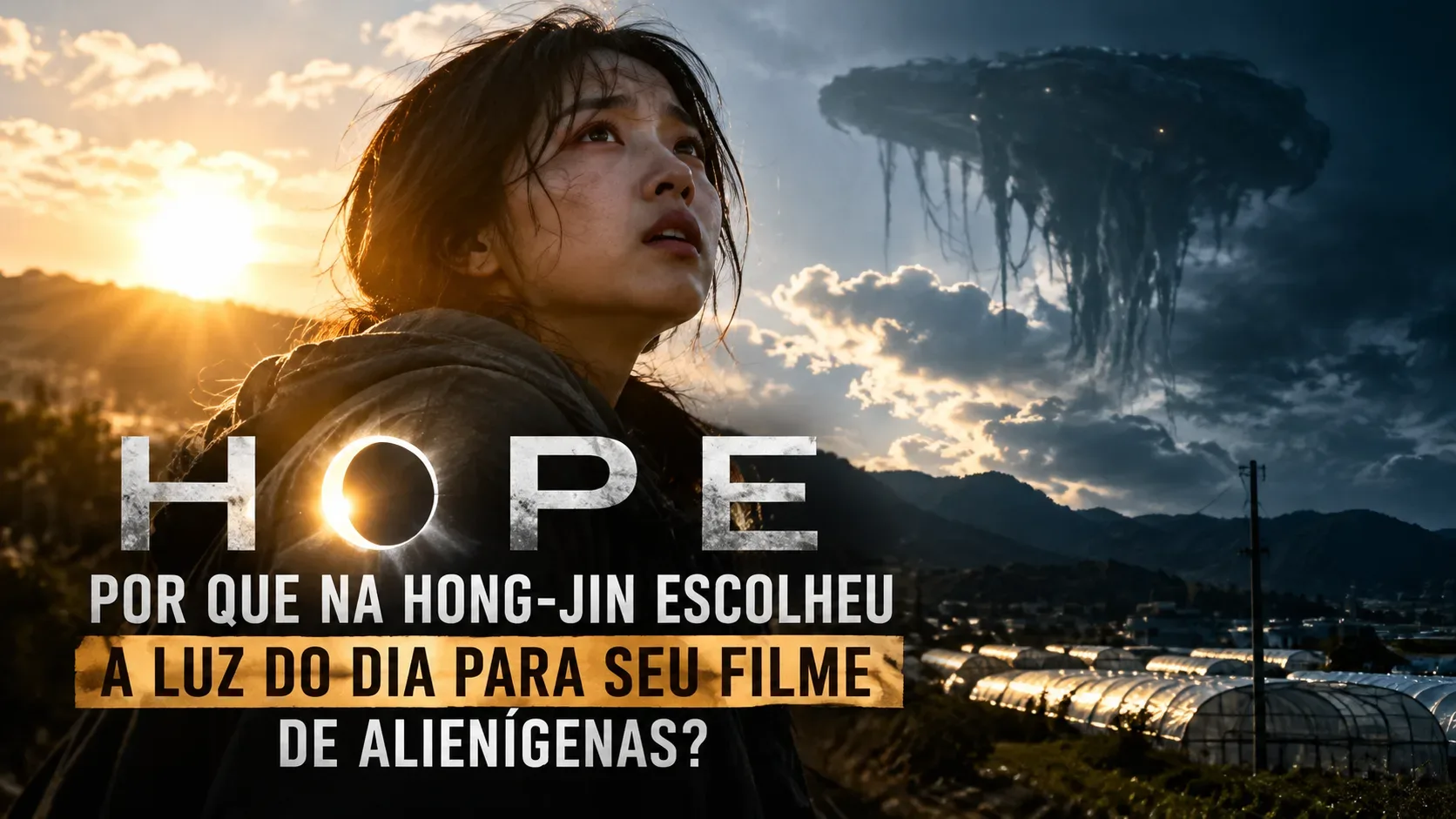
Na Hong-jin chose to show the aliens in Hope in broad daylight because he wanted images that did not repeat the familiar horror technique of concealing creatures in darkness. There was a storytelling reason as well: he conceived the larger narrative as a journey from sunrise through night to another dawn, and the film released in 2026 occupies its daylight portion. Night belongs to a follow-up he would like to direct, but that does not mean a sequel has been greenlit.
The South Korean feature screened in competition at Cannes in 2026 and opened in Brazilian theaters on October 8 under the local title Hope: O Primeiro Impacto. It follows an isolated community facing an unknown presence. The focus here is the film's visual construction and what the director has actually said about another installment, without recounting the ending.
Daylight was a choice about both style and narrative structure
In a September 11 interview with The Playlist, Na described a story beginning at sunrise, moving toward sunset, and eventually continuing until the sun comes up again. The first film covers the segment before nightfall. He also wanted to avoid the established approach of hiding a monster in darkness: he said he had already explored nocturnal creatures and wanted the fresher, more unexpected sight of a creature under the sun.
That decision did not eliminate shadows. Speaking to Dazed, the filmmaker explained that he used the forest to evoke the feeling of night without actually turning the film into a series of nighttime scenes. The village is associated with its residents and the woods with the visitors. As those boundaries are crossed, the setting makes the conflict visible. This interpretation follows Na's own remarks about the two environments' colors, density and borders; it is not a claim that every shot has one fixed symbolic meaning.
Daylight simplified lighting but made the visual effects harder
In the same Dazed interview, Na said daytime shooting avoided the lighting demands of many night scenes. Yet that did not make the digital creatures easy to integrate. He told Letterboxd Journal that filming in real locations came first, even though it was impossible to reproduce identical weather and lighting conditions on every shooting day. With the beings fully exposed, their design, movement and integration must withstand much more direct scrutiny.
An interview published in Spanish by Cineplay details the difficulties. Na discussed fast-changing sun and clouds near coastal Haenam, shifts between light and shadow across shots, and the unusual look of extremely fast-moving creatures photographed in daylight. Motion can blur; forcing it to appear sharp can look unnatural too. He also described using extremely wide-angle and vintage lenses to draw viewers into the action. Those practical complications make it misleading to reduce the decision to daylight filming being simply cheaper or easier.
The choice also affected creature design. Na told Letterboxd Journal that an earlier concept leaned further into horror, in keeping with nighttime passages from his longer story. Because those passages would not appear in this film, he thought pushing the creatures too far in that direction would work against the daylight setting. The location in time therefore shaped not just the photography but the creatures' appearance.
The night of Hope 2 is a creative intention, not a confirmed release
Na told The Playlist that a follow-up would carry the story into the night and move closer to the aliens' point of view. He also said he was considering a separate, darker and more violent film before returning to this world. Across September interviews, he drew a distinction between having written further material and actually moving a sequel into production.
Accounts of possible backing differ in emphasis. On September 10, Na told Inverse that he was not then in talks to develop another Hope and suggested he needed some distance from the project. On September 17, Sports Kyunghyang reported his comments about parties interested in supporting a budget, while stressing that nothing had been finalized. These remarks do not establish an official greenlight, a filming schedule or a release date. A screenplay and potential financiers are not the same as an authorized production.
The day-to-night contrast reveals the logic of his approach
Daylight made the creatures less reliant on concealment and forced the production to confront their visible detail, movement and changing natural light. It also defined the precise slice of the story that reached theaters. Na's imagined nighttime chapter is not evidence that a second feature is being shot: it is a possible continuation of a narrative structure he has described in interviews. That interplay of visual language, practical filmmaking and storytelling explains the daylight choice.
Sources and references
- Festival de Cannes: official Hope film entry
- Cinépolis Brazil: Hope: O Primeiro Impacto
- The Playlist: Mike DeAngelo's interview with Na Hong-jin
- Dazed: Nick Chen's interview with Na Hong-jin
- Letterboxd Journal: Isaac Feldberg's interview
- Cineplay: interview with Na Hong-jin in Spanish
- Inverse: interview about a possible sequel
- Sports Kyunghyang: Na Hong-jin's remarks on future production