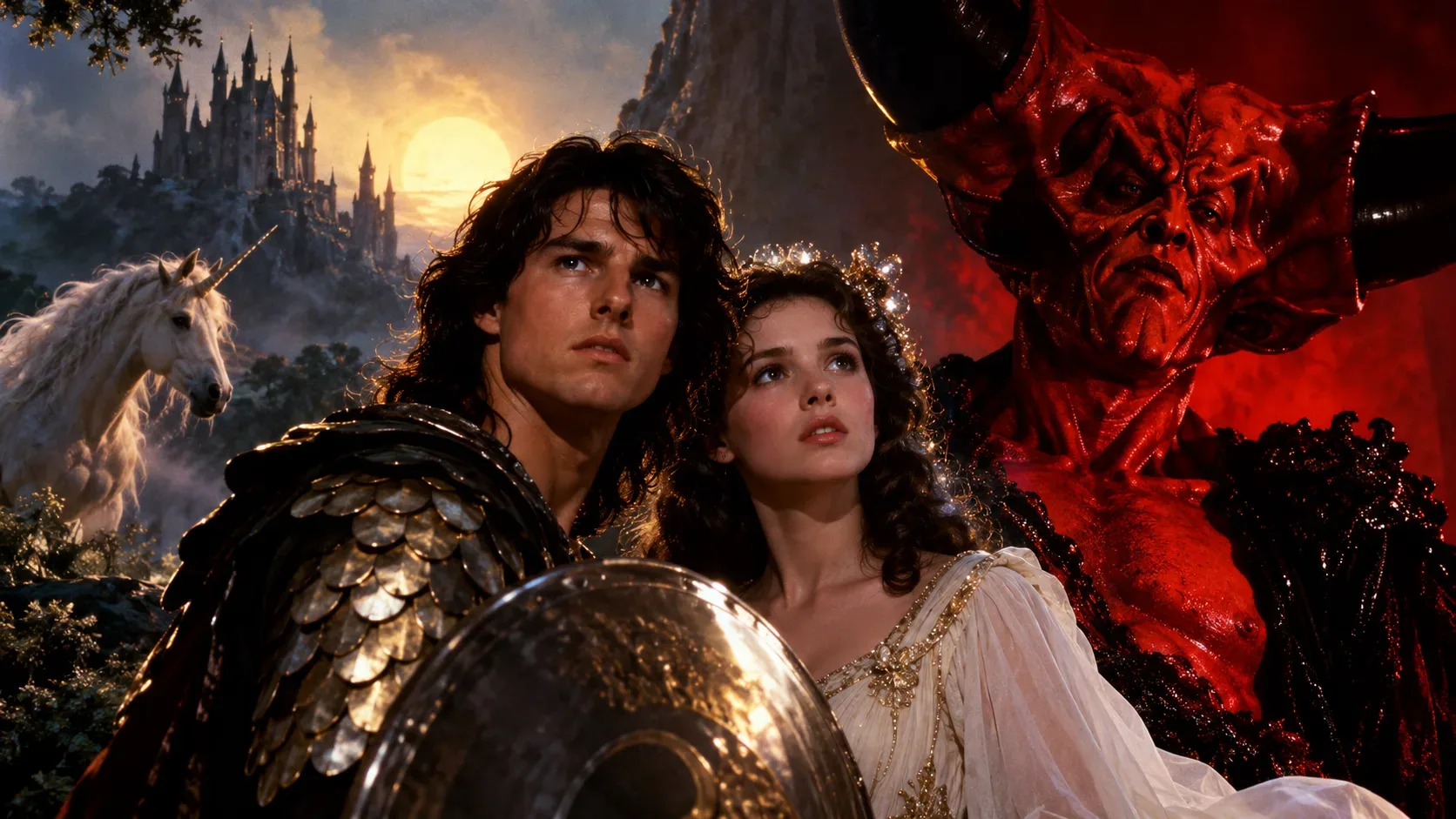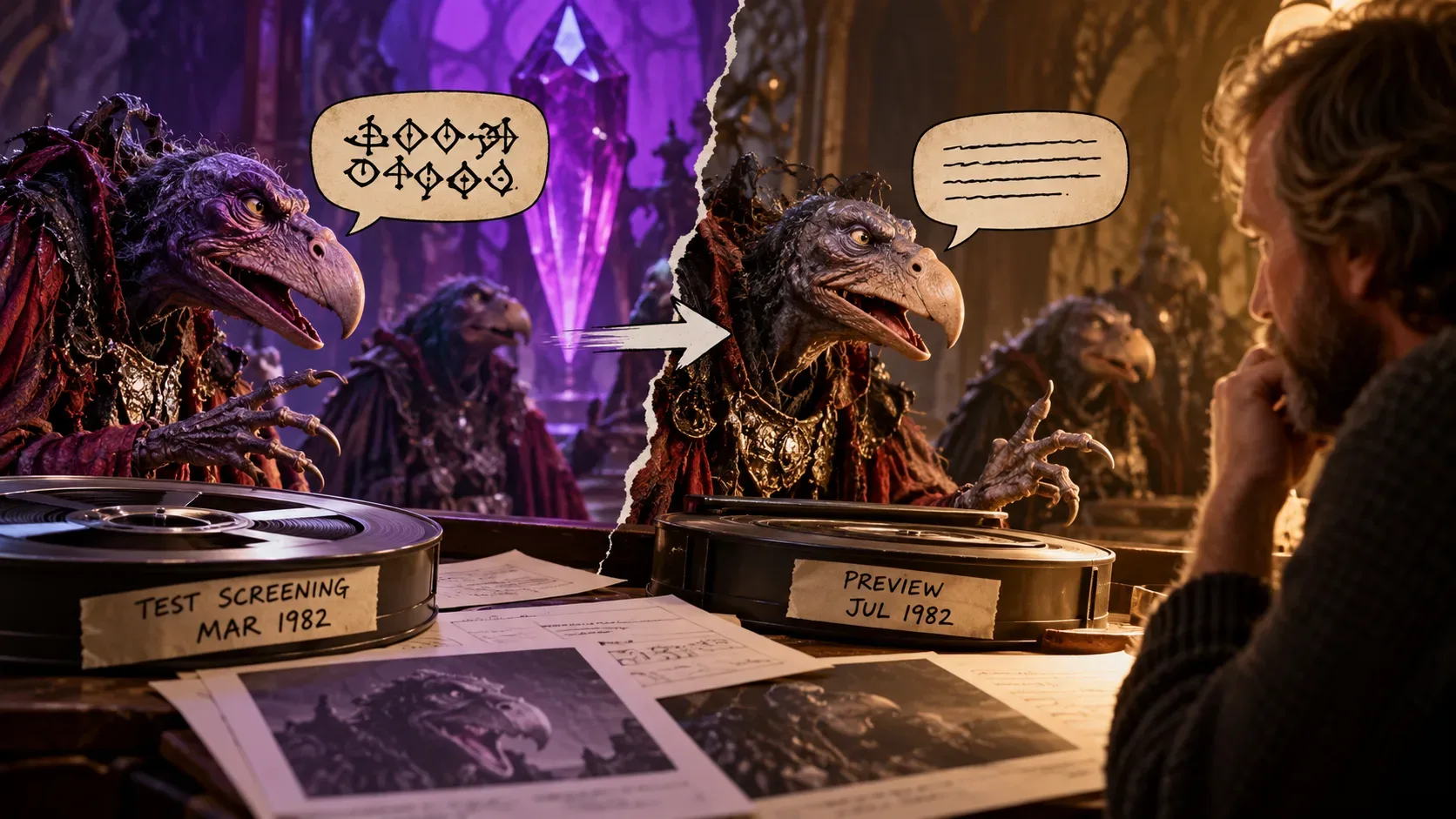
Jim Henson replaced the Skeksis' invented language with English dialogue after the March 19, 1982 preview in Washington revealed a specific problem: viewers admired the creatures but struggled to follow the story without understanding what they were saying. According to the Jim Henson Company archive, screenwriter David Odell was asked to write new lines that could be dubbed over the mouth movements already filmed. The changes went beyond language, encompassing editing and narrative clarification before the film reached theaters in December.
What language did the Skeksis speak in the test version?
At the screening documented by the Henson archive, the Skeksis did not speak English. They used a language invented for the fantasy world, with no subtitles to guide the audience. Giving the creatures a distinctive sound was a creative choice, but in that cut it made important information harder to follow. The archive describes viewers frustrated by the story's lack of clarity despite the production's impressive visuals.
The AFI Catalog adds background: it describes the development of a language drawing on Greek and Egyptian influences, later replaced with intelligible dialogue. That historical account does not provide a complete transcript of the original lines or establish how every exchange worked, scene by scene.
Why rewrite and dub the lines instead of merely adding subtitles?
The clearest first-party account says Henson asked David Odell to write new dialogue for the Skeksis, shaped to fit their already filmed mouth movements. This was therefore more than a word-for-word translation. The writing had to communicate story information within the existing footage, with new voices recorded in post-production.
The distinction matters: the invented language was part of the creatures' characterization, while the English dub became a way to clarify events and motivations. The sources consulted do not provide enough evidence to reproduce the original script or claim that every line was given a direct equivalent.
From Washington to release: what dates do the documents establish?
- January 1982, according to AFI: the catalog reports a Washington showing of an incomplete cut that confused viewers. This conflicts with the Henson archive's description of the March screening as the first preview.
- March 19, 1982: Henson's journal record identifies a poorly received Washington preview in which the Skeksis spoke their invented language without subtitles.
- July 12, 1982: a revised version with redubbed dialogue and other changes was screened in Detroit. Henson reported a better response, not unanimous enthusiasm.
- September 13 to 23, 1982: the final sound mix took place, according to the official timeline and Henson archive.
- December 17, 1982: the US theatrical release date documented by AFI and Henson.
The January-versus-March discrepancy does not justify treating both references as the same screening or declaring one of them definitively wrong. The records differ on timing and on how they describe the preview; without further screening documentation, that difference remains unresolved.
Beyond language: opening narration, Aughra's voice and running time
AFI reports that the changes also added opening narration by Joseph O'Conor to explain the shared origins of the Skeksis and Mystics. It also describes Billie Whitelaw rerecording Aughra's dialogue in a lighter tone and a reduction from a roughly 101-minute cut to one of about 94 minutes. These changes should not be folded into the language switch alone: they indicate a broader rethink of how the film conveyed information.
Henson characterized the Detroit response as an improvement over the earlier preview. The evidence supports a clear but limited conclusion: the package of revisions made the narrative more accessible to that test audience. It does not establish that the new dubbing alone caused the better reception.
What remains unproven about the early cut?
Production records establish a stage featuring an invented language, rewritten dialogue and subsequent changes to sound and editing. They do not amount to direct access to a complete, authenticated print of the cut screened in Washington. A shot-by-shot comparison, the exact content of discarded dialogue, or claims that the original was necessarily better or worse go beyond what these sources demonstrate.
The Dark Crystal offers a documented example of a post-production dilemma: keeping a fantasy world strange while making its story understandable. The substantiated decision was to rewrite and redub the Skeksis, as part of a larger process of revision that continued into September 1982.