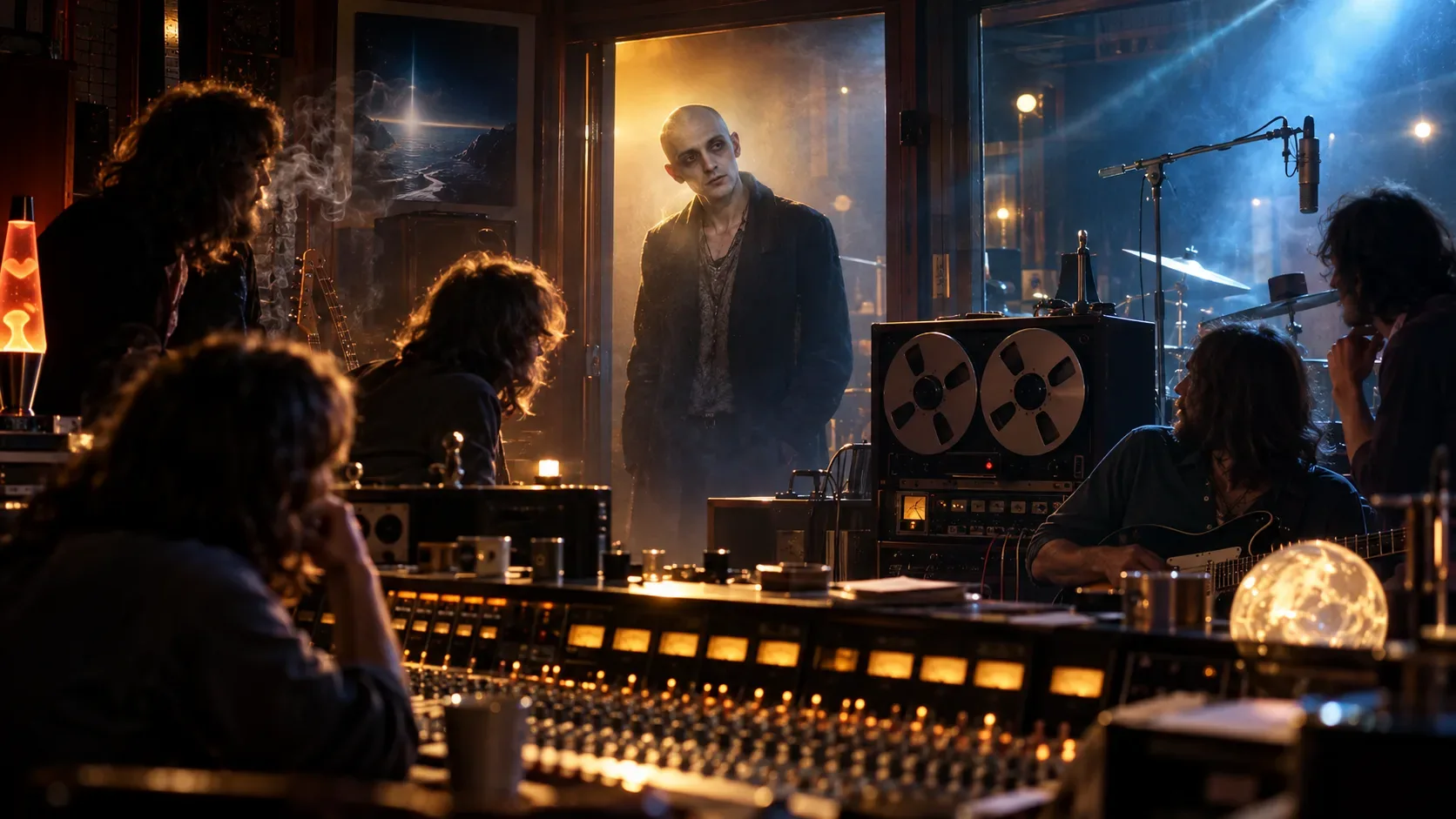
In 1975, Syd Barrett arrived unannounced at Abbey Road Studios in London while his former Pink Floyd bandmates were recording Wish You Were Here. His appearance had changed so much that it took them time to recognize him. The encounter is documented in the band’s official timeline and in later eyewitness accounts. But the familiar version in which Barrett’s arrival inspired Shine On You Crazy Diamond reverses the order of events: the composition already existed before the visit.
The most frequently cited account dates his arrival to June 5, 1975. Yet the people present remembered certain details differently, especially which stage of the track was underway. Keeping those accounts separate offers a more accurate story than treating the coincidence as a flawless legend.
How the band recognized Syd Barrett
In a technical feature published by Richard Buskin in Sound on Sound in 2014, engineer Brian Humphries described Barrett entering Abbey Road’s Studio Three. He had a shaved head, barely visible eyebrows and looked very different from the former frontman people remembered. According to the account, Rick Wright assumed he was an acquaintance of Roger Waters, while David Gilmour thought he worked for EMI.
The same feature says Gilmour eventually told Nick Mason who the visitor was. But Wright’s account in Shades of Pink, a 1984 interview preserved as a transcript, offers another perspective: the keyboardist recalled working in the room with Waters for quite some time before realizing the man was Syd. That distinction matters because the memories do not establish a precise, minute-by-minute sequence of who recognized him first.
The reaction was intense. Sound on Sound reports that Waters and Gilmour cried. In Andy Price’s MusicRadar article, Storm Thorgerson is quoted remembering that several people became emotional. These are attributed recollections, not a complete recording of every person’s expressions or conversations.
A timeline of the Wish You Were Here sessions
Pink Floyd’s own official timeline places the episode among recording dates and stretches on the road:
| When | What the sources document |
|---|---|
| 1974 | Gilmour developed the four-note motif behind Shine On You Crazy Diamond, which the band played live before recording the album, according to Sound on Sound. |
| January 6, 1975 | Intermittent sessions for Wish You Were Here began at Abbey Road, according to the official timeline. |
| April 8 and May 5, 1975 | Pink Floyd began a North American tour leg in April and resumed recording in London on May 5 for approximately a month of work. |
| June 5, 1975 | The specific date Sound on Sound gives for Barrett’s arrival; the official timeline simply places his visit within the sessions resumed in May. |
| June 7 and July 7, 1975 | The North American tour continued on June 7; on July 7 the band returned for another three weeks of recording and mixing, according to the official site. |
| September 12 and 13, 1975 | The album was released in the United Kingdom and United States, respectively, according to the official timeline. |
The June 5 date is supported by the technical account and later reconstructions, but is not separately specified in the official chronology. The essential fact, an unannounced visit during the 1975 sessions, is explicitly recorded by Pink Floyd.
How was the visit connected to Shine On You Crazy Diamond?
The track grew out of Gilmour’s guitar motif and became a tribute to Barrett. The official album page describes absence as a central theme of Wish You Were Here and identifies Shine On You Crazy Diamond as a tribute to the former member. Divided into nine parts, it opens the record with Parts 1 through 5 and closes it with Parts 6 through 9. The visit therefore did not give rise to the song.
The harder question is what the band was doing at that exact moment. Drawing on engineer Humphries’s recollections, Buskin places the visit during the final mixing of Shine On. In his 1984 interview, Wright recalled work on the track’s vocals. An official Pink Floyd announcement in 2025 likewise associates the encounter with the beginning of the final mixes. The accounts agree on the visit’s proximity to the song, but they do not describe the studio task in exactly the same way.
Humphries also told Sound on Sound about the sessions’ technical difficulties, including a newly installed 24-track tape machine, a modified mixing console and the need to redo takes. This context matters: Shine On evolved through a lengthy process. The documents reviewed do not confirm that Barrett played or sang on the recording released in September.
What popular retellings tend to oversimplify
- Barrett’s words: Sound on Sound attributes to him a comment that the music sounded somewhat old. That is a later published recollection, not a recorded transcript of the conversation. We cannot know exactly how he understood the tribute.
- Gilmour’s wedding: Sound on Sound says Barrett attended a reception in the studio canteen. MusicRadar, however, notes that Gilmour did not remember him being there. This detail should not be presented as undisputed.
- The meaning of the visit: Barrett’s arrival does not prove he knew which track was being worked on, that he came specifically to hear it or that he caused a decisive change to the album. None of those intentions is established by the accounts consulted.
The encounter remains moving because music already shaped by Barrett’s absence met his unexpected presence in the studio. The sources establish that his former bandmates were surprised and support accounts of their emotional response. They cannot turn the moment into a perfectly reconstructed conversation or a diagnosis of Syd’s life.
Sources and references
- Pink Floyd, official 1975 timeline
- Pink Floyd, official Wish You Were Here album page
- Pink Floyd, announcement about Shine On You Crazy Diamond (2025)
- Richard Buskin, Sound on Sound: Classic Tracks, Shine On You Crazy Diamond (2014)
- Shades of Pink (1984), interview with Rick Wright, David Gilmour and other band members
- Andy Price, MusicRadar: the studio visit and witness accounts (2025)