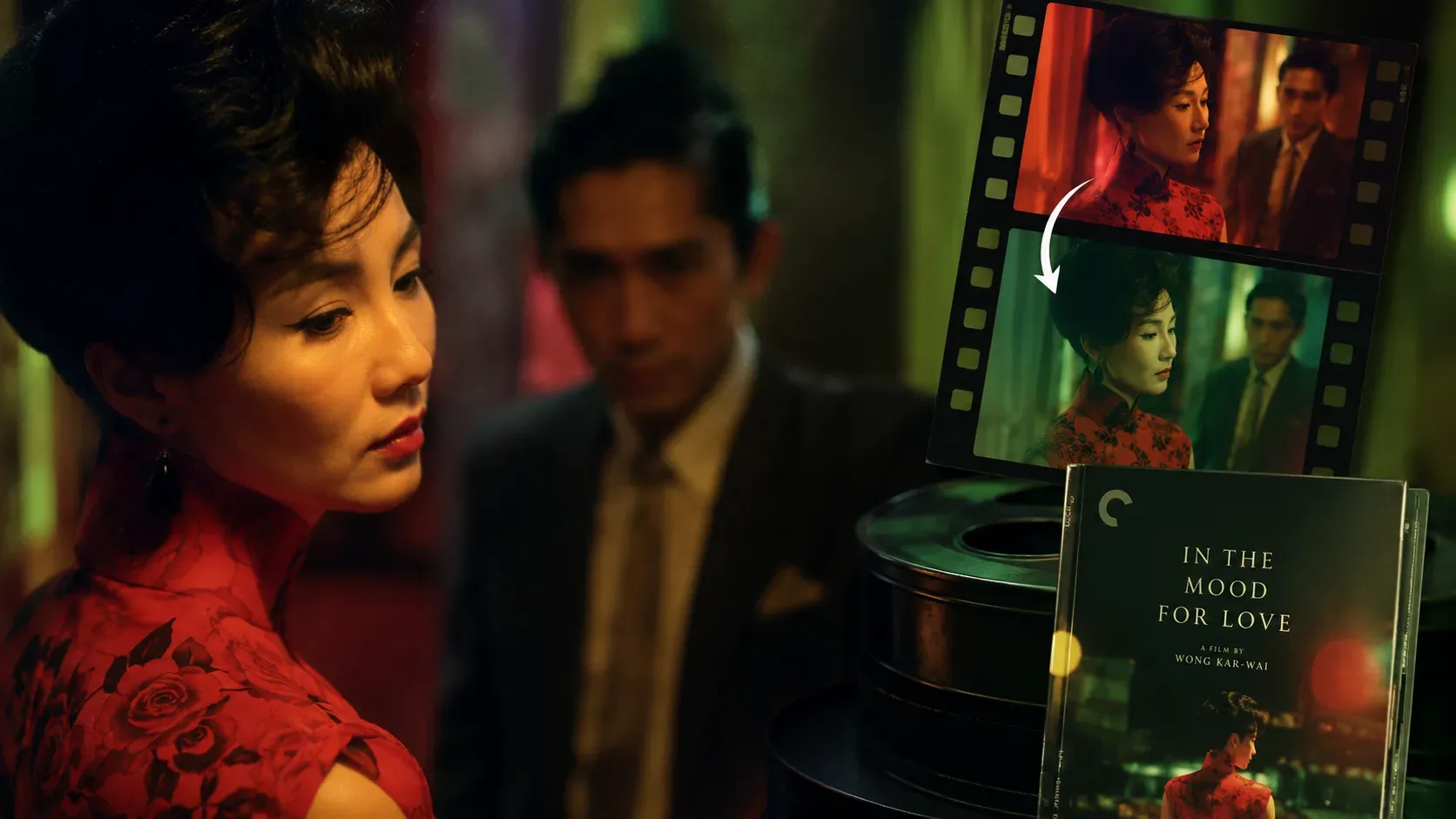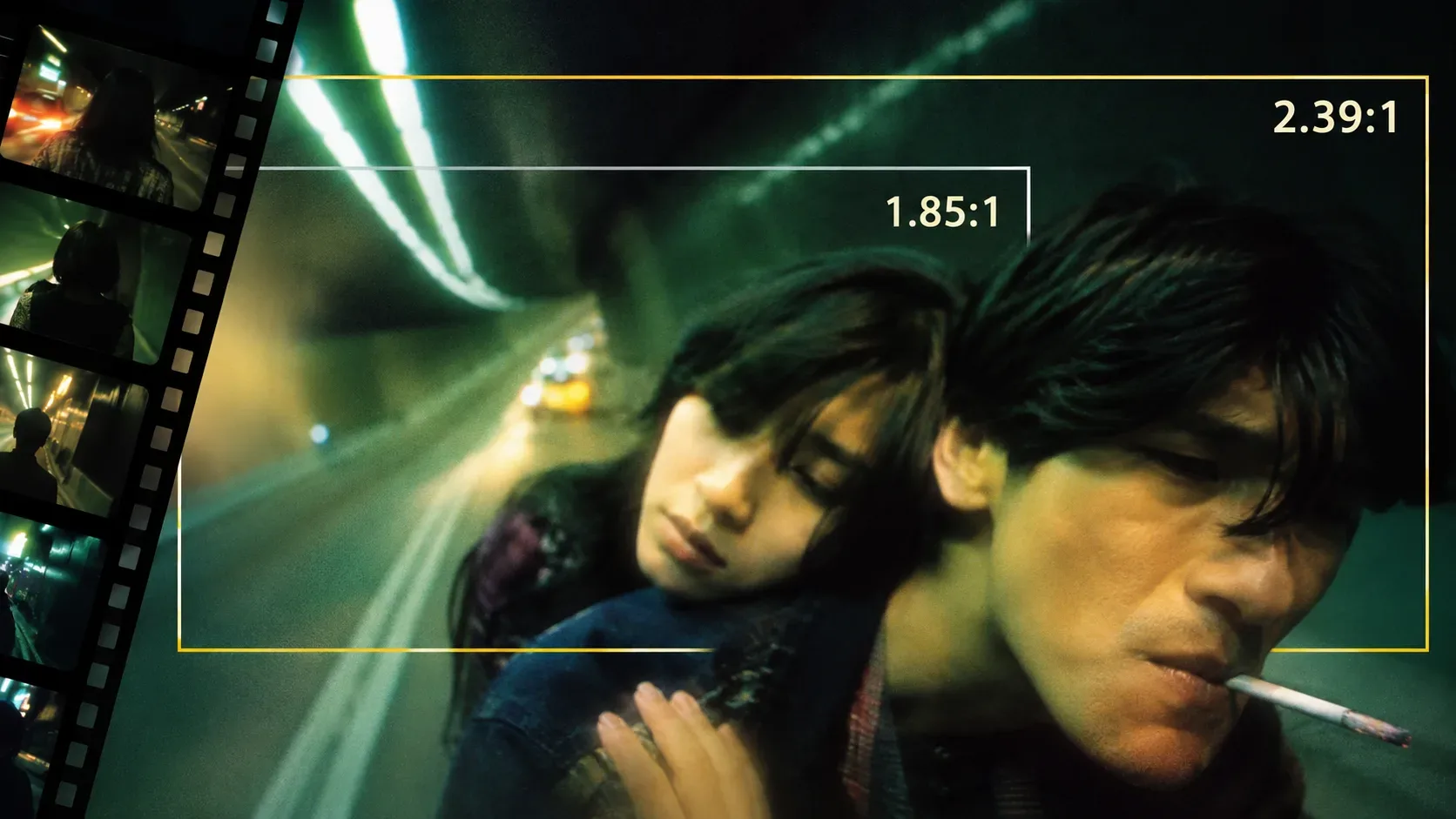
The 4K restoration of Fallen Angels (1995) presents the film at 2.39:1, wider than the 1.85:1 presentation identified by Cinema Escapist as the earlier version. The change was deliberate and approved by Wong Kar-wai. According to the director, CinemaScope recreates a look he wanted during the original editing process but could not release theatrically at the time. The restoration therefore revises the film's visual composition as well as improving the image, rather than merely cleaning it up or increasing its definition.
The artistic rationale is documented by the Criterion Collection and the Asian Film Archive. The objection that this reframing alters a visual record of Hong Kong in 1995 is a critical interpretation made by Justin Chor Yu Liu in Cinema Escapist. Both positions concern the same film, but they rely on different ideas of fidelity.
Why did Wong Kar-wai want CinemaScope?
In a note published by Criterion on March 23, 2021, Wong recalls that a Steenbeck editing machine was accidentally switched to an anamorphic viewing setting instead of the standard one. He says the result made the distance between the characters more expressive, amplifying the effect of the extreme wide-angle photography. He came to prefer that stretched, panoramic appearance.
According to Wong, the technical circumstances of the time prevented him from releasing a film photographed for standard presentation in an anamorphic format. The restoration eventually let him realize that intention. This is the filmmaker's explanation for his later decision, not evidence that the prints shown in 1995 already had a 2.39:1 ratio.
Criterion says the note originally accompanied a retrospective that began in late 2020. Its publication also describes an illustrative clip contrasting the standard and anamorphic views. That material establishes the director's stated motivation, but does not replace a shot-by-shot examination of the two complete versions.
What changes between 1.85:1 and 2.39:1?
An aspect ratio expresses the relationship between width and height. A 1.85:1 frame measures 1.85 units wide for every unit of height; a 2.39:1 frame measures 2.39. The latter is therefore more panoramic. If two images were displayed at the same width and the only change were cropping, less vertical content would be visible in the wider ratio. This is an explanation of geometry, not a measurement of how much was removed from each shot of the film.
Nor should viewers assume that 2.39:1 automatically reveals more scenery at the sides. Changing a previously composed image to a different ratio can require reframing or geometric adjustments. The exact process must be established through equivalent source materials and technical documentation; the sources consulted here do not provide a shot-by-shot account.
| Criterion | Earlier presentation | Wong-approved restoration |
|---|---|---|
| Aspect ratio | 1.85:1, according to the Cinema Escapist comparison | 2.39:1, confirmed by the Asian Film Archive and Criterion |
| Frame shape | Relatively taller at an equal display width | Relatively wider and shallower |
| Historical reference | Presentation associated with the earlier version of the 1995 film | Director-authorized reinterpretation presented in the 2020/2021 restorations |
| Meaning of fidelity | Preserving how the work previously circulated | Achieving the visual intention Wong later described |
What does the 4K restoration actually document?
The Asian Film Archive describes a 4K digital restoration from the original 35 mm camera negative, undertaken by the Criterion Collection in collaboration with L’Immagine Ritrovata and Jet Tone, supervised and approved by Wong Kar-wai. The archive screened the restored version on March 27, 2021, explicitly listing its aspect ratio as 2.39:1.
Two technical facts should remain separate: 4K refers to the resolution of the digital process, whereas 2.39:1 describes the displayed image's shape. A restoration can increase definition and repair damage without necessarily preserving the historical framing. Criterion's film page lists 2.39:1; its World of Wong Kar Wai collection includes the director-approved 4K restoration in a Blu-ray set, which should not automatically be mistaken for a 4K UHD disc.
Were there changes beyond framing?
Yes, although the evidence comes from different types of sources. Wong confirms in his Criterion note that new credits were created to standardize the presentation of the restored films. Justin Chor Yu Liu, writing in Cinema Escapist on January 23, 2021, argues that Fallen Angels also underwent new color grading and alterations to color and black-and-white imagery. He also criticizes cropping and what he regards as visual distortion.
Those observations about color, particular crops, and distortion must be attributed to the critic: they have not been independently established here through a direct examination of both complete cuts. His article offers examples to support the argument, but these do not establish that an identical technical operation was applied uniformly to every shot.
Why does the change raise preservation concerns?
For Wong, the restoration offers a chance to bring the film closer to an intention he could not realize in 1995. For Liu, the danger is that the revised version may displace the earlier one in public memory and access. He emphasizes the value of the movie's urban images of Hong Kong before the 1997 handover and cites a clock allegedly removed by a new crop as an example of visual information being lost.
That assessment is part of Cinema Escapist's preservationist argument, not a neutral judgment on the restoration's artistic quality. The concern that the original cut might become difficult to obtain was also expressed in January 2021; it cannot, on its own, establish whether older editions are currently available in Brazil.
Which version is more faithful?
It depends on what one wants to preserve. The 2.39:1 restoration carries the director's approval and realizes the format he says he originally wanted. The 1.85:1 presentation records an earlier exhibition experience that is also part of the film's history. Recognizing the value of either version does not require erasing the other.
When comparing editions, check the declared aspect ratio, the mastering year, and the restoration credits for the specific copy. A proper visual comparison would require matching passages shown without automatic zooming or forced screen-fill, noting the frame edges, the characters' proportions, color, and credits. This article draws on the cited documentation and does not claim first-hand audiovisual inspection of both cuts.