How Jumanji became a video game
Jumanji: Welcome to the Jungle (2017) is a sequel to the 1995 movie, not a remake. The magical game changes from a board game into a video game, but retains its power to trap players and change lives. Four students enter the jungle as adult avatars and must complete a quest to return home.
Warning: the sections below contain spoilers for the stories and endings of both films.
From the board to the console: the beginning
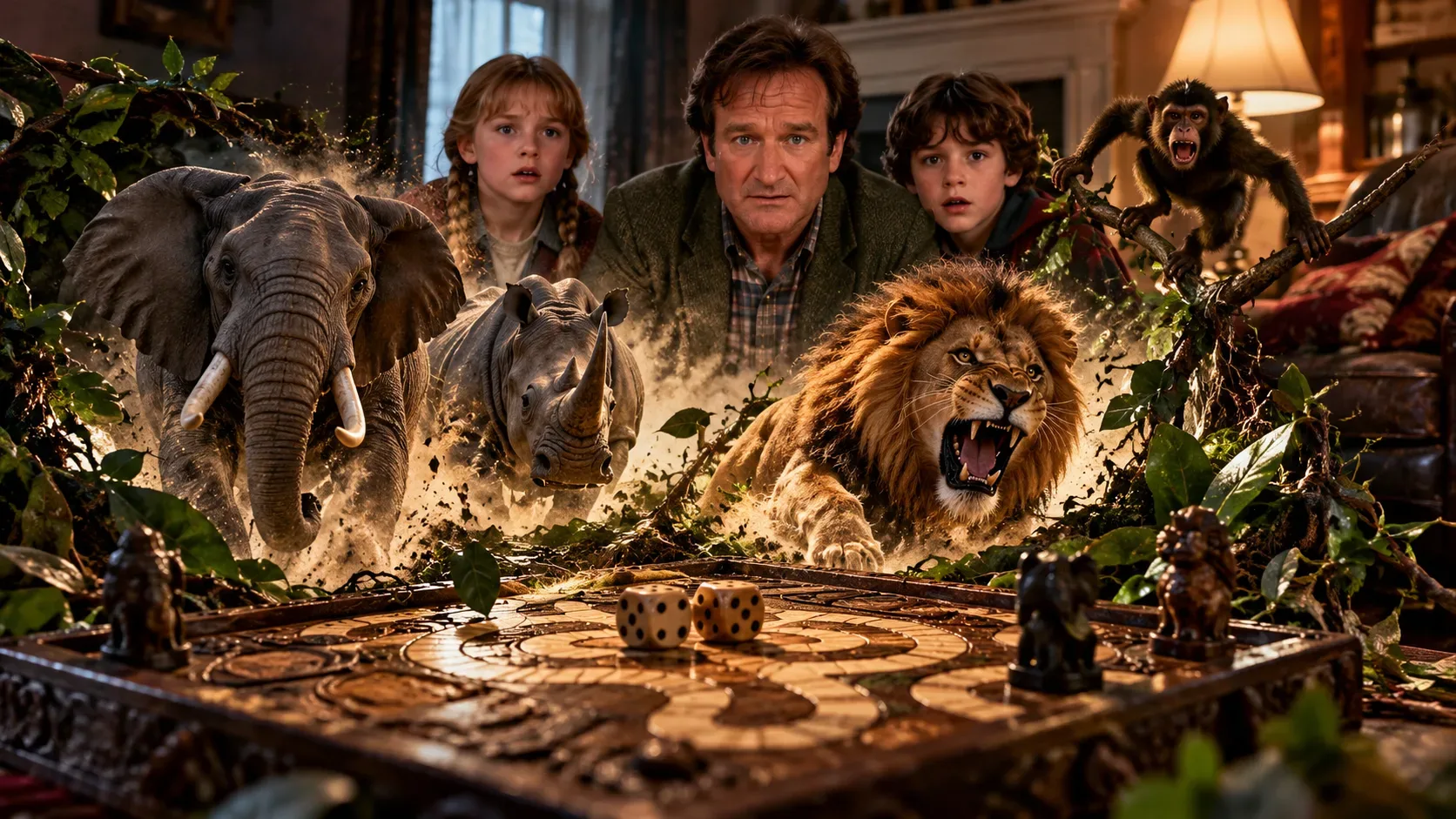
In the first Jumanji, Alan Parrish is trapped within the board game’s world for 26 years. In Welcome to the Jungle, the new adventure begins in 1996: Alex Vreeke receives the game, has no interest in a board game, and discovers an electronic version. He disappears after playing it. Years later, four students find the console while serving school detention.
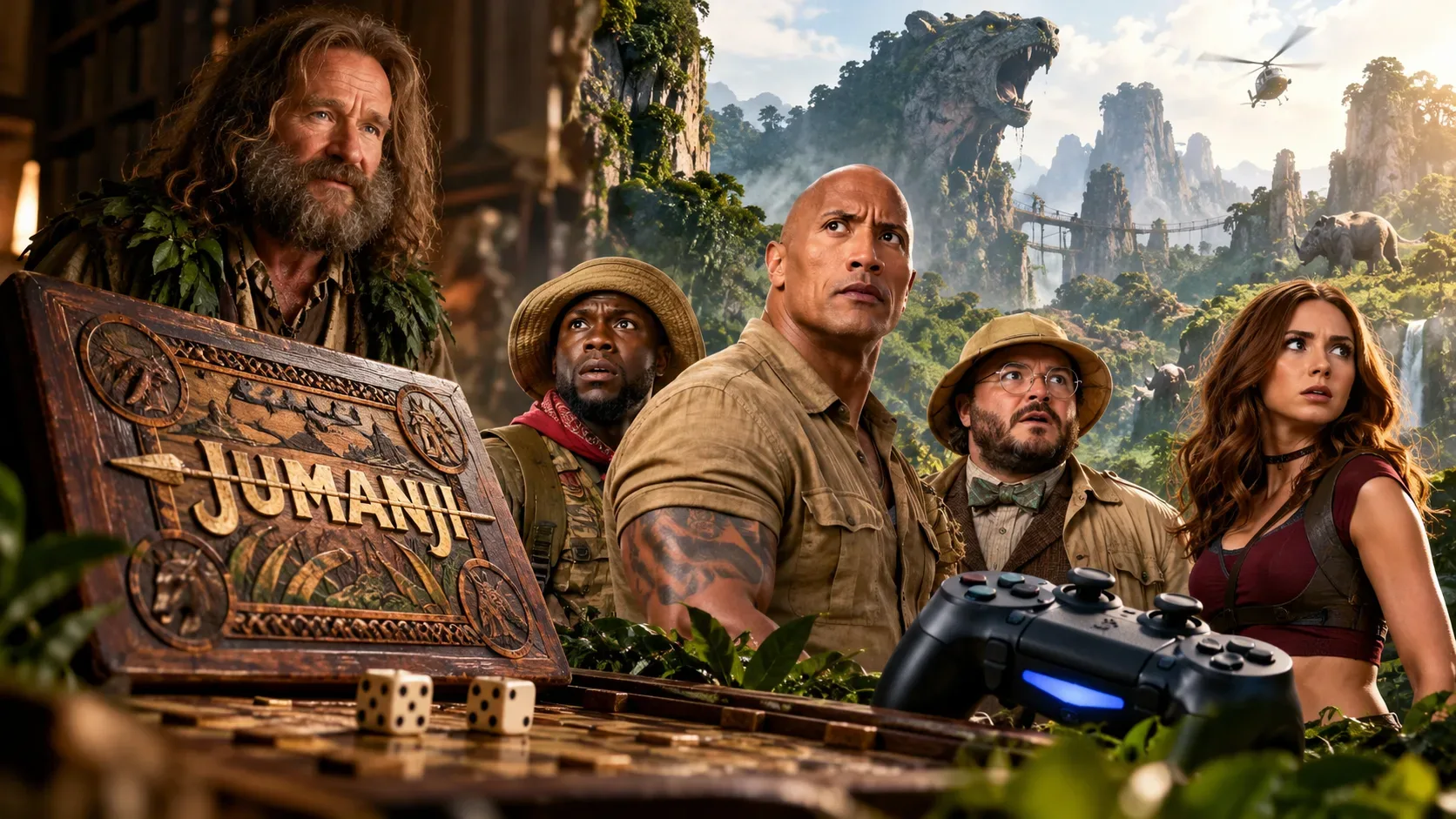
Spencer, Fridge, Bethany and Martha select characters and are pulled into the game. Unlike the 1995 adventure, in which the game’s dangers entered the town, the participants now enter Jumanji’s environment themselves.
The players and their avatars
Spencer becomes adventurer Dr. Smolder Bravestone, played by Dwayne Johnson. Fridge becomes specialist Franklin Finbar, played by Kevin Hart. Bethany takes the form of Professor Shelly Oberon, played by Jack Black, while Martha becomes fighter Ruby Roundhouse, played by Karen Gillan.
The body swaps drive the story: each player has to navigate abilities and limitations unlike their life outside the game. The game also gives each avatar three lives, making every mistake more dangerous.
The quest, Alex and the Alan Parrish connection
Guide Nigel explains that the players must return the Jaguar’s Eye jewel to its statue and say Jumanji to lift the curse associated with Van Pelt. Amid animal attacks, confrontations and the search for the jewel, the group meets another player: Alex, whose avatar is pilot Jefferson Seaplane McDonough.
Alex disappeared in 1996 and has remained trapped for years. His jungle shelter provides a direct link to the previous movie: it is a place associated with Alan Parrish. This reference establishes continuity with Robin Williams’s character without making Alan the protagonist of the 2017 film.
How Jumanji: Welcome to the Jungle ends
As the quest nears its end, Alex loses his final life, but Bethany manages to save him by giving him one of hers. The team confronts Van Pelt’s forces and returns the jewel to the statue. After completing the quest, the four teens return to school in their original bodies.
Alex does not reappear as a teenager alongside them: he returned to his own time in 1996 and was able to live his life. In the present, the students meet an adult Alex with a family; he named his daughter Bethany after the girl who helped him. The friends decide to destroy the console to prevent another game.
What links the 1995 and 2017 films
The two movies share the same supernatural game, the town of Brantford and a narrative connection to Alan Parrish. Both explore a person disappearing for years and the consequences of finishing a game. The key reversal is the format: in 1995, the board game releases threats into the real world; in 2017, the video game turns players into characters and draws them into the jungle.
Welcome to the Jungle is therefore a sequel with a new cast and a different way of presenting the rules, rather than a retelling of Alan’s story.