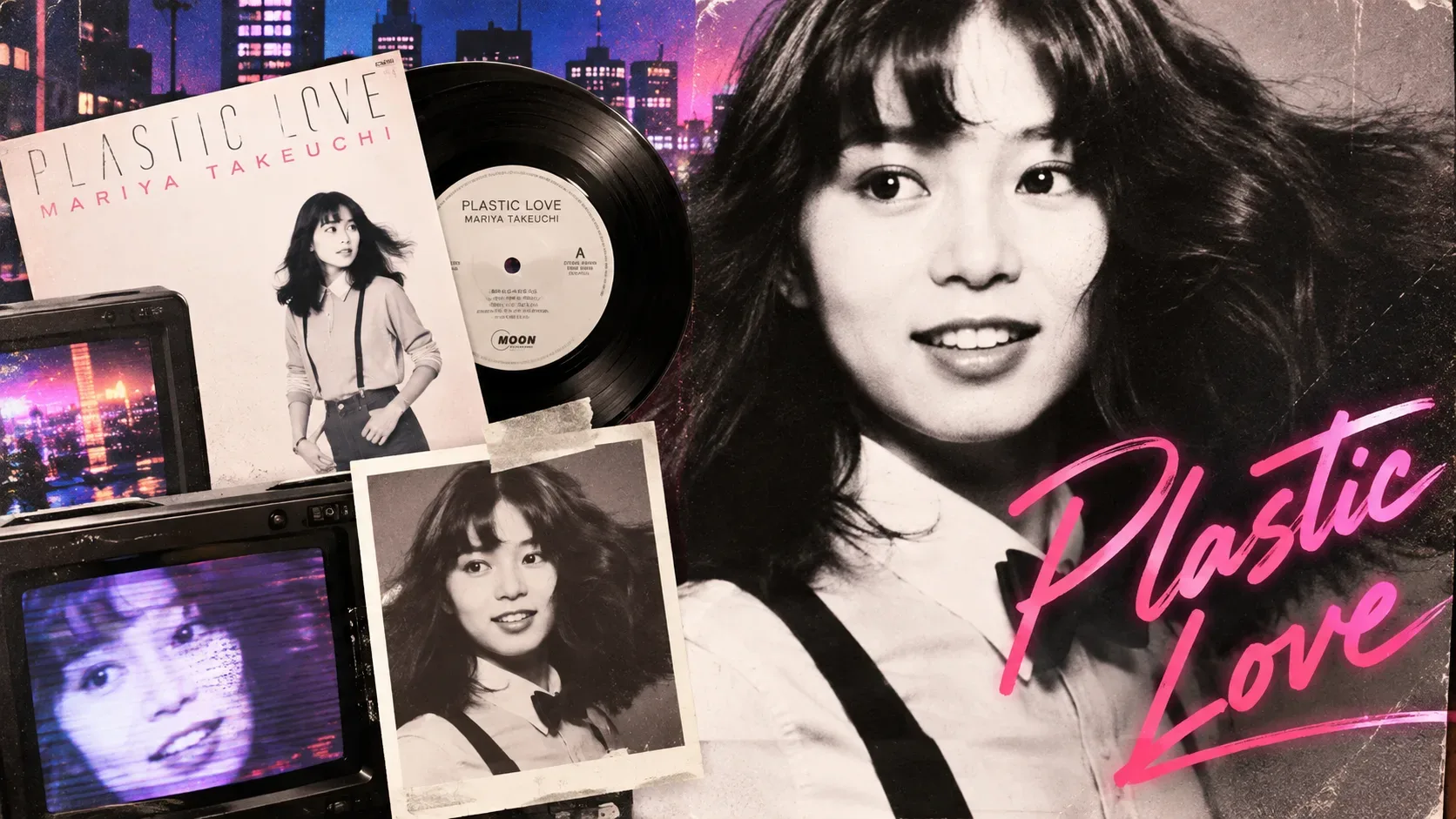
The black-and-white photograph that became inseparable from Mariya Takeuchi's Plastic Love was not the sleeve of the single released in 1985. Shot by Alan Levenson, the portrait had been used for the 1980 single Sweetest Music and became linked to Plastic Love through fan-uploaded YouTube videos in 2017. It was the photographer, not the record label behind the music, who filed the copyright complaint that temporarily brought down one of those videos. There is a documented twist: Warner Music Japan officially adopted the image as the sleeve of a new Plastic Love pressing in 2021.
Where did the Mariya Takeuchi portrait come from?
In an interview published by Pitchfork on May 18, 2021, Levenson said he photographed Takeuchi for her 1980 album Miss M. He expected one of the shots to appear on the album cover, but, according to his account, it did not. When he later investigated where the photograph had gone, he learned it had appeared on the sleeve of the 1980 single Sweetest Music.
Warner Music Japan independently identifies that origin in its September 14, 2021 announcement, expressly naming Sweetest Music as the earlier release that used the picture. In other words, a visual pairing that now feels inseparable from Plastic Love was not created for its first single issue. Levenson also told Pitchfork that the original photographic job had been arranged informally, without a written contract. That is the photographer's account, not a court ruling on every license that may have existed.
What was released in 1984 and 1985, before the viral upload?
Plastic Love first appeared on Variety, Mariya Takeuchi's album originally released in 1984. Warner's discography credits Takeuchi with the album's songwriting and Tatsuro Yamashita as its producer. On March 25, 1985, the track received a Japanese 12-inch single, catalog number MOON-13002. It featured an Extended Club Mix and a new remix of the song.
The 1985 release had its own sleeve design, separate from the portrait familiar to internet listeners. This resolves the original-cover question: online audiences came to identify a photograph from another release as the face of the song. It was not a long-lost piece of the 1985 single's artwork.
How did the photograph become the song's best-known image?
In 2017, an anonymous YouTube user known as Plastic Lover uploaded an extended version of Plastic Love using the portrait as its thumbnail. The upload helped listeners outside Japan encounter both the track and city pop. Plastic Lover told Pitchfork that an earlier video of the song had repeatedly appeared in their recommendations. After that upload disappeared, they decided to post their own copy.
That history does not support naming Plastic Lover as the person who invented the entire audio-and-image pairing. The uploader said they did not know who first matched the picture with the track or exactly where the circulating extended edit originated. Recommendation feeds and sharing helped spread it, but naming a single creator of the viral combination would go beyond the evidence.
Who claimed the photo rights, and why was the video removed?
Levenson said he grasped the scale of the image's online circulation in August 2018, after Sony contacted him about potentially using it in a film project. His subsequent search led him to Plastic Lover's upload. According to his interview, disagreements arose over permission and payment for additional uses, including discussions involving record companies. He pursued copyright registration for the photograph and, following legal advice, submitted a copyright complaint to YouTube.
The complaint led to the video's removal in 2018 and to abusive messages directed at the photographer, as both interviewees described to Pitchfork. Later, with intermediaries involved, Levenson agreed to withdraw the complaint in exchange for a photo credit, allowing the video to return. The interview does not provide the original photography agreement, a full record of all possible licenses, or a judgment settling every disputed right. What it does document is Levenson's claim as the photograph's creator and his role in the removal and reinstatement of the upload.
Three separate layers matter here. The photograph is a visual work attributed to Levenson. The composition of Plastic Love is credited to Mariya Takeuchi. The sound recording is the commercially released master, subject to its own rights and permissions. A complaint about a thumbnail does not mean the photographer controlled the song, or that a fan automatically had permission to distribute its audio. Neither does it establish that the record label automatically owned every right in the photograph.
When did it actually become an official Plastic Love sleeve?
On September 14, 2021, Warner Music Japan announced it would use the previously unofficial, internet-associated photograph for a new single sleeve. The 12-inch record followed on November 3, 2021, with catalog number WPJL-10152. So it would be inaccurate to say the portrait has never been an official sleeve: it was not the original 1985 cover, but it was officially adopted in 2021.
The records also differ musically. Side A of the 2021 edition kept the earlier Extended Club Mix, while side B substituted the original Variety album version for the new remix included on the 1985 single. Warner's material confirms that the photograph was officially chosen, but does not disclose the contractual terms governing the picture's use. The reissue should therefore not be treated as proof of a permanent transfer of photographic rights.